Ronald Ojeda Murder: Chile Court Convicts Maickel Villegas, Political Motive Not Proven
JUSTICE · CHILE
Key Facts
- —The country Chile, where former Venezuelan army lieutenant Ronald Ojeda was living when he was abducted on 21 February 2024, according to prosecutors.
- —What happened On 1 October 2026 a Santiago trial court found Maickel Villegas Rodríguez guilty of kidnapping with homicide, BioBioChile and ADN Radio reported.
- —The numbers Prosecutors will ask for 20 years; the defence wants 15 years and a day (BioBioChile, 1 October 2026). Sentencing is set for 15 October.
- —What it means for you The first trial in the case has ended in a conviction. A second trial of 18 defendants is due to open on 20 October.
- —Still open The court did not find a political motive proven. Prosecutors say they will argue that point against the gang’s leaders in a later trial.
A court in Santiago has delivered the first conviction in the Ronald Ojeda murder case. On Thursday 1 October it found Maickel Villegas Rodríguez guilty as a direct perpetrator of kidnapping with homicide.
Ojeda, a former Venezuelan army lieutenant living in Chile, was abducted on 21 February 2024. The verdict settles one defendant’s role, but leaves the question of who ordered the killing for later trials.

What the Court Decided
The Second Oral Trial Court of Santiago, a panel that hears criminal trials, read its verdict on Thursday. BioBioChile and ADN Radio both reported that Villegas was convicted as a direct perpetrator.
According to the prosecution, Villegas watched the target for about four hours before the abduction and filmed part of it. Prosecutors also tied him to the later rescue of three people involved in the crime.
ADN Radio reported that Villegas is 28 and was applying for permanent residence in Chile at the time. Prosecutors place him in “Los Piratas”, a cell linked to the Venezuelan gang Tren de Aragua.
How Long He May Serve
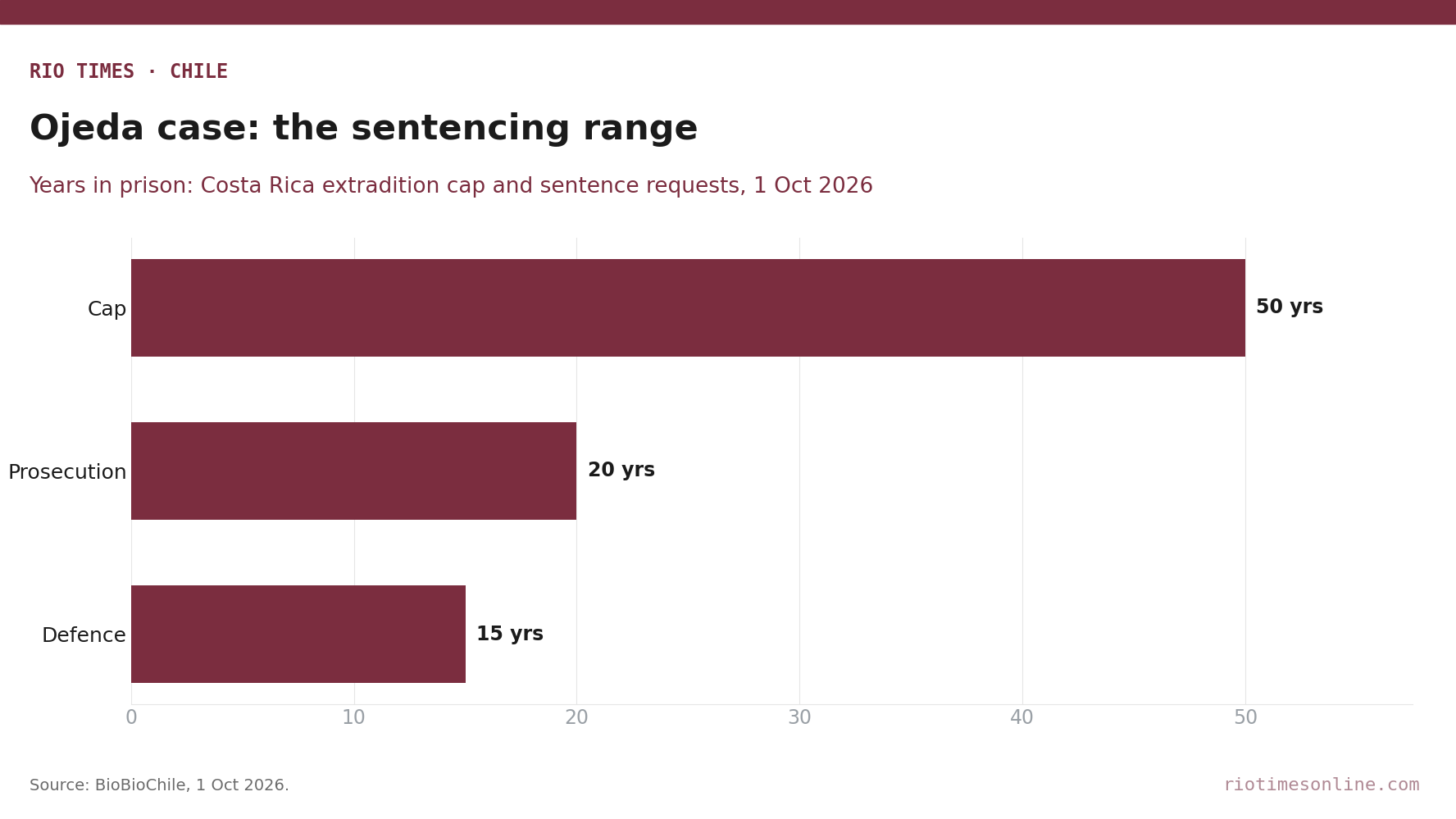
Regional prosecutor Héctor Barros said the Public Prosecutor’s Office will ask for 20 years in prison. He called the verdict “conclusive” about Villegas’s part in the crime.
Defence lawyer Jeannete Cofré said she will seek 15 years and a day, citing his clean record. She said Costa Rica, which extradited him, barred any sentence above 50 years and the death penalty.
Barros also said the extradition terms set a ceiling, because Costa Rica handed Villegas over for kidnapping with homicide only. The defence said it intends to appeal.
The Political Motive Question
Both outlets reported that the court did not find a political motive proven. ADN Radio said this means a direct commission from the Venezuelan government was not established in this trial.
Barros said he agrees, because prosecutors did not set out to prove that motive in this trial. He described Villegas as a low-level operative who probably did not know what was decided higher up.
Juan Carlos Manríquez, lawyer for the Ojeda family, read the ruling differently. He said the ruling leaves a political motive by a foreign government plausible, and the family will argue it at the next trial.
How the Case Reached Court
According to ADN Radio, Villegas left Chile after the abduction and spent months as a fugitive. He was arrested in Costa Rica while trying to cross irregularly into Panama, then extradited.
A 17-year-old Venezuelan, the first person detained, was convicted earlier through a fast-track procedure, ADN Radio reported. The Rio Times has covered the wider pressure on Venezuela’s leadership, including the US$25 million US bounty on Diosdado Cabello.
The case also shapes Chile’s security debate, which has moved to Congress with President Kast’s security reform. Prosecutors describe the Ojeda killing as the work of an organised criminal structure.
What Is Not Yet Known
The length of the sentence will only be known on 15 October. Whether an appeal changes the verdict is also open.
Barros said 18 defendants go on trial on 20 October, including those accused of hiding the body. The case against the alleged leaders, among them “El Turko” and “Carlos Bobby”, has no trial date yet.
Whether the Ronald Ojeda murder was ordered from abroad remains unproven in court. That question now moves to the later trials.
Sources: BioBioChile, 1 October 2026; ADN Radio, 1 October 2026; statements by prosecutor Héctor Barros, defence lawyer Jeannete Cofré and family lawyer Juan Carlos Manríquez as reported by BioBioChile.
In depth
Read More from The Rio Times