Brazil Supreme Court Distrust Hits Record 48% in Datafolha Poll
BRAZIL · POLITICS
Key Facts
- —The record 48% said they do not trust the Supreme Federal Court (STF), up from 43% in March.
- —The rest 35% said they trust the court a little, and 14% said they trust it a lot.
- —The campaign 38% said the court crisis hurts Lula, while 31% named Flávio Bolsonaro.
- —The survey Datafolha interviewed 2,001 people in 125 towns and cities from 15 to 17 September.
- —The catch The 38% and 31% figures measure perceived harm, not voting intention.
- —What comes next A court decision on investigating Justice Alexandre de Moraes is on hold with no new date.
Nearly half of Brazilians now say they do not trust the Supreme Federal Court, and more voters see the crisis hurting Lula than his main rival.
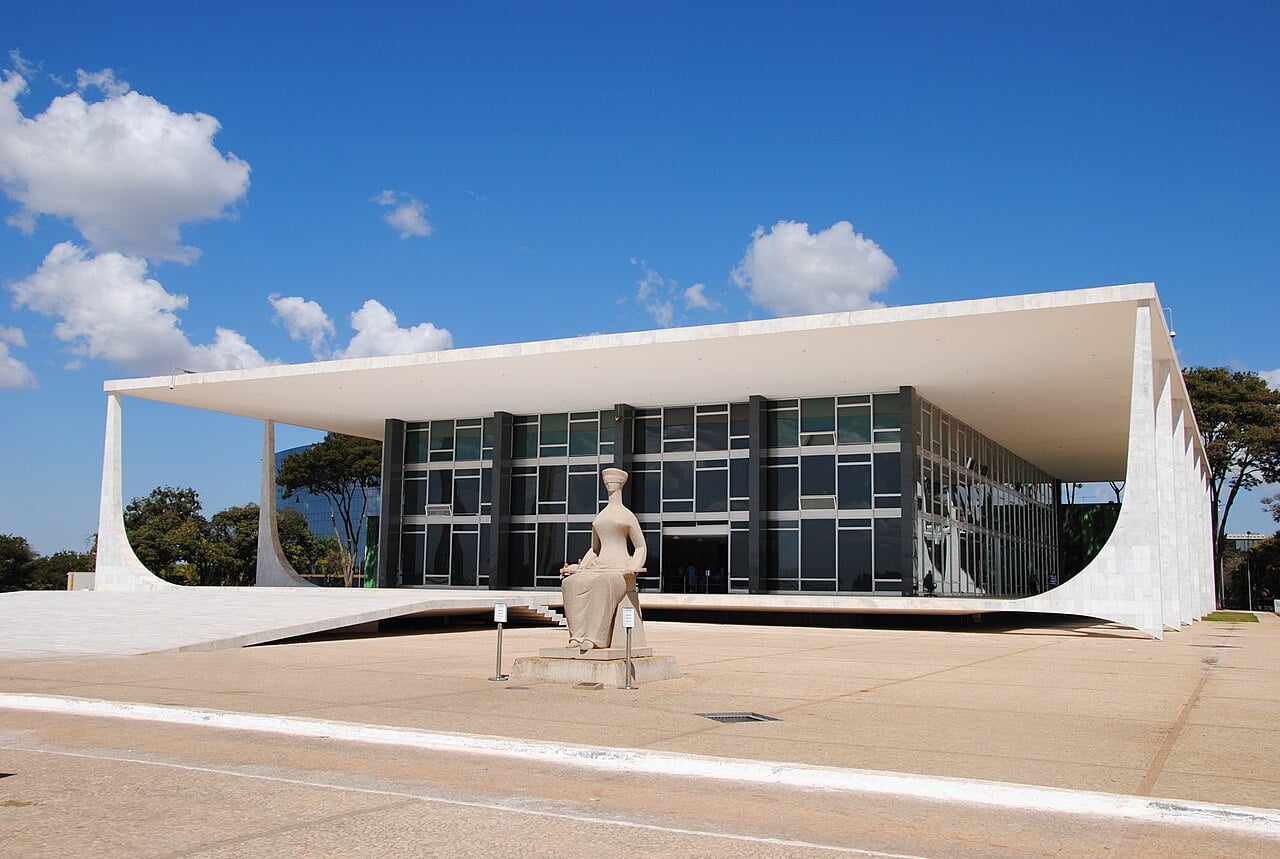
Brazil Supreme Court distrust reached 48% in a Datafolha poll published on Friday, 18 September 2026. It is the highest level since the series began in 2012.
What the Datafolha poll found
Datafolha found that 48% of respondents do not trust the Supreme Federal Court (STF), Brazil’s highest court. In March 2026, that figure was 43%.
The share who trust the court a little fell from 38% to 35%. Those who trust it a lot fell from 16% to 14%.
For the first time, distrust in the STF was higher than distrust in Congress and political parties, both at 45%. Distrust in the presidency stood at 42%.
Views split sharply by politics. Among voters backing Flávio Bolsonaro, 69% distrust the court, compared with 22% among Lula voters.
There are other gaps too. Some 54% of men distrust the court, against 43% of women, and the figure reaches 60% among higher earners.
Among people who rate Lula’s government as bad or very bad, distrust climbs to 75%. That suggests views of the court now track views of the government.
How the survey was done
Folha de S.Paulo reported that Datafolha interviewed 2,001 people aged 16 or older in 125 municipalities. Fieldwork ran from 15 to 17 September 2026.
The margin of error is 2 percentage points either way, at a 95% confidence level. Folha de S.Paulo and TV Globo commissioned the survey.
It is registered with the Superior Electoral Court (TSE) under number BR-04029/2026. Vote-intention results from the same registration came out on 17 September, citing 2,002 interviews on 15–16 September.
Who voters say the crisis hurts
The poll also asked which presidential candidates the court crisis could hurt. Some 38% named President Luiz Inácio Lula da Silva, and 31% named Senator Flávio Bolsonaro.
Another 25% said the crisis hurts no candidate, 5% said it hurts everyone and 14% did not know. Respondents could give more than one answer.
This question measures how people see the damage, not how they plan to vote. It should not be read as a head-to-head result.
On 16 September, Lula spoke on a podcast about the dispute. He said court president Edson Fachin had a responsibility to keep it from disrupting the election.
Why Brazil Supreme Court distrust is rising now
The poll was taken during a tense week for the court. On 15 September, judges debated whether to open an investigation into Justice Alexandre de Moraes.
The case rests on a Federal Police report about messages between Moraes and Daniel Vorcaro, the former owner of Banco Master. Moraes has not been charged with anything.
Justice Flávio Dino asked for more time to study the case, and the session was suspended. He has up to 90 days to return it.
A related decision on whether to investigate Justice André Mendonça was scheduled for 23 September. Whether that session goes ahead is now uncertain.
The dispute grew over several weeks. The Federal Police delivered a 218-page report on the Banco Master case to Mendonça on 27 August.
Major Brazilian outlets published its contents on 1 September, after secrecy was lifted. Since then, the court has faced near-daily revelations and open clashes between judges.
A second story adds pressure
On 18 September, Folha columnist Mônica Bergamo reported that Vorcaro met Justice Gilmar Mendes at the court in April 2024. He sought support in a large case.
Metrópoles, which confirmed the meeting, reported that Mendes later voted against the banker’s interests. The report came as the poll was published.
Why this matters for expats and investors
The STF has the final word on tax disputes, contracts, regulation and large company cases. Its standing shapes how predictable Brazil feels for people with money or lives there.
Low trust does not change any ruling by itself. But a court seen as divided may face more political pressure in cases that matter to business.
The crisis now sits inside the presidential race. Investors watching Brazilian assets may see more political noise before voters go to the polls in October.
For residents, daily life is unchanged. Courts keep working, and no ruling has been altered by the dispute.
What is not known yet
It is not known when Dino will return the Moraes case, or whether the court will investigate any judge. No justice has been charged.
It is also unclear whether the crisis will move votes. The poll measures trust and perceived harm, not final choices.
With a 2-point margin of error, the true distrust level could be slightly higher or lower. The rise from 43% is still larger than that margin.
How to read the numbers
Brazil Supreme Court distrust at 48% means nearly half of those asked do not trust the court. It does not mean they reject its rulings or will act on that view.
The next Datafolha surveys will show whether this is a lasting shift or a reaction to one difficult week.
Frequently Asked Questions
Frequently Asked Questions
How high is distrust in Brazil’s Supreme Court?
Datafolha found 48% do not trust the STF, the highest level since 2012. In March 2026 it was 43%.
Does the poll show who wins the election?
No. It shows that 38% think the court crisis hurts Lula and 31% think it hurts Flávio Bolsonaro.
What happens next at the court?
The Moraes case is paused after Justice Flávio Dino asked for more time. He has up to 90 days, and no new date is set.
Connected Coverage
Gilmar Mendes Confirms Vorcaro Meeting as Banco Master Claims Reach STJ
Datafolha Poll Shows Brazil’s Presidential Race Tied Weeks Before the Vote
Sources: Datafolha survey for Folha de S.Paulo and TV Globo (TSE registration BR-04029/2026), 18 September 2026; Poder360; CNN Brasil; Correio Braziliense; InfoMoney; Metrópoles.
This article was produced by The Rio Times’ automated newsroom system. How we use AI · Report an error
Read More from The Rio Times