Trump’s Foreign Policy Loses Its Bearings in Latin America
RIO DE JANEIRO, BRAZIL – Donald Trump made his way to the White House pledging to build a wall on the border to isolate the country from Mexico.
Three years later, Donald Trump did not erect a single new foot of wall, but instead speaks of his “tremendous relationship” with Mexico and praises President Andrés Manuel López Obrador (AMLO), particularly after he allowed him to show the domestic public a sharp drop in immigration coming from Central America.

This reduction was possible because the center-left AMLO stopped the immigration flow by sending a contingent of the National Guard, a body designed to fight organized crime – which, meanwhile, is growing stronger in Mexico – to the southern Mexican border.
When organized crime struck Americans, Trump announced he would include the Mexican cartels on his list of terrorist groups; however, a week later, he suddenly withdrew the threat in an afternoon tweet. The case of Mexico, a neighboring country for which the erratic foreign policy of Trump’s Administration seems to follow electoral dictates, is not an isolated one.
In Central America, after interrupting humanitarian aid, aggravating problems that have led thousands of its citizens to flee to the north, Washington has now decided that Guatemala, Honduras and El Salvador, some of the most dangerous territories in the world, are “safe third countries” to which tens of thousands of asylum seekers can be returned.
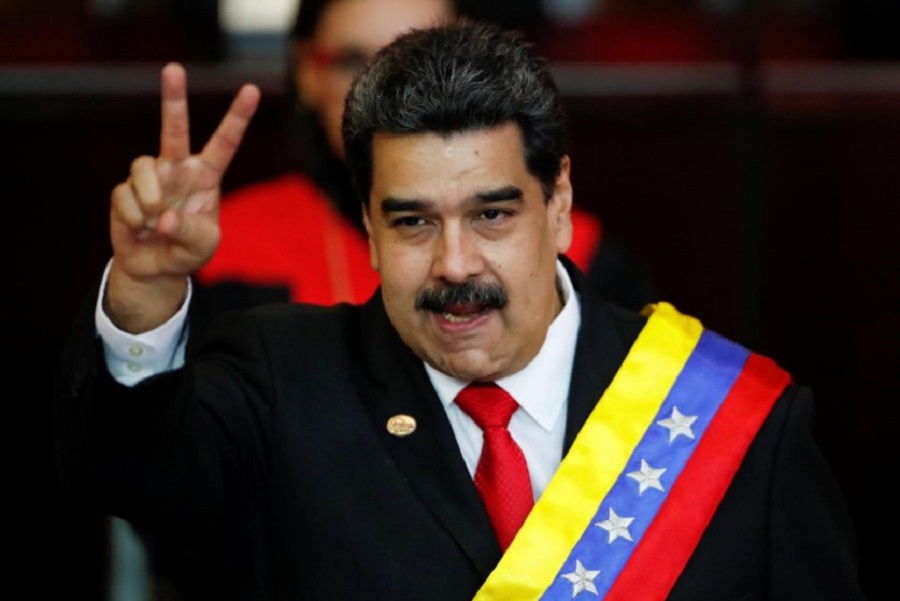
In Venezuela, the means to overthrow Nicolás Maduro are exhausted, forcing the President into the multilateralism that he publicly rejects so much. In Brazil, President Jair Bolsonaro, his great ally in the region, whose foreign policy is based on his good rapport with Trump, was stunned last week by the sudden announcement via Twitter of new tariffs on Brazilian steel and aluminum.
Just like Argentina, plunged into a deep economic crisis, the target of Trump’s tariff punishment just a week before the new president, Alberto Fernández, takes office. Only with Cuba did Trump maintain a clear position, to increase the siege of the island and drastically break with the opening begun by its predecessor, Barack Obama.
“There is no strategy for Latin America,” summarizes Richard Feinberg, who was special advisor to President Clinton and director of inter-American affairs at the National Security Council, and is now a member of the Brookings Institute’s Latin American Initiative.
“It is necessary to begin with the fact that this is a very diverse hemisphere, and it is difficult to have a coherent strategy for the region. But we used to have a policy based on democracy, human rights, and an open economy. Trump, at least rhetorically, said that he doesn’t care about the first two points.”
“As for the third point, the president is obviously not a standard-bearer for free trade. So the traditional pillars of US policy on Latin America were thrown out of the window. But it is difficult to define Trump’s foreign policy. Are we talking about his tweets? Or the policy he actually implements on the ground?”
That the domestic electoral agenda conditions foreign policy is nothing new. But now this electoral vision, according to the critics, seems to be the only one. And it adds to the president’s impulsive nature and his contempt for traditional procedures.
In an international scenario in deep transformation and teeming with challenges, as evidenced by the protests that sweep through Latin America, disconcertedness and concern are repeated in conversations by experienced diplomats.
“There is no well thought-out policy for the region,” says Michael Matera, director of the Americas program at the Washington Center for Strategic and International Studies, with 25 years of experience in US foreign service.
“Part of this is the internal bureaucratic disputes between the State Department and the National Security Council. The latter’s mission is to balance the agendas of the different departments. But that hasn’t happened as it should over the past three years. The process has essentially been disrupted”.
This disruption in the balance between diplomacy, which is in charge of the longer-term vision, and the White House is precisely what underlies the Ukrainian plot, which led the democrats to initiate an impeachment process against Trump.
“We are witnessing an unprecedented diplomatic rebellion by the United States against the Chief Executive,” warns Feinberg. “Disagreements are one thing, but an open rebellion? There are diplomats testifying in Congress against the president with a view to his impeachment! And the entire foreign service is applauding these representatives. Nothing like this has ever been seen.”
For Michael Shifter, president of the Inter-American Dialogue, one of the oldest think tanks about Latin America in Washington, this phenomenon that exploded in the Ukrainian plot is also seen in Latin America. “Everyone is talking about Ukraine as an example of placing personal interest before the national interest, but it is not a surprise,” he says.
“Mexico is a very clear example of this. The things Trump does, the terms he employs, are designed to respond to the fears of his political bases and to strengthen his cause. Ukraine is not an isolated case. Trump is clearly using Mexico for his personal political goals.”
Disagreements over Latin America have also made political victims. Kimberly Breier resigned in August as Under-Secretary of State for the Western Hemisphere, leaving the most senior diplomatic office for relations with Latin America vacant.
Breier, the latest in a string of casualties in the department headed by Mike Pompeo, claimed personal reasons. But many pointed to a range of disagreements crowned by a political collision with Stephen Miller, the radical White House adviser on migration policy, who considered her uncompromising on the surprising asylum agreement between the United States and Guatemala.
Fernando Cutz, who was on the National Security Council during the Trump Administration itself, until April 2018, and before that during Obama’s, agrees that the “underlying issues” seen in the impeachment hearings are repeated “all over the world”. “This battle between the two channels, the official and the unofficial, is constant,” he says.
“The two channels often do not share the same goals and do not even communicate, which weakens us diplomatically. Many of the crises in the Latin American region require multilateral approaches, and this must be led by the State Department. As a result of going without allies, for instance, we have a weaker policy in Venezuela”.
The image of US leadership suffered globally with Trump’s advent into the White House, according to a Gallup study, but in no region was this more evident than in Latin America. US leadership approval dropped from 49 percent in 2016 to 24 percent in 2017. As for Trump’s role, the figures are even worse.
Only 16 percent of Latin Americans approved of the US president’s performance during the first year of his presidency. He had his best rating in Venezuela (37 percent), and the worst in Mexico (7 percent).
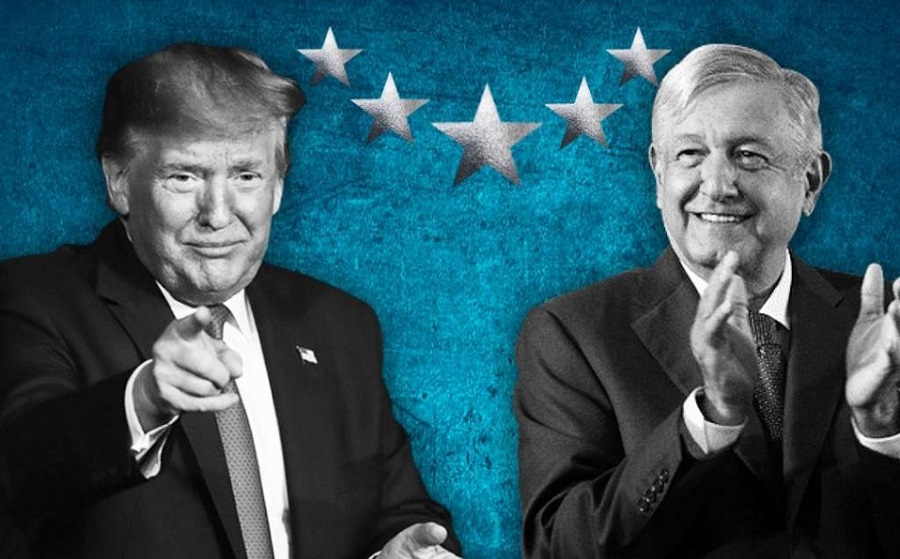
“Trump could flaunt his relationship with Mexico as a political victory, for instance, because although he has not built a wall, he has reduced immigration,” said Cutz. “But these results come at a cost. The United States has lost credibility, among other things because of the way it has handled immigration”.
There is a certain degree of continuity, cautions Michael Matera, in what have been “years and years of considering the region of secondary importance. “This is not new to the Trump Administration,” concludes the veteran diplomat.
“But in previous administrations there has been greater recognition that while the White House doesn’t have enough capacity to devote much time to Latin America, at least the State Department, Commerce, and Treasury bureaucrats have had a greater leeway to develop a strategy. At this point, now, there is no one trying to build an integral strategy.”
Source: El Pais
More: Brazil news in English, every day from The Rio Times.
This article was produced by The Rio Times’ automated newsroom system. How we use AI · Report an error · Editorial responsibility: Matthias Camenzind, Editor-in-Chief