Analysis: Mining radiography in Argentina – a promising future and an urgent problem
RIO DE JANEIRO, BRAZIL – To talk about Mining and present the latest official data on the sector, the consulting firm LLYC organized a roundtable and workshop for journalists at the Hotel Emperador together with leading experts.
During the presentation, it was noted that the mining sector had regained its pre-pandemic export levels, forecasts for sales and investment growth were analyzed, and the challenges ahead to boost economic activity were mentioned.
Although 80% of the revenues of the major mining companies remain in the country and the mining sector generated a foreign exchange surplus of about US$54 billion between 2003 and 2021, there is still a long way to go.
In 2011, when Argentine exports reached a record US$4.3 billion, Chile exported US$50 billion in the same range. “We have regained pre-pandemic volumes and maintained employment levels, with wages consistently above average.
Last year, Mining was one of the three sectors that brought dollars into the country,” said Luciano Berenstein, executive director of the Argentine Chamber of Mining Entrepreneurs (CAEM).
Read also: Check out our coverage on Argentina
Daniel Schteingart, director of the Center for the Study of Production (CEP XXI) and head of the Argentina Productive 2030 Department of the National Ministry of Productive Development, ventured that “we need more mining to combat climate change” and pointed to the creation of the National Round Table for Community Open Mining (Memac), which will convene soon, first in Buenos Aires and then in the provinces, and to the imminent opening of the Community Open Mining Information System of Argentina (Siacam), where all the data on the sector will be posted. “We want to talk about mining, learn the pros and cons, and know how to improve the positives and mitigate the negatives because the dialogue that falls on deaf ears is not the way to go,” he said.
MINING FIGURES
According to the latest data from Schteingart’s CEP XXI, based on SIPA and AFIP, Mining provides 34,000 direct jobs with an unprecedented multiplier effect: for every formal worker in Mining, there is another worker in construction, services, industry, hotels, transport, catering and commerce, who earn up to 40% more as contractors of mining companies due to the stability and permanence of investments.
The metals industry employs 95% of reported workers, with average salaries as high as US$313,000 per month. The poverty rate for these mining families is 8.2%, with 3 in 10 workers having a college education and high job skills for professional (17%), technical (30%), and operational tasks (49%).
Compared to construction, fishing, commerce, electricity, gas, or petroleum extraction, the accident rate is also low, with 21 cases of illness and secondary illness per 1,000 workers.
As a source of formal and well-paid employment, Mining is a relatively immigrant-intensive activity. An estimated 55% of miners were born in their locality. According to a report issued by the National Mining Secretariat in January of this year, Argentina has 87 mining projects in various stages of development.
Seventeen mines are in production, three are in the construction or expansion phase, and another 12 projects have already announced their technical and economic feasibility. In silver, five projects are at an advanced stage, and in gold, the country is the 20th largest producer globally, with two of the top 25 projects in the world. Copper employs 12,000 people, and 4,500 more will be added soon.
Official data also shows that 5 of the ten municipalities in the country that have created the most jobs in the last two years are miners. Santa Cruz and San Juan are the main mining provinces. Due to Mining, poverty in Greater San Juan was 10% higher than the national average in 2004 (65% vs. 55%) and will be lower in 2021 (36% vs. 38%).
AN OUTSTANDING DEBT
An outstanding debt is the low employment rate of women. As in much of the world, the percentage of women in leadership or decision-making positions in the mining industry in Argentina is lower than that of men. However, this situation is beginning to change.
The country is reaching nearly 16% female representation in the industry, above Chile (12.2%) and Peru (7%) and just below Australia (18.6%) and Canada (17%), both global mining benchmarks. According to Argentina’s Women In Mining (WIM) organization, women miners accounted for only 9.8% of the workforce in 2020, with most working in administration and finance (27%) and only 18% in Mining.
Schteingart considered that Mining could bring in foreign currency to “move the country forward” and contribute to the decentralization of the national productive apparatus by creating thousands of well-paid and formal jobs, especially in the hinterland.
POOR COMMUNICATION
The sociologist believes that one of the reasons for the lethargy in development is poor communication from both companies and governments about this activity. “Sometimes things are published that are wrong or distorted.
Like nuclear energy, it has terrible press. The culture of secrecy, the bureaucracy of communication, has taken a lot away from us. Now, this is changing; I see that in the last year, more exciting things have been done in terms of communication,” he stressed.
“The case of Catamarca with Bajo de la Alumbrera, which was presented as if to save the province, and half of the hired people were from Tucumán, where Mining is prohibited, it is logical that a problem arose. They sold salvation, and then the improvements were rather limited. Business leaders were also based in Tucumán. Now there are requirements for local suppliers that didn’t exist before, and the benefits are different,” Schteingart said.
As published in Ámbito, the MARA project, which will use the Bajo de la Alumbrera facilities to extract copper and gold from the Agua Rica deposit, has nearly 90% local suppliers out of 450 companies providing services.

Adriana Sirito, regional director of sustainability at Moody Brook Consultants, stressed the importance of “promoting education to be able to work in processes where radical ideologies are a barrier,” adding that “you have to be able to talk to each other and have an open dialogue, which helps build trust in the sector.”
Mining companies spent US$400 million on health care and food during the pandemic, buying tests, medical supplies, hygiene products, field hospitals, respirators, and hospital equipment.
Sirito also highlighted Mining’s contribution to the UN Sustainable Development Goals (SDGs), explaining that in 2018, of the total investment in CSR in the country, which amounted to US$4.05 billion, 13 mining companies accounted for about US$1.8 billion. However, this is still a low level for the expert, as only 48% of these companies have aligned their CSR policies with the UN goals.
“When you think about the logic of mining’s contribution to the SDGs, some are priorities, and those are related to environmental sustainability, social inclusion, and economic development,” she said.
A PROMISING FUTURE
For Luciano Berenstein, the communication problem is related to the country’s experience in Mining, which is why a paradigm shift is being sought to “transfer the activity to practice.” In Chile, for example, there has been mining for 100 years and about 200 metal projects, while here, there are only 13.
We know we need to communicate with communities and open the information process, but we need to understand that Mining has had a law since 1993 that promotes investment; it’s a process, it’s a young industry,” he said, adding, “Mining has to do much more than other industries, but it’s the one that complies the most.
The CAEM managing director, who has 12 years of experience in the field, said the timing is “favorable” for the sector’s development because of the international value of minerals, political developments in neighboring countries and among competitors, and the advance of clean energy.
“We hope to reach exports of US$10 billion by 2030, three times our current export volume (forecast for 2022: US$3.116 billion), provided that copper and lithium projects come into production and the right international conditions are in place,” he said, celebrating progress in lithium exploration work, which is crucial for the future.
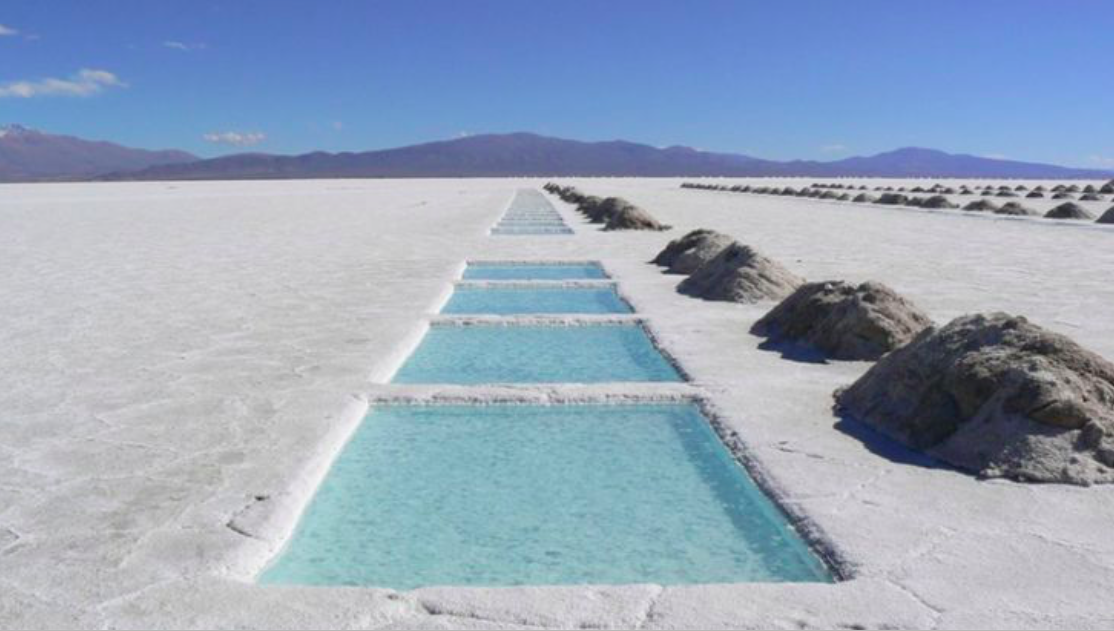
“Today, we are the second country with lithium reserves globally and have two projects in production, and two years ago, we were the fourth,” he said.
In terms of jobs, he said the goal is to create 120,000 direct and indirect jobs, up from the 83,000 they currently count in all associated production rings. “We expect US$20 billion in investment over the next ten years,” Berenstein said, with the fiscal contribution at all levels amounting to US$88.1 billion. As a preview, he said mining company Exar’s Olaroz Cauchari project, the third in the country, is expected to begin production by the end of the year.
Experts believe the energy transition toward clean production systems will require more Mining. The International Energy Agency (IEA) asserted that a carbon-free world would multiply the demand for minerals that Argentina possesses.
Copper is essential for renewable energy; manganese, platinum, and rare earths are needed for wind turbines; lithium, cobalt, and nickel are required to make batteries for electric vehicles. In 2020, 10 million electric cars will be produced worldwide; by 2030, that number is expected to reach 137 million. Each car carries up to 83 kilograms of minerals, but electric buses carry up to 369 kilograms each.
In this context, Berenstein reiterated the need for a stable legal framework, the enforcement, and strengthening of tax stability for 30 years, withholding taxes with progressive rules, VAT refunds for export projects, and free access to the foreign exchange market. “The investment volume of the sector is crucial for the repayment of loans in dollars,” he stressed.
AN URGENT CONCERN
The mining sector is concerned about the lack of gas. Although the national government has made progress on agreements to ensure winter supply with more supplies from Bolivia and Brazil, this demanding industry is vulnerable to cutbacks to avoid affecting domestic consumption.
“I don’t know how the state will handle the priority list, but we are making the necessary arrangements to be included in the priority list. We are still trying to find a solution, and we are at the forefront of that,” the CAEM chief said.
Berenstein clarified that the sector’s concern is the same as that of the entire country. “This affects us as much as anyone else, especially in the north of the country, in the lithium projects that use the NOA gas pipeline. Without gas, production comes to a halt, although we will look for ways to continue producing. We’re working to figure out who will be affected, but it’s not there yet,” he warned.
With information from Ámbito
More: Argentina news in English, every day from The Rio Times.
This article was produced by The Rio Times’ automated newsroom system. How we use AI · Report an error
Read More from The Rio Times