Brazil Opens Non-Resident Accounts as Mexico Demands Residency for Foreign Banking
Guides · Latin America
—The stakes. A foreigner’s ability to bank locally often determines whether they can receive salary, pay rent, and move money without losing value to fees and exchange spreads.
—The divide. Brazil offers non-resident account structures and Pix access, while Mexico and most other listed markets require residency documents before standard accounts are opened.
—The documents. Passport, local tax identifiers such as CPF, RFC and CUIL, and proof of address form the core documentary package across the verified markets.
—The fintech bridge. Wallets like Mercado Pago and fintech platforms can provide a temporary local payment layer before a traditional account exists, especially in Argentina and Brazil.
—The currency control. Argentina is control-sensitive and often routes newcomers through CDI or CVU-based wallet access, but no verified current numeric cap is confirmed in this research.
For foreign professionals and investors, local banking access is a quiet gatekeeper. The countries covered here do not follow one regional rule: Brazil allows non-resident account structures, Mexico generally requires a residency card, and Argentina splits between wallet access and full bank onboarding.
Why Brazil is the regional exception
Brazil is the one market in this comparison where non-resident account structures are explicitly discussed in foreigner-facing sources. The structure is commonly called a Conta de Não Residente, abbreviated as CNR, or CDE in some references.
It can be opened without Brazilian residency if the chosen institution supports the product and the customer passes the bank’s compliance checks. The central identifier is the CPF, Brazil’s individual taxpayer registry number.
Once the CPF and account exist, the foreigner can operate through Pix, Brazil’s instant payment rail used for person-to-person and merchant transfers. Pix keys may be linked to a CPF, email, phone number, random key, or a CNPJ for business accounts.
Some institutions may also ask for a legal representative in Brazil for non-resident onboarding. This is a compliance measure rather than a universal legal requirement.
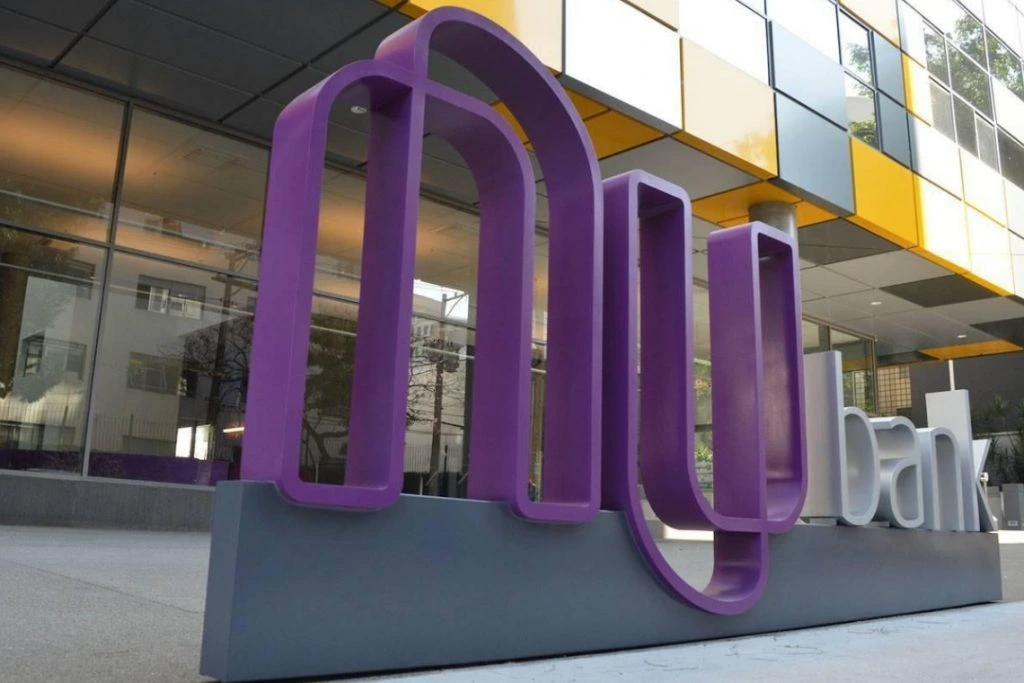
For practical money movement, a verified Brazilian bank account plus Pix is the clearest local path described in the research. Fintech platforms such as Nubank and cross-border services like Wise appear in the Brazil context, but the research does not establish a country-wide rule for their use.
Mexico’s residency-first gate
Mexico presents the clearest residency-first posture among the large Latin American economies. Mainstream banks typically require a temporary or permanent residency card before opening standard retail accounts.
The two residency categories are Residente Temporal and Residente Permanente. Both are immigration statuses issued to foreigners with legal residence in Mexico.
The standard document set includes a passport, the residency card, proof of Mexican address, and often the RFC and CURP identifiers. The RFC is Mexico’s federal taxpayer registry, while the CURP is the unique population registry code.
The practical implication is that a newcomer without residency generally cannot walk into a mainstream Mexican bank and open a normal account. Fintechs and cross-border cards may bridge the gap, but the research does not confirm a single dominant local rail equivalent to Pix.
For expats who need local salary deposits or bill payments, the realistic sequence is residency first, then bank account. Until then, money movement tends to rely on international cards or fintech wallets.
Argentina’s two-track system
Argentina operates with a split between ordinary resident banking and non-resident pathways. For traditional bank accounts, residency and a local DNI usually make onboarding far easier.
The base document for non-residents is a passport. Some banks may also work with a CDI, a non-resident tax identification code used in Argentina.
Banks frequently request proof of address and, for larger balances or non-resident cases, proof of income or source of funds. The tax identifier for residents is CUIL or CUIT for businesses.
Fintech wallets, particularly Mercado Pago, are described as a practical bridge for newcomers who lack full bank access. The local transfer layer runs on the CVU, a virtual uniform key used to identify accounts in the wallet and payment ecosystem.
Argentina is also the clearest control-sensitive market in this brief. The research does not confirm a current official numeric limit for transfers, so no cap is stated here.
The fintech bridge across the region
Fintech platforms and wallets perform a bridging function in markets where traditional bank accounts are hard to open without residency. They allow a foreigner to hold a balance, receive transfers, and sometimes pay bills before full onboarding.
In Argentina, Mercado Pago is the named wallet bridge, and the CVU system supports local payments. In Brazil, Pix and fintech players like Nubank sit alongside traditional accounts.
Wise appears in the Brazil-related research as part of the broader fintech bridge for cross-border money movement. The research does not establish a uniform fee structure or country-by-country rule set for Wise.
The common denominator is that fintech access often still depends on a local tax identifier, phone number, or address verification. It reduces friction but does not always remove the identity requirement.
Foreigners should treat fintech wallets as payment layers rather than full substitutes for a bank account. Salary deposits, credit products, and large transfers usually require traditional banking relationships.
Local transfer rails and why they matter
Pix is the standout local rail in this research. It is Brazil’s instant payment system, widely used for daily transfers and merchant payments, and it becomes available once a foreigner has the required onboarding credentials.
In Argentina, the CVU functions as the local account and transfer key within the wallet ecosystem. It is not a bank IBAN but serves a similar routing purpose for fintech transactions.
Mexico does not present a single verified rail comparable to Pix in the gathered sources. Its practical system is the conventional bank account once residency is secured.
Having a local rail matters because it changes the cost and speed of everyday money movement. International card networks and cross-border transfers are usually more expensive or slower than domestic instant rails.
The research supports a regional pattern: where a local rail exists and is accessible, expats use it heavily. Where access is blocked by residency rules, they remain dependent on international or fintech workarounds.
Currency-control limits in Argentina and Venezuela
Argentina is the only listed market with enough directly gathered evidence to discuss a control-sensitive banking environment in this brief. The sources describe a new entrant often relying on wallet access or non-resident identification before full banking.
No verified current official limit figure for Argentine transfer controls is included in the research. The article therefore does not state a numeric cap.
Venezuela is mentioned in the research frame as a control-sensitive environment, but the gathered sources do not provide a verified current numeric limit either. No specific figure is stated.
The safest verified statement is that expats in control-sensitive markets typically combine local wallet rails, cross-border transfers, and bank access depending on their documentation level. The exact method depends on whether they can obtain a local tax ID or residency document.
Control environments shift regularly, so foreign users should treat any fixed limit as time-specific and verify it with an institution before relying on it.
How expats actually move money in and out
The practical pattern varies by documentation stage. Before residency, foreigners rely on international cards, fintech wallets, and non-resident account structures where available.
In Brazil, the documented path is a bank account plus Pix once the CPF and onboarding requirements are met. Money then moves domestically at low friction.
In Mexico, the realistic path is to become a resident first and then open a normal bank account for local salary, transfers, and bill payments.
In Argentina, newcomers often start with Mercado Pago or similar wallet rails, then migrate to a conventional bank account after obtaining residency and tax registration.
For Chile, Colombia, Peru, Panama, and Uruguay, the gathered research does not contain enough authoritative institutional material to state a reliable current opening rule, document list, or fintech summary.
The documents that recur across markets
Passport is the base identity document in every market with verified material. It is the starting point for both resident and non-resident onboarding.
Tax identifiers appear in different forms: CPF in Brazil, RFC and CURP in Mexico, and CUIL or CUIT in Argentina, with CDI for non-residents. These identifiers anchor the account to a local registry.
Proof of address is a recurring requirement. Some banks accept a foreign address for non-resident products, while others demand a local proof.
For larger balances or non-resident cases, banks may request proof of income or source of funds. This is standard compliance practice rather than a fixed legal threshold.
No fee amounts, income thresholds, or named officials are stated in this article because the verified research does not contain them.
Comparison table by country
<table><thead><tr><th>Country</th><th>Non-resident standard account</th><th>Residency first</th><th>Key identifiers</th><th>Notable rail or bridge</th></tr></thead><tbody><tr><td>Brazil</td><td>Yes for some institutions via CNR or CDE</td><td>No for non-resident structures</td><td>CPF, passport</td><td>Pix, Nubank, Wise</td></tr><tr><td>Mexico</td><td>Mostly no for standard retail</td><td>Yes for most banks</td><td>RFC, CURP, residency card</td><td>Fintech bridge before residency</td></tr><tr><td>Argentina</td><td>Yes via CDI or wallet routes</td><td>Usually yes for traditional banks</td><td>CUIL or CUIT, CDI for non-residents</td><td>Mercado Pago, CVU</td></tr><tr><td>Chile</td><td>Unverified in research</td><td>Usually yes in practice</td><td>Not verified</td><td>Not verified</td></tr><tr><td>Colombia</td><td>Often possible with local ID</td><td>Often yes in practice</td><td>Not verified</td><td>Not verified</td></tr><tr><td>Peru</td><td>Unverified</td><td>Unverified</td><td>Not verified</td><td>Not verified</td></tr><tr><td>Panama</td><td>Foreigners can often open with strong KYC</td><td>Often helpful, not verified</td><td>Not verified</td><td>Not verified</td></tr><tr><td>Uruguay</td><td>Some circumstances</td><td>Unverified</td><td>Not verified</td><td>Not verified</td></tr></tbody></table>
What this means for foreign investors
Banking access affects where an investor can hold cash, receive distributions, and pay local obligations. A market with non-resident account structures removes a major friction point.
Brazil’s CNR or CDE route plus Pix makes it operationally accessible before residency. Mexico’s residency-first stance means investors should expect a documentary lag before local banking begins.
Argentina’s dual strategy of wallet plus bank access reflects its control-sensitive environment. Investors should plan for stricter source-of-funds checks and potential wallet reliance in early stages.
For the remaining markets, the absence of verified institutional material in this research means investors should not assume smooth onboarding. Local legal advice and bank pre-checks are prudent.
The standing reference value of this article is the verified split: Brazil is open by structure, Mexico is closed without residency, Argentina is wallet-bridged and control-sensitive, and the others require case-by-case confirmation.
Connected Coverage
Guyana’s Oil Boom for Expats: Jobs, Housing and Daily Life in Georgetown in 2026
Aitana in Santiago, Chile: Cuarto Azul World Tour at Movistar Arena on October 19, 2026
The Big Picture
This article was produced by The Rio Times’ automated newsroom system. How we use AI · Report an error · Editorial responsibility: Matthias Camenzind, Editor-in-Chief
LatAm Markets: Live Signals → — real-time movers, turnover leaders and FX across Latin America.