Guyana’s Oil Boom for Expats: Jobs, Housing and Daily Life in Georgetown in 2026
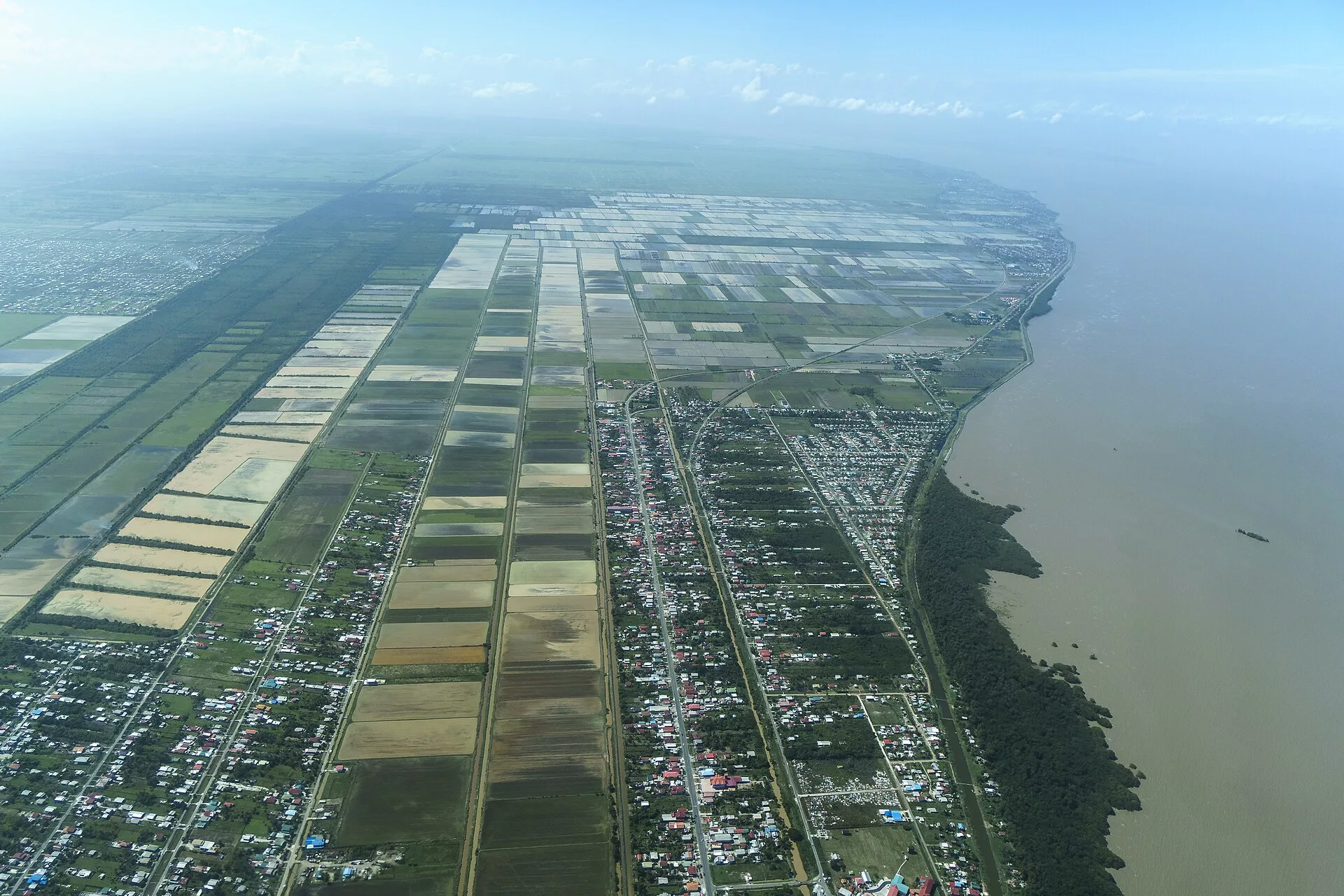
Guyana oil boom expats are remaking Georgetown: with roughly US$7.8 billion in oil revenue booked by mid-2026 and new projects coming online, the Guyanese capital has become South America’s most unusual expat posting.
For expats weighing an oil-and-gas posting — or nomads curious about the continent’s fastest-growing economy — here is what daily life in Georgetown actually looks like in 2026.
Key Facts
- The economy. Guyana has booked roughly US$7.8 billion in oil revenue by mid-2026, transforming a US$3.5 billion economy.
- The driver. Offshore oil production in the Stabroek block, with additional projects and a flagship Gas-to-Energy initiative in progress.
- The expat hub. Georgetown — a Caribbean-culture capital on South America’s northern coast.
- The workforce. A large and growing expatriate oil-industry community, concentrated in energy, logistics and services.
- The pressure point. Housing — rents in expat-preferred districts have risen sharply with the boom.
The Boom in Numbers
Guyana’s transformation is statistical before it is visible: from an economy of roughly US$3.5 billion to one booking some US$7.8 billion in oil revenue alone by mid-2026 — growth rates no other country on earth currently matches.
The pipeline keeps building: new production phases offshore, and the government-backed Gas-to-Energy project that ministers are now presenting to the local business community as the next leg of industrialization.
Where Expats Actually Work
The expatriate workforce concentrates in the offshore oil industry and its feeder sectors — engineering, logistics, marine services, catering, security — with most rotating through Georgetown between offshore shifts.
Beyond energy, the boom is pulling in construction, professional services and hospitality workers; English as the official language removes the region’s usual barrier for North American and Commonwealth expats.
Housing: The Real Scarcity
Georgetown’s housing market is the boom’s pressure valve: demand from energy companies and their contractors has pushed rents in the preferred districts well above regional norms, and quality stock remains thin.
Expat practice is company-negotiated leases or long-term hotel-apartment arrangements; independent renters should budget early and expect competition for the better properties.
Daily Life in Georgetown
The capital is Caribbean in culture and South American in geography — cricket, rum shops, reggae and soca alongside a coastal cityscape of wooden colonial architecture and canals.
Amenities lag the boom: imported goods carry premium prices, dining variety is improving but limited, and most expats socialize within work and community networks rather than a developed nightlife scene.
Safety and Practicalities
Georgetown requires normal big-city caution — petty crime exists, and the standard expat guidance (secure housing, vetted drivers, situational awareness at night) applies and is routinely provided by employers.
The practical wins are real: English everywhere, a US-dollar-linked business culture, direct Caribbean and North American flight connections, and a small-country administration that expats can actually navigate.
What the Boom Means for the Region
Guyana’s rise is reshaping the Guianas and the Caribbean basin — new infrastructure money, new air links and a new gravitational pull for workers from Trinidad, Suriname and beyond.
For nomads it is not (yet) a laptop destination; for professionals in energy and its orbit, it is currently one of the hemisphere’s most consequential postings.
The Contract Reality
Most expat packages in Georgetown are employer-driven: housing, security and transport are typically negotiated into contracts, and independent arrivals without that scaffolding face the market’s sharp edge.
Rotation patterns dominate — weeks offshore, weeks in the capital — which shapes everything from the rental market to the rhythm of the expat social scene.
Beyond the Capital
The boom’s effects ripple outward: interior infrastructure projects, new bridges and energy corridors are opening regions that were previously expedition territory.
For adventurous expats, weekends offer genuine frontier travel — Kaieteur Falls, the Rupununi savannahs — with a tourism industry still small enough to feel personal.
The Long View
Whether Georgetown becomes a durable expat hub depends on the boom’s second act — local content rules, the Gas-to-Energy buildout and whether services catch up with salaries.
For now, the honest summary is: extraordinary professional opportunity, thin lifestyle infrastructure, and a frontier feel that either thrills or exhausts, depending on the expat.
Company profiles: Banks DIH Limited · more in our LatAm Company Intelligence section.
Company profiles: Caribbean Container Inc. · more in our LatAm Company Intelligence section.
Company profiles: Citizens Bank Guyana Inc. · more in our LatAm Company Intelligence section.
Company profiles: City Jewelers and Pawnbrokers Limited · more in our LatAm Company Intelligence section.
Company profiles: Demerara Bank Limited · more in our LatAm Company Intelligence section.
Company profiles: Demerara Distillers Limited · more in our LatAm Company Intelligence section.
Company profiles: Demerara Tobacco Company Limited · more in our LatAm Company Intelligence section.
Company profiles: Guyana Bank for Trade and Industry Limited · more in our LatAm Company Intelligence section.
Company profiles: Guyana Stockfeeds Inc. · more in our LatAm Company Intelligence section.
Company profiles: Humphrey & Company Limited · more in our LatAm Company Intelligence section.
Company profiles: J.P. Santos & Company Limited · more in our LatAm Company Intelligence section.
Company profiles: National Bank of Industry & Commerce Ltd. · more in our LatAm Company Intelligence section.
Company profiles: Property Holdings Inc. · more in our LatAm Company Intelligence section.
Company profiles: Republic Bank (Guyana) Limited · more in our LatAm Company Intelligence section.
Company profiles: Rupununi Development Company Limited · more in our LatAm Company Intelligence section.
Company profiles: Sterling Products Limited · more in our LatAm Company Intelligence section.
Company profiles: Globe Trust & Investment Company Limited · more in our LatAm Company Intelligence section.
Company profiles: Guyana National Cooperative Bank · more in our LatAm Company Intelligence section.
Company profiles: Hand-in-Hand Group of Companies Limited · more in our LatAm Company Intelligence section.
Company profiles: Caricom Services Inc. · more in our LatAm Company Intelligence section.
Company profiles: Guyana National Industrial Company Limited · more in our LatAm Company Intelligence section.
Company profiles: Precision Auto Limited · more in our LatAm Company Intelligence section.
More: Latin America news in English, every day from The Rio Times.
Sources
CaribShout: Guyana’s oil boom — jobs, feeder industries and housing · Georgetown Chamber of Commerce & Industry: local content briefings
Frequently Asked Questions
Is Guyana a good expat posting in 2026?
For energy-sector professionals, yes — high demand, English-language environment and premium compensation packages; housing is the main constraint.
How big is Guyana’s oil boom?
The country had booked roughly US$7.8 billion in oil revenue by mid-2026, against a pre-boom economy of about US$3.5 billion.
Where do expats live in Georgetown?
In company-leased houses and apartments in the city’s preferred districts, or in long-stay hotel apartments; quality housing stock is limited and competitive.
Do you need Spanish or Portuguese in Guyana?
No — Guyana is South America’s only English-speaking country, which makes it uniquely accessible for anglophone expats on the continent.
Connected Coverage
More on the Guyanas: our coverage of the Guyana–Trinidad CARICOM ferry service and what it means for regional travel.
Sources: CaribShout, Georgetown Chamber of Commerce & Industry (consulted September 10, 2026).
This article was produced by The Rio Times’ automated newsroom system. How we use AI · Report an error · Editorial responsibility: Matthias Camenzind, Editor-in-Chief