Banco Inter Co-Founder Donated US$38,850 to Brazil’s PT Chief
Key Facts
-
—
What happened. Banco Inter co-founder Marcos Alberto Cabaleiro Fernandez gave R$200,000 (US$38,850) to PT president Edinho Silva’s 2026 campaign. -
—
How big. The same donor gave R$400,000 (US$77,700) to a PL candidate in Minas Gerais, for R$600,000 (US$116,550) total in 2026. -
—
Who it affects. Edinho Silva, president of the Workers’ Party (PT), is running for federal deputy in São Paulo state. -
—
What it means. The gift surfaced through Brazil’s mandatory electoral finance registry, run by the Superior Electoral Court (TSE). -
—
The catch. Cabaleiro Fernandez has a history of funding both left and right, including a PCdoB and a PL winner in 2022. -
—
What comes next. Brazilians vote in the first round of general elections on Oct. 4, 2026, with a runoff possible Oct. 25.
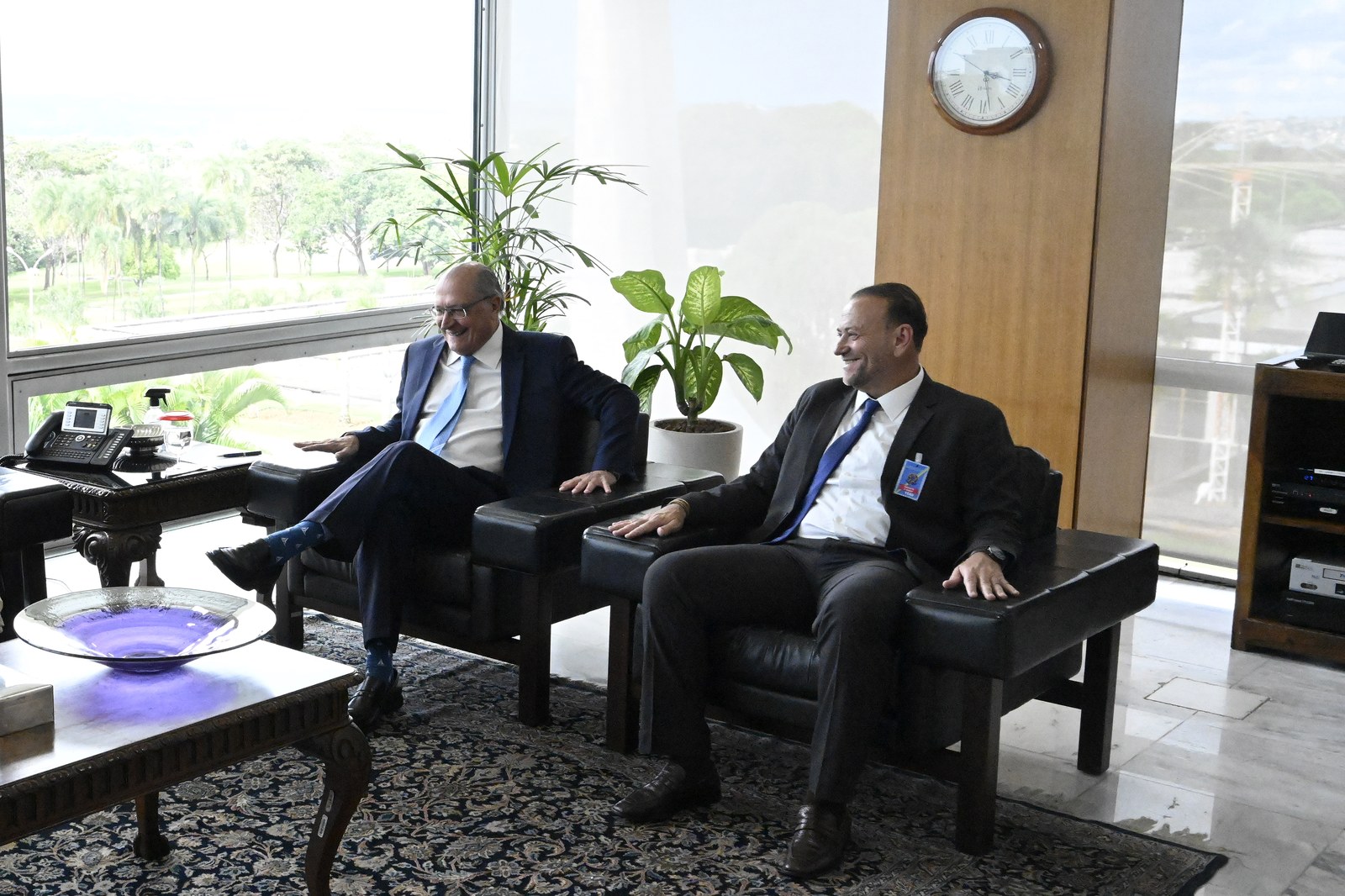
A co-founder of Banco Inter, one of Brazil’s largest digital banks, has donated to the campaign of Edinho Silva. Silva is president of the governing Workers’ Party, known by its Portuguese initials PT.
The gift totals R$200,000 (US$38,850) and is now public record in Brazil’s electoral finance database. It surfaced months before the country’s October general election.
The donor, Marcos Alberto Cabaleiro Fernandez, is tied to the Menin family business empire that built Banco Inter and homebuilder MRV Engenharia. Electoral disclosures reviewed by Brazilian outlets show he did not give only to the left.
A Donor Who Covers Both Flanks
Cabaleiro Fernandez also sent R$400,000 (US$77,700) to Flávio Roscoe, a right-wing Liberal Party (PL) candidate for governor of Minas Gerais. Combined, his declared 2026 donations reach R$600,000 (US$116,550), split almost evenly between Brazil’s two dominant political camps.
Political columnist Igor Gadelha, who first reported the donations for Metropoles, described the pattern as a bank founder “diversifying” his electoral bets. Brazilian campaign-finance researchers say the strategy is common among large donors seeking access regardless of who wins.
It is not a new habit for Cabaleiro Fernandez. In the 2022 cycle, he distributed roughly R$1.3 million (US$252,530) across several parties, the disclosures show.
Those recipients spanned Novo, União Brasil and Solidariedade, three parties with little ideological overlap. The spread again suggested access-seeking rather than partisan loyalty.
That year his money also reached Rogério Marinho, a PL politician now serving as a Senate coordinator for Flávio Bolsonaro’s political operation. A further donation went to Celinho do Sinttrocel, a PCdoB unionist elected to the Minas Gerais legislature.
Who Is Edinho Silva
Edinho Silva has spent four decades inside the Workers’ Party, joining in 1985. He served as mayor of Araraquara, in São Paulo state, and later as President Lula’s minister for social communication.
Party members elected him PT’s national president, a term running through 2029. He is now a candidate for federal deputy representing São Paulo, one of Brazil’s most competitive electoral battlegrounds.
Silva has positioned himself as a bridge between PT’s traditional base and more centrist allies. Colleagues describe his leadership style as pragmatic, favoring coalition-building over ideological confrontation.
His candidacy carries symbolic weight for the party heading into a tense national election. São Paulo alone elects dozens of federal deputies, making fundraising there unusually consequential for PT’s legislative bench.
How Brazil Tracks Campaign Money
Brazilian law requires every campaign donation above a small threshold to be filed with the Superior Electoral Court, or TSE. The filings are published on the court’s divulgacandcontas portal, searchable by donor, candidate or party.
The system exists partly because of Brazil’s history of undisclosed corporate financing in politics, which the country’s top court outlawed in 2015. Individual citizens may still donate, up to limits tied to their prior-year income.
Journalists and watchdog groups routinely mine the database each election cycle. Recent reporting found that just ten individual donors accounted for more than R$9 million (US$1.75 million) in identified 2026 contributions.
That concentration worries some campaign-finance scholars, who note that a handful of wealthy individuals can still shape multiple races at once. Brazil’s 2015 corporate-donation ban was meant to curb exactly that kind of influence.
Banco Inter’s Roots
Banco Inter began in 1994 as Intermedium, a financial arm founded by members of the Menin family to support their construction business. It later pivoted into consumer and middle-market lending before rebranding as Banco Inter and going public.
Cabaleiro Fernandez has been linked to that founding group and to Banco Intermedium’s early leadership. He has also run his own construction firms since the 1970s, alongside board seats tied to MRV.
MRV is the homebuilder that Rubens Menin, Banco Inter’s best-known founder, still leads today. The two men’s business paths have run in parallel for decades.
Banco Inter itself is not a party to Edinho Silva’s campaign filing. The donation is registered to Cabaleiro Fernandez as an individual, the standard channel for personal political giving in Brazil.
What It Means for the Race
For Edinho Silva, the donation is a modest but useful boost in a crowded São Paulo ballot. For Cabaleiro Fernandez, it fits a long pattern of hedging across ideological lines rather than backing one side outright.
Election analysts note that such dual-track giving rarely draws legal scrutiny on its own. Brazilian law restricts corporate donations but does not stop an individual from funding rivals in the same cycle.
The bigger test comes as the TSE finishes auditing 2026 filings ahead of the October vote. Any irregularities in reported amounts or donor eligibility can trigger fines or, in rarer cases, candidacy challenges.
For now, the R$200,000 gift stands as one line in a much larger ledger of Brazilian campaign finance. It nonetheless illustrates how deeply intertwined the country’s financial elite remains with politicians across the spectrum.
This article was produced by The Rio Times’ automated newsroom system. How we use AI · Report an error
Read More from The Rio Times