Argentina’s March of Anger Targets Milei Disability Cuts
Key Facts
Argentina’s president has spent a year refusing to apply two spending laws that Congress passed over his veto. On Saturday the left takes that fight to the street, days after his 2027 budget moved to repeal one of them.
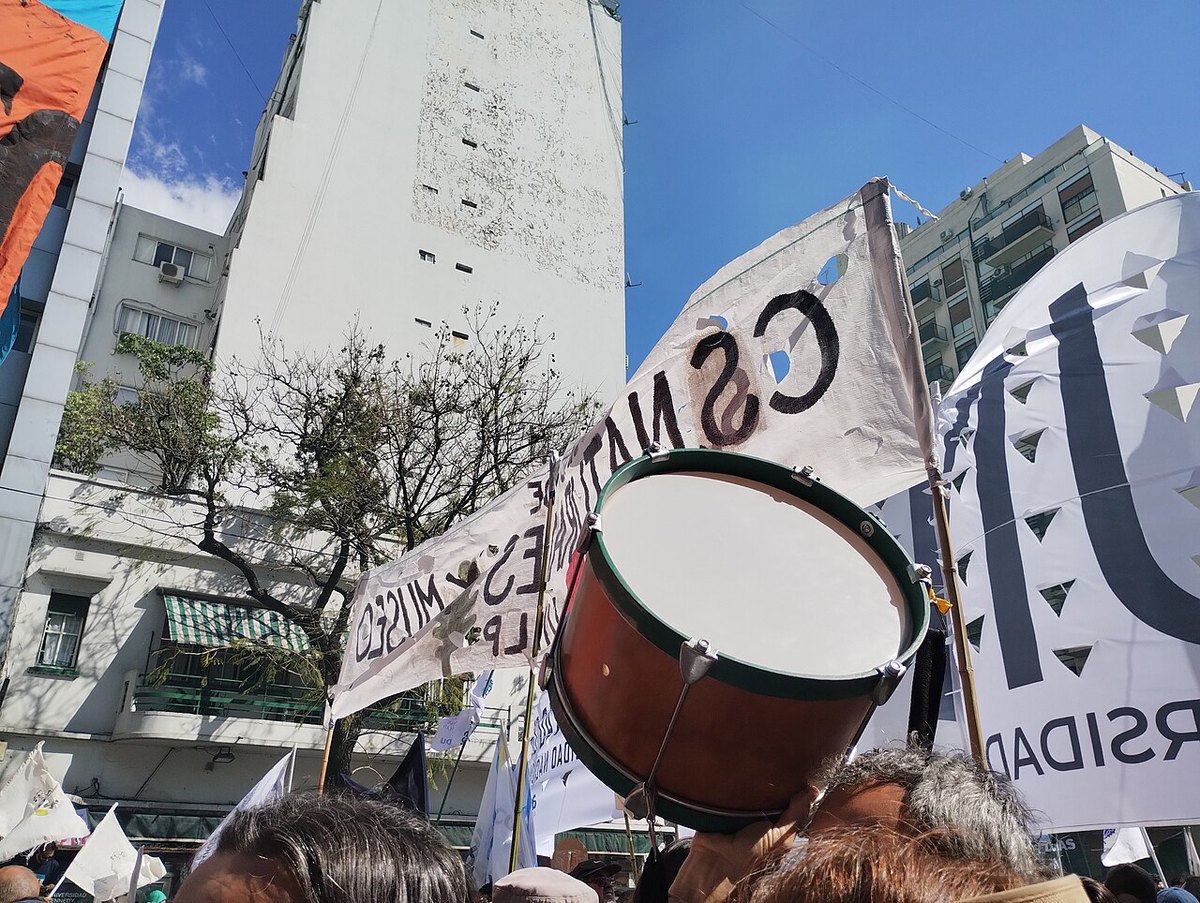
Left-wing parties, picket groups and grassroots unions are due to march on Saturday, 19 September 2026, against President Javier Milei. The Marcha de la Bronca, or March of Anger, runs from Congress to Plaza de Mayo, beside the presidential palace.
Why This Matters
Javier Milei, a libertarian economist, took office in December 2023 promising deep spending cuts to end chronic deficits. His 2027 budget, filed on 15 September, promises a fourth straight year of fiscal surplus, La Nación reported.
Two of the sharpest disputes over that austerity involve people with disabilities and public universities. In 2025, Congress passed a law for each group and then overrode Milei’s vetoes with two-thirds majorities.
The government promulgated both laws but suspended the parts that cost money, citing a lack of funding. Courts have since ordered it to apply the university law, and unions say it still has not complied.
The new budget now proposes repealing the disability emergency law outright, according to Infobae and La Nación. Saturday’s march is the first test of how much street support that confrontation still commands.
Milei’s party, La Libertad Avanza, won more than 40% of the vote in the October 2025 midterm elections, NPR reported. That result gave him enough seats in the lower house to make future vetoes much harder to override.
What the March Is and Who Is Behind It
The Buenos Aires column gathers at Plaza Congreso at 15:30 and marches along Avenida de Mayo, Infobae reported. Organisers announced gatherings in more than 30 other cities, including Rosario, Córdoba, Mendoza and Salta.
Leading figures include deputies Myriam Bregman and Nicolás del Caño of the Left Front, a Trotskyist alliance. Eduardo Belliboni of Polo Obrero, a movement of unemployed workers, is also among the organisers.
Bregman is widely seen as the idea’s main promoter, El Cronista reported. “We propose transforming anger into organisation and mobilisation,” she said, according to the same report.
Hospital workers from the Garrahan, Argentina’s leading children’s hospital, are expected to join, as are rank-and-file union branches. The CGT, the main union federation, and the CTA federations did not formally endorse the march, Infobae reported.
The joint closing document calls for higher wages and pensions, a ban on layoffs and repeal of the labour reform. It also calls for a national strike and a break with the IMF, the International Monetary Fund.
How Congress Overrode Milei, and Why the Laws Still Stalled
In Argentina, the president can veto a law, and Congress can insist on it with two-thirds of each chamber. The disability emergency law, Law 27.793, cleared that bar in the Chamber of Deputies in August 2025.
Deputies voted 172 to 73 to reject the veto, the legal portal Palabras del Derecho reported. The Senate followed on 4 September 2025 by 63 votes to 7, according to the Senate’s own press office.
El Cronista described it at the time as the first time the opposition had overturned one of his vetoes. The university funding law, Law 27.795, followed the same path, with both chambers overriding his veto by October 2025.
The government then invoked Law 24.629, which requires every spending law to name its source of funding. Decree 681/2025 promulgated the disability law but suspended it until funding is written into the budget, Chequeado reported.
A separate decree suspended the pay and scholarship articles of the university law on the same grounds. Critics call this a way to ignore Congress, while the government says it is protecting the budget balance.
The Fight Over Disability Pensions
Argentina pays non-contributory disability pensions, benefits that do not depend on past social security contributions. A total of 1,148,484 people received one in March 2026, according to figures cited by Perfil.
In April the pension was worth 266,000 pesos a month (about US$176), plus a 70,000-peso bonus (about US$46). From 2024 the national disability agency, ANDIS, audited recipients and suspended 65,789 pensions, Chequeado reported in August 2025.
The same report found that 46% of the audit letters had never reached their recipients. The agency was later hit by leaked audio in which its former head, Diego Spagnuolo, allegedly discussed bribes.
The allegations became a judicial case, and the reports reviewed by The Rio Times show no conviction. On 4 September 2026, officials told deputies that about 150,000 cancelled pensions had been restored with back pay, El Litoral reported.
The 2027 budget would require a medical finding that a person cannot work, instead of a disability certificate. It would also end automatic inflation updates for disability service fees, La Nación reported.
Service providers say they are owed more than 340 billion pesos (about US$225 million) in emergency compensation, according to La Nación. Even allies were surprised, with the centre-right PRO bloc saying the proposal “completely changes the discussion”.
The Fight Over University Funding
The dispute centres on the pay of lecturers and staff, and on student grants. Law 27.795 orders the state to restore staff salaries lost to inflation since December 2023 and to update student grants.
A federal appeals court confirmed an injunction to that effect on 31 March 2026, Diario de Cuyo reported. The Supreme Court then rejected the government’s final appeal in late June, El Ágora and Nota al Pie reported.
Unions say salaries still trail inflation by about 32.5% since Milei took office, according to Actualidad a Diario. At talks on Thursday, 17 September, the government offered 3% for September and 3% for October, and all unions rejected it.
The 2027 budget allots 7.3 trillion pesos (about US$4.8 billion) to national universities, Telégrafo reported. The national council of university rectors had asked for about 11 trillion pesos (US$7.3 billion).
Teaching unions called strikes for 18 and 22 September and a fifth national university march for 15 October. In Buenos Aires, the October march will head to the federal courts to press for compliance, Telégrafo reported.
The Government’s Case
The government argues that Argentina’s recovery depends on never again spending money it does not have. Milei told his cabinet that “populism cannot be beaten with more populism”, La Nación reported.
On disability, officials say the pension system was riddled with fraud, including non-existent addresses and unmet medical requirements. Its April bill on the issue was titled the law “against disability pension fraud”, El Cronista reported.
The Security Ministry said it will apply its protocol against road blockades, with reinforced fencing at Congress and Plaza de Mayo. “Marching peacefully is a right, violence is not,” the ministry said, warning that those who cause damage will face consequences.
What It Means If You Live in or Invest in Argentina
For residents of Buenos Aires, expect traffic closures around Congress, Avenida de Mayo and Plaza de Mayo on Saturday afternoon. The university strike on 22 September and the march on 15 October will disrupt classes, including for exchange students.
For investors, the budget’s surplus targets depend partly on keeping disability and university spending below what the laws require. Court orders and Congress could force higher spending, so the fiscal path is less certain than the budget suggests.
Families using disability services should watch the budget debate, because it would change how fees and pensions are set. Conversions here use the central bank’s reference rate of 1,512.33 pesos per dollar for 18 September 2026 (BCRA Communication A 3500).
What Is Not Yet Known
It is not known how many people will join the march, and organisers expect several tens of thousands. It is not known whether Congress will approve the repeal of the disability emergency law in the 2027 budget.
The exact amount the government owes universities under the court orders remains disputed. The disability emergency is due to expire on 31 December, and its successor regime is undecided.
It is not yet clear whether the CGT will call a general strike, as the marchers demand. The judicial investigation into the alleged disability agency bribes has not reached a verdict.
Frequently Asked Questions
Why does this march matter?
It tests public support for resisting Milei’s cuts to disability benefits and universities. It comes days after his 2027 budget proposed repealing the disability emergency law.
What is the Marcha de la Bronca?
It is a protest against Milei called by left-wing parties, picket groups and grassroots unions. The main march runs from Congress to Plaza de Mayo on 19 September 2026.
Did Congress not already pass these laws?
Yes, and it overrode Milei’s vetoes in 2025. The government then suspended the costly parts, saying Congress had not named a funding source.
What happens to disability pensions now?
Nothing changes until Congress votes on the 2027 budget. The proposal would tie pensions to an inability to work, not a disability certificate.
Sources: Infobae, march details, organisers and demands, Infobae, route and anti-blockade protocol, Infobae, the march’s closing document, El Cronista, Bregman’s role, La Nación, 2027 budget and the disability law, La Nación, main axes of the 2027 budget, Infobae, plan to repeal the disability emergency law, Argentine Senate, veto override on Law 27.793, Palabras del Derecho, Deputies’ override vote, Chequeado, Decree 681/2025 suspends the disability law, Chequeado, the disputed disability pension audits, El Litoral, 150,000 pensions restored, Perfil, disability pension bill in five figures, El Cronista, the government’s pension fraud bill, Diario de Cuyo, appeals court on the university law, El Ágora, Supreme Court ruling on universities, Nota al Pie, university law history and non-compliance, Actualidad a Diario, failed university pay talks, Telégrafo, university strikes and budget, NPR, Milei’s October 2025 midterm win, BCRA, reference exchange rate Communication A 3500
This article was produced by The Rio Times’ automated newsroom system. How we use AI · Report an error
In depth
Read More from The Rio Times