IBOV 187,206.89 ▼ 0.56% IPSA 11,220.60 ▼ 0.16% IPC MEX 63,924.77 ▼ 0.28% MERVAL 3,098,898 ▼ 1.87% COLCAP 2,589.69 ▼ 1.41% BVL PERÚ 59,373.28 ▼ 0.32% USD/BRL5.13— 0.00% USD/MXN16.96▼ 0.14% USD/CLP941.13— 0.00% USD/COP3,077▼ 0.78% USD/PEN3.35▼ 0.01% USD/ARS1,509— 0.00% USD/UYU40.26▲ 3.12% USD/PYG5,903▲ 3.35% USD/BOB11.98▼ 2.70% USD/DOP58.96▲ 0.56% USD/CRC447.55▲ 1.64% USD/GTQ7.63▲ 2.97% USD/HNL26.85▲ 3.13% USD/NIO36.62— 0.00% USD/VES830.41▼ 1.28% USD/PAB1.00— 0.00% USD/BZD2.00— 0.00% USD/JMD 157.28 — 0.00% USD/TTD6.74▲ 2.35% EUR/BRL5.95▲ 0.25% BRENT 88.88 ▼ 0.03% WTI 83.11 ▼ 0.11% IRON ORE 161.91 — — COPPER 6.61 ▲ 0.03% GOLD 4,461 ▲ 1.78% SILVER 65.59 ▲ 1.26% SOY 1,184 ▲ 3.20% CORN 480.50 ▲ 10.02% WHEAT 655.00 ▲ 3.93% COFFEE 317.25 ▼ 5.51% SUGAR 16.43 ▼ 1.79% ORANGE JUICE 138.55 ▼ 0.47% COTTON 85.03 ▲ 2.33% COCOA 5,719 ▲ 3.18% BEEF 223.60 ▼ 3.93% CATTLE 339.10 ▼ 3.16% LITHIUM 75.20 ▲ 1.47% PETR4 41.64 ▼ 0.05% VALE3 72.97 ▲ 0.83% ITUB4 38.60 ▼ 1.03% BBDC4 16.85 ▲ 0.36% ABEV3 14.89 ▼ 0.80% BBAS3 19.37 ▲ 0.47% B3SA3 14.26 ▼ 0.21% WEGE3 47.59 ▲ 0.49% PRIO3 59.14 ▼ 0.19% SUZB3 41.33 ▲ 2.35% RENT3 34.68 ▼ 0.09% AZZA3 15.89 ▼ 2.63% CSAN3 3.22 ▼ 1.83% RAIZ4 0.25 — 0.00% PCAR3 2.75 ▼ 0.36% GMAT3 3.65 ▼ 1.08% PSSA3 48.13 ▼ 0.54% CVCB3 1.33 ▼ 2.92% POSI3 3.36 ▲ 2.44% SLCE3 13.34 ▲ 0.30% NATU3 8.14 ▼ 0.73% IBOV 187,206.89 ▼ 0.56% IPSA 11,220.60 ▼ 0.16% IPC MEX 63,924.77 ▼ 0.28% MERVAL 3,098,898 ▼ 1.87% COLCAP 2,589.69 ▼ 1.41% BVL PERÚ 59,373.28 ▼ 0.32% USD/BRL 5.16 ▲ 0.01% USD/MXN 17.06 ▼ 0.24% USD/CLP 913.98 ▲ 0.04% USD/COP 3,140 ▲ 0.03% USD/PEN 3.36 ▼ 0.66% USD/ARS 1,493 ▲ 0.10% USD/UYU 40.27 ▲ 1.24% USD/PYG 5,939 ▲ 1.68% USD/BOB 11.64 ▼ 0.76% USD/DOP 58.34 ▲ 1.25% USD/CRC 445.92 ▲ 0.89% USD/GTQ 7.62 ▲ 2.21% USD/HNL 26.79 ▲ 1.57% USD/NIO 36.62 ▲ 0.69% USD/VES 762.44 ▼ 0.13% USD/PAB 1.00 — 0.00% USD/BZD 2.00 — 0.00% USD/JMD 157.28 — 0.00% USD/TTD 6.70 ▲ 0.61% EUR/BRL 5.95 ▲ 1.01% BRENT 88.88 ▼ 0.03% WTI 83.11 ▼ 0.11% IRON ORE 161.91 — — COPPER 6.61 ▲ 0.03% GOLD 4,461 ▲ 1.78% SILVER 65.59 ▲ 1.26% SOY 1,184 ▲ 3.20% CORN 480.50 ▲ 10.02% WHEAT 655.00 ▲ 3.93% COFFEE 317.25 ▼ 5.51% SUGAR 16.43 ▼ 1.79% ORANGE JUICE 138.55 ▼ 0.47% COTTON 85.03 ▲ 2.33% COCOA 5,719 ▲ 3.18% BEEF 223.60 ▼ 3.93% CATTLE 339.10 ▼ 3.16% LITHIUM 75.20 ▲ 1.47% PETR4 41.64 ▼ 0.05% VALE3 72.97 ▲ 0.83% ITUB4 38.60 ▼ 1.03% BBDC4 16.85 ▲ 0.36% ABEV3 14.89 ▼ 0.80% BBAS3 19.37 ▲ 0.47% B3SA3 14.26 ▼ 0.21% WEGE3 47.59 ▲ 0.49% PRIO3 59.14 ▼ 0.19% SUZB3 41.33 ▲ 2.35% RENT3 34.68 ▼ 0.09% AZZA3 15.89 ▼ 2.63% CSAN3 3.22 ▼ 1.83% RAIZ4 0.25 — 0.00% PCAR3 2.75 ▼ 0.36% GMAT3 3.65 ▼ 1.08% PSSA3 48.13 ▼ 0.54% CVCB3 1.33 ▼ 2.92% POSI3 3.36 ▲ 2.44% SLCE3 13.34 ▲ 0.30% NATU3 8.14 ▼ 0.73%
since 2009
Sunday, September 13, 2026

Brazil Latin America

Argentina Creates South America’s First Center for Complex Cancers

By · July 21, 2019 · 3 min read

The LatAm Brief

One email, every weekday morning. What moved in Latin American markets, politics and expat life.

Yesterday’s subject line: “'The false peace is over' - Colombia”

Free. We send a confirmation link first — nothing arrives until you click it. Unsubscribe with one click in any edition. If you stop opening us for 30 days we stop sending by ourselves, as we assume the interest is no longer there. See our privacy policy. We never share your email.

RIO DE JANEIRO, BRAZIL – The new Argentine Proton Therapy Radiotherapy Center, also called  “the bunker”, will be built on the grounds of the Ángel Roffo Oncology Institute, under the University of Buenos Aires (UBA), in the Agronoma neighborhood.

The University of Buenos Aires is a public research university in Buenos Aires. Established in 1821, it is the premier institution of higher learning in the country and one of the most prestigious universities in South America. It has educated seventeen Argentine presidents, produced four of the country’s five Nobel Prize laureates, and is responsible for approximately forty percent of Argentina’s research output.

The cancer center is focusing on the treatment of tumors located in areas that are difficult to access, such as the base of the skull, or infrequent and complex pediatric cancers, in addition to research. Unlike conventional radiation therapy, proton beams are more concentrated in tumors, with minimal radiation to surrounding tissues and fewer adverse effects.

Proton radiotherapy equipment, as opposed to photons of conventional radiotherapy — which requires facilities with special safety measures –, had been acquired from a foreign company between 2014 and 2015, but only paid for last year.

The acquisition was a purchase commitment, in which the Federal Planning Ministry commanded by Julio De Vido, negotiated with the Belgian company Ion Beam Applications (IBA).

It is estimated that the construction works for the new high-tech center will be finished next year.
One-stop reference
Company Intelligence
Every listed company in Latin America — financials, ownership and structure for 1,450+ companies across 26 exchanges, in one place.
Browse the directory →
RT
Ask Rio Times
This story and the bigger picture.
Open the full Ask Rio Times →

According to UBA, the total cost of the project, which will cover the National Atomic Energy Commission (CNEA), is US$44.8 (R$170) million. Both institutions will jointly manage the new center when it is completed.

The first structure, the physical space where patients receive therapy, and its particle accelerator (cyclotron), which produces the beam of protons to irradiate the tissue where the tumor is, will arrive in November 2019, according to the UBA.

“The new center will include a proton therapy kit consisting of a cyclotron and two treatment rooms, plus an experimental research room, a state-of-the-art clinical linear accelerator, a diagnostic magnetic resonator, and the nation’s first CyberKnife [for high-precision robotic radiosurgery]. The equipment will allow radiotherapy and radiosurgery treatment of head, neck and eye tumors, in addition to its application in pediatrics, as it is a type of radiotherapy with fewer undesirable side effects,” they added speaking to media outlet La Nación.
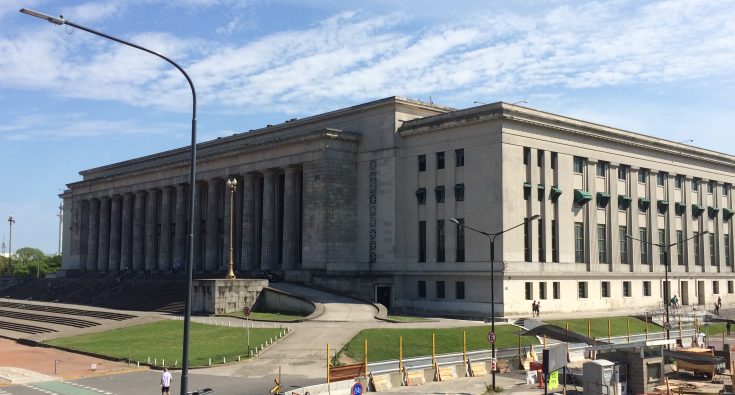
The University of Buenos Airesis a public research university in Buenos Aires, Argentina. Established in 1821, it is the premier institution of higher learning in the country and one of the most prestigious universities in the region.
The University of Buenos Aires is a public research university in Buenos Aires, Argentina. Established in 1821, it is the premier institution of higher learning in the country and one of the most prestigious universities in the region.

Alberto Barbieri, Rector of the national university, highlighted “the great national and regional impact” that the project will have located on the Roffo Institute campus for public health. “In our hospitals, we are preparing doctors and specialists for the future,” he said.

UBA not only has the most important cancer institute in Argentina, it is also a reference in Latin America. Now, with this highly complex center, it will have a new space for research and preparation of its doctors to increase the physical and medical residencies to continue strengthening the practice and research in this area so sensitive to the health of the South American population.

According to the first agreement signed in May 2015, CNEA was to execute the construction works in an area of 3,500 square meters, in addition to the construction of a new biotherium to move the one that was in the sector where the new center will operate.

By an extension signed in March last year, the original work was extended to about 4,000 square meters to install a second gantry, an experimental room, a magnetic resonator, and a linear accelerator.

Now, as promised, the project will have the first stage of construction by December, with a second phase throughout next year.
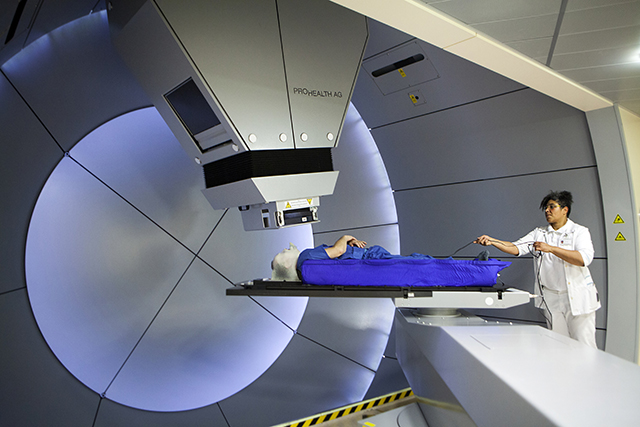
A patient in Germany undergoes proton therapy.

“This high-cost technology is only available in eighty centers around the world, located mostly in the United States, Canada, Europe, and Asia. Thanks to this Argentinian initiative, it will also be available in South America from mid-2021,” said the Rector of UBA. In Europe, there are already 21 centers in operation, thirteen under construction, and nine projects approved.

Read More from The Rio Times

The Rio Times · Power Map
See who really holds power in Latin America
Click to open the Power Map

Rotate for Best Experience

This report is optimized for landscape viewing. Rotate your phone for the full experience.