Argentina Plans a US$2.8 Billion Defence Budget, Mostly for Upkeep
Key Facts
Argentina has spent less on defence than its neighbours for years while trying to rebuild its forces. Its 2027 budget shows that most of the money is not for new weapons.
The 2027 draft budget assigns the Defence Ministry the equivalent of about US$2.833 billion, Infodefensa reported on 20 September. Most of it covers readiness, training, health care and maintenance rather than new equipment.
Why It Matters
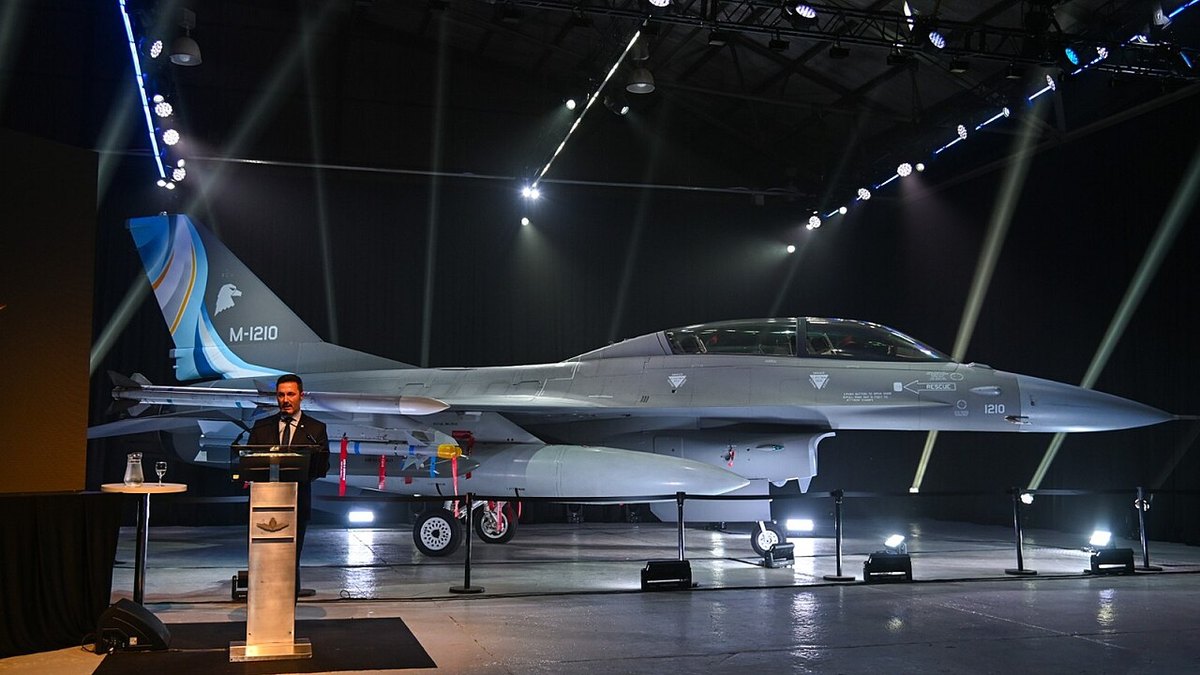
President Javier Milei’s government is adding F-16 fighters and has agreed to buy 235 Stryker armoured vehicles. In August, iProfesional reported that about 50 Strykers were due by the end of 2026.
The Rio Times reported last week on the budget’s US$3.5 billion loan for submarines and frigates. The breakdown shows how little room is left for such programmes.
The rearmament starts from a low base, because the air force retired its last Mirage fighters on 30 November 2015. Denmark agreed to transfer 24 used F-16s under a letter of intent signed on 26 March 2024.
The first six jets arrived from December 2025, with three more batches of six due by 2028. The navy lost the submarine ARA San Juan with all 44 crew on 15 November 2017.
Defence Minister Carlos Presti signed the Stryker agreement with US ambassador Peter Lamelas in August, iProfesional reported. The army had already received eight Strykers between December 2025 and February 2026, for about US$9 million.
Where the Money Goes
The army receives the largest share, about US$1.391 billion, Infodefensa said. Its lines name no specific purchase by model or system, so Stryker costs are not itemised there.
Operational readiness takes US$802 million of the army’s total, and training US$215 million. The money pays for 40 days of garrison training, 17 days in the field and four combined exercises.
The navy has about US$707 million, including roughly US$20.4 million for four light helicopters. It plans 200 days at sea, 2,700 flight hours and 584 search-and-rescue cases in 2027.
The air force gets about US$564 million and aims to add six F-16s in 2027. About US$5.5 million goes to F-16 infrastructure at Tandil and at the Río Cuarto maintenance area.
Central administration and the Joint Staff share the remaining US$171 million, Infodefensa said. That block includes about US$12.5 million for logistics support to Argentina’s Antarctic campaigns.
The navy’s readiness line is US$348 million, and the air force’s is US$292 million. The air force targets 98,300 hours of operation and 30 exercises, Infodefensa reported.
The Warship Loan Sits Outside the Budget
Article 42 of the bill lets the executive seek loans of up to US$3.5 billion for new warships, Infodefensa reported. The plan sets aside US$2.3 billion for three conventional submarines and US$1.2 billion for two multi-mission frigates.
The submarines are linked to the Mar del Plata naval base and the frigates to Puerto Belgrano. The US$3.5 billion warship loan exceeds the whole defence budget by about US$667 million.
It is outside 2027 spending and still needs approval and financing. Pucará said the purchases depend on obtaining that financing at reasonable rates.
A Smaller Budget in Real Terms
Pucará Defensa, a specialist site, put the sector’s total at 8.07 trillion pesos (US$5.33 billion). That compares with 6.72 trillion pesos (US$4.45 billion) in 2026, a nominal rise of 20%.
Pucará said the increase trails inflation of about 33% between the two budgets. Salaries take 4.28 trillion pesos (US$2.83 billion) and social security 2.82 trillion pesos (US$1.86 billion).
Together, pay and pensions absorb about 88% of the sector’s total, by Rio Times arithmetic. Capital spending gets 166.5 billion pesos (US$110.1 million), or about 2% of the total.
The two outlets use different scopes and exchange rates, so their totals are not directly comparable. Peso conversions here use the BCRA reference rate of 1,512.33 pesos per dollar for 18 September 2026.
What the Budget Leaves Out
No new funds are assigned to the Ushuaia integrated naval base, according to both Infodefensa and Pucará. Pucará said the navy puts that base’s total cost at about US$300 million, with roughly 30% already assigned.
Pucará also found no money for announced programmes such as Unimog trucks, ARAD rifles or Atmos artillery. It did list 27.9 billion pesos (US$18.5 million) to restore military ramp services at 15 air force sites.
Infodefensa noted that in 2025 the forces fell short of targets because of missing supplies and resources. Budget lines alone therefore do not guarantee that planned training and flying hours will happen.
The government frames the spending under Plan ARMA, its military re-equipment plan. That plan earmarks 10% of proceeds from sales or leases of state assets for military modernisation.
It also returns 70% of revenue from selling specific military assets to the defence sector, Infodefensa said. Pucará flagged 3 billion pesos (US$2 million) for a family of army scout vehicles, a very small sum.
It said options under study include the Guaicurus, the Oshkosh JLTV and Milkor designs. At that price, Pucará suggested, the army could buy only surplus vehicles or a tiny first batch.
How Argentina Compares
Brazil spent about US$23.9 billion on its military in 2025, or 1.1% of GDP, according to SIPRI data. SIPRI is the Stockholm International Peace Research Institute, which tracks global military spending.
Argentina does not appear among SIPRI’s 40 largest spenders for 2025. The Brazilian figure uses SIPRI’s broad definition, so it is not a like-for-like match with Argentina’s ministry budget.
Beyond the Defence Ministry
The Security Ministry gets 20 billion pesos (US$13.2 million) to restore six Airbus H125 helicopters of the Gendarmerie, Pucará reported. The Gendarmerie is Argentina’s militarised border and national police force.
The space agency CONAE keeps funding for the SARE IIA and Saocom 2 satellite programmes. The budget also funds work on the Tronador II and Tronador III launch vehicles, both outlets reported.
What It Means If You Follow Argentina
For investors, the budget confirms that fiscal discipline still comes before rearmament. US suppliers gain from the F-16 and Stryker deals, but large new orders depend on outside financing.
For Argentines, the numbers show forces focused on keeping existing units running rather than expanding. Anyone tracking the warship plan should watch Congress, because article 42 needs its approval first.
Shipbuilders hoping to supply the frigates or submarines face a long approval and financing process. Taxpayers should note that pay and pensions, not hardware, drive most of the sector’s cost.
What Is Not Yet Known
The documents reviewed do not state defence spending as a share of GDP. It is not clear how the Stryker purchase will be paid for in 2027.
No lender or shipyard has been named for the submarines and frigates. It is not known whether Congress will change the defence lines during the budget debate.
Frequently Asked Questions
Why does Argentina’s defence budget matter?
Milei is buying F-16s and Strykers while keeping a fiscal surplus. The budget shows how little money is left for new weapons.
How much will Argentina spend on defence in 2027?
The draft budget assigns the Defence Ministry about US$2.833 billion, Infodefensa reported. Congress has yet to approve it.
Are the submarines and frigates in the defence budget?
No. A separate article allows loans of up to US$3.5 billion, which still need approval and financing.
Does the budget rise in real terms?
No. Pucará Defensa said the nominal rise of 20% trails inflation of about 33% between the two budgets.
Sources: Infodefensa, Argentina plans US$2.833 billion for defence in 2027, Pucará Defensa, 2027 defence budget in pesos, iProfesional, 235 Stryker vehicles for the army, BCRA, reference exchange rate Communication A 3500, Wikipedia, Argentine Air Force: Mirage retirement and F-16 transfer, Wikipedia, ARA San Juan (S-42), Wikipedia, SIPRI military expenditure list
This article was produced by The Rio Times’ automated newsroom system. How we use AI · Report an error
Read More from The Rio Times