Angélique Kidjo Becomes First African Musician on Hollywood Walk of Fame
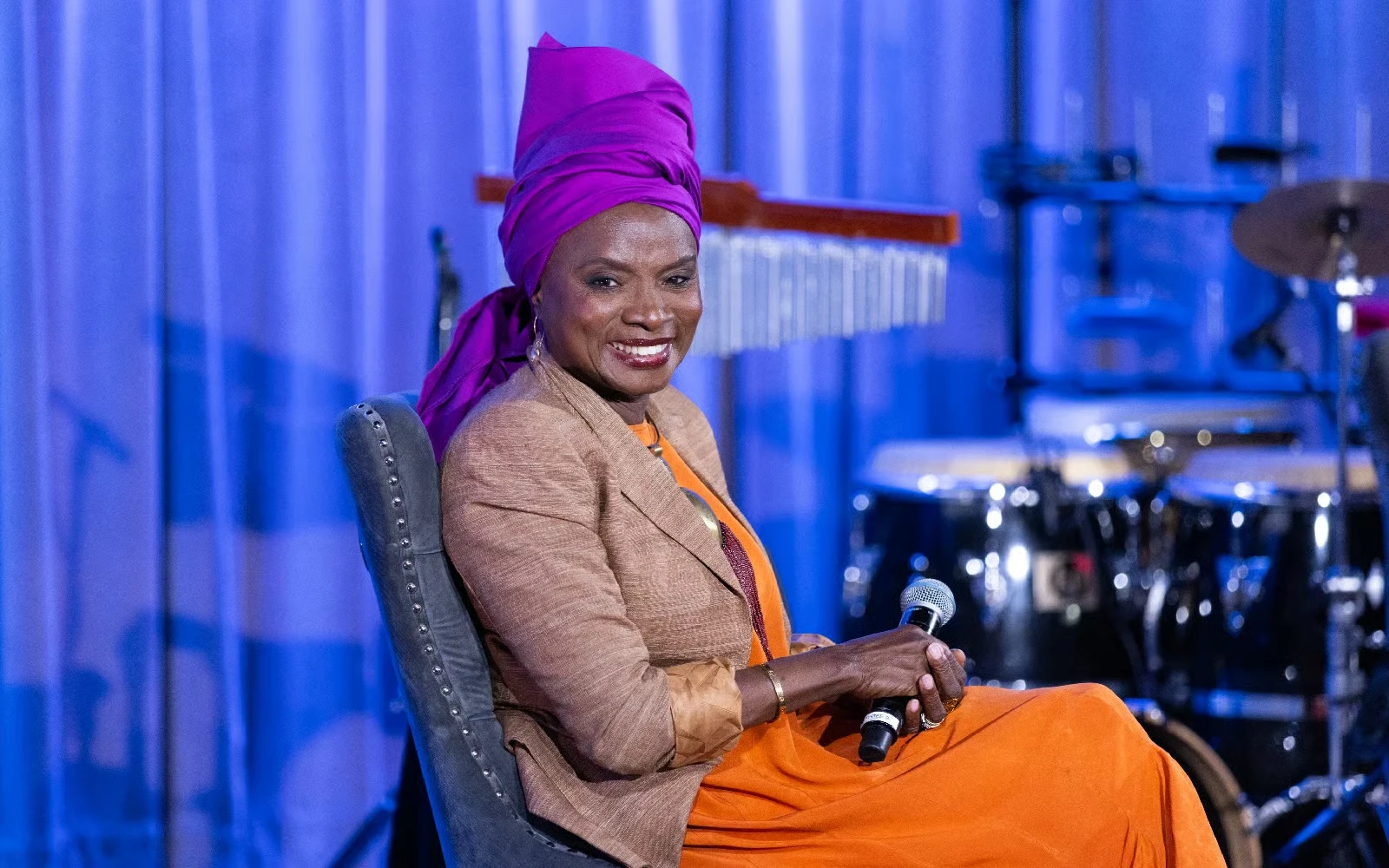
Benin · CULTURE
Key Facts
—The ceremony: Angélique Kidjo receives her star on Tuesday 18 August 2026 at 11:30 a.m. Pacific Time at 7011 Hollywood Boulevard.
—The historic first: Kidjo is the first African musician and first Black African performer to be honoured on the Hollywood Walk of Fame.
—The star number: She receives the 2,854th star, in the Recording category, selected by the Hollywood Chamber of Commerce as part of the Class of 2026.
—The speakers: Variety’s Angelique Jackson hosts, with actor Willem Dafoe and Recording Academy chief executive Harvey Mason Jr. scheduled to speak.
—The delegation: Benin sends an official delegation including Minister of Culture, Arts and Heritage Yassine Latoundji and Ambassador to the United States Agniola Ahouanmenou.
—The artist: Kidjo is a five-time Grammy Award winner with 18 albums across more than four decades, blending West African traditions with R&B, funk, jazz and gospel.
Angélique Kidjo receives a star on the Hollywood Walk of Fame on 18 August 2026, becoming, the Hollywood Chamber of Commerce says, the first African musician to earn the honour in the Walk’s 66-year history. The ceremony marks a cultural milestone for Benin and a soft-power moment for African creative industries on a global stage.
A Hollywood Walk of Fame first for Africa
The Beninese-French singer-songwriter receives the 2,854th star on the Hollywood Walk of Fame, in the Recording category. The unveiling takes place at 7011 Hollywood Boulevard, opposite the Hollywood Roosevelt Hotel, and is free to the public.
The Hollywood Chamber of Commerce selected Kidjo as part of the Class of 2026, announced around 2–3 July 2025 after the Walk of Fame board met on 25 June 2025. The class includes Miley Cyrus, Timothée Chalamet, Demi Moore, Shaquille O’Neal and Deepika Padukone.
The Hollywood Chamber of Commerce says Kidjo is the first African musician and the first Black African to receive a star. Other African-born honourees include the Johannesburg-born actor Basil Rathbone, who received three stars in February 1960, and Charlize Theron, whose star was unveiled in September 2005.
The ceremony is live-streamed globally via the official Walk of Fame platform. Actor Willem Dafoe and Harvey Mason Jr., chief executive officer of the Recording Academy, are scheduled to speak.
Benin turns a personal honour into national branding
The government of Benin is sending an official delegation to Los Angeles, including Minister of Culture, Arts and Heritage Yassine Latoundji and Ambassador to the United States Agniola Ahouanmenou. The state is treating the star as a nation-branding asset, not merely a personal achievement.
President Romuald Wadagni publicly congratulated Kidjo on 17 August 2026, calling the star a “national pride” and announcing the delegation. The government statement emphasised that Kidjo has “carried the image of Benin high on the international stage for forty years.”
This fits a regional pattern in which governments deploy globally famous artists as cultural ambassadors to attract tourism, foreign investment and diplomatic attention. Benin, a relatively small West African economy, is using Kidjo’s star to tie her personal brand to the state’s image.
Four decades of music, Grammys and advocacy
Kidjo is a five-time Grammy Award winner, recognised in the Best World Music and Global Music categories, among others. In 2023, she received the Polar Music Prize, one of the world’s most prestigious music honours.
Across more than four decades and 18 albums, she has blended West African traditions with R&B, funk, jazz and gospel. Her career pre-dates and helps legitimise the current African music boom, positioning African music as a sustainable, cross-generational business rather than a short-lived trend.
Kidjo is also a longtime United Nations Children’s Fund (UNICEF) Goodwill Ambassador and Oxfam campaigner. Her activism reinforces the framing of the star as validation of an African public intellectual and humanitarian on a United States cultural stage.
The commercial and institutional stakes
A Walk of Fame star materially enhances an artist’s brand equity, reinforcing leverage in touring and festival fees, brand endorsements and catalogue valuation. For Kidjo, the star consolidates her position as a heritage act within world music and global pop, likely increasing the long-term commercial value of her recordings and publishing rights.
The presence of Harvey Mason Jr. at the ceremony links the moment to the Grammys’ evolving relationship with African music. It creates a clear bridge between United States music institutions and African creative capital.
Global labels and streaming platforms can use Kidjo’s star in investor and marketing narratives as evidence that their African catalog is central to the future of global music. The ceremony’s live-streaming underscores the digital monetisation layer: global audiences watching a Hollywood event celebrating an African artist via United States digital infrastructure.
Culture as geopolitical terrain in the new scramble
Great powers increasingly treat African culture as a strategic asset. Hollywood, the Grammys and United States streaming platforms are deepening commercial ties with African artists, from distribution deals to co-productions and festival circuits.
Kidjo’s Franco-Beninese identity places her at the crossroads of European and African soft power. France benefits from her success in debates over cultural diversity, while Benin claims her as a national icon.
Each high-profile recognition in Western institutions can be interpreted by policymakers as part of the competitive landscape: who frames African narratives, who distributes African content, and which capital cities become gateways for African talent. This dynamic sits squarely within the broader contest over cultural influence and creative industries covered in Africa: The New Scramble.
What to watch next
Kidjo put it this way: “I may be the first African female singer to have a star on the Hollywood Walk of Fame, but I am convinced that I will not be the last.” The statement signals a generational opening rather than an isolated achievement.
The fact that it took until 2026 for the first Black African performer to be added to a Walk of Fame established in 1960 highlights long-standing structural exclusions. Kidjo’s induction partially corrects this, but also raises questions about pace and criteria: whose artistic contributions qualify as global, and who gets institutional recognition.
For Benin, the star offers proof of concept for investment in music education, cultural infrastructure and tourism campaigns tied to Kidjo’s hometown of Ouidah. For the wider African music industry, it is a credential that embeds non-United States artists into the canon of mainstream American entertainment.
When does Angélique Kidjo receive her Hollywood Walk of Fame star?
Angélique Kidjo receives her star on Tuesday 18 August 2026 at 11:30 a.m. Pacific Time at 7011 Hollywood Boulevard.
What historic first does Angélique Kidjo achieve with this star?
She becomes the first African musician and first Black African performer to be honoured on the Hollywood Walk of Fame.
Which star number does Angélique Kidjo receive?
She receives the 2,854th star on the Walk of Fame, in the Recording category, as part of the Class of 2026.
Connected Coverage
For more on how culture, influence and great-power competition intersect across the continent, read Africa: The New Scramble.
Sources
This article was produced by The Rio Times’ automated newsroom system. How we use AI · Report an error · Editorial responsibility: Matthias Camenzind, Editor-in-Chief
LatAm Markets: Live Signals → — real-time movers, turnover leaders and FX across Latin America.