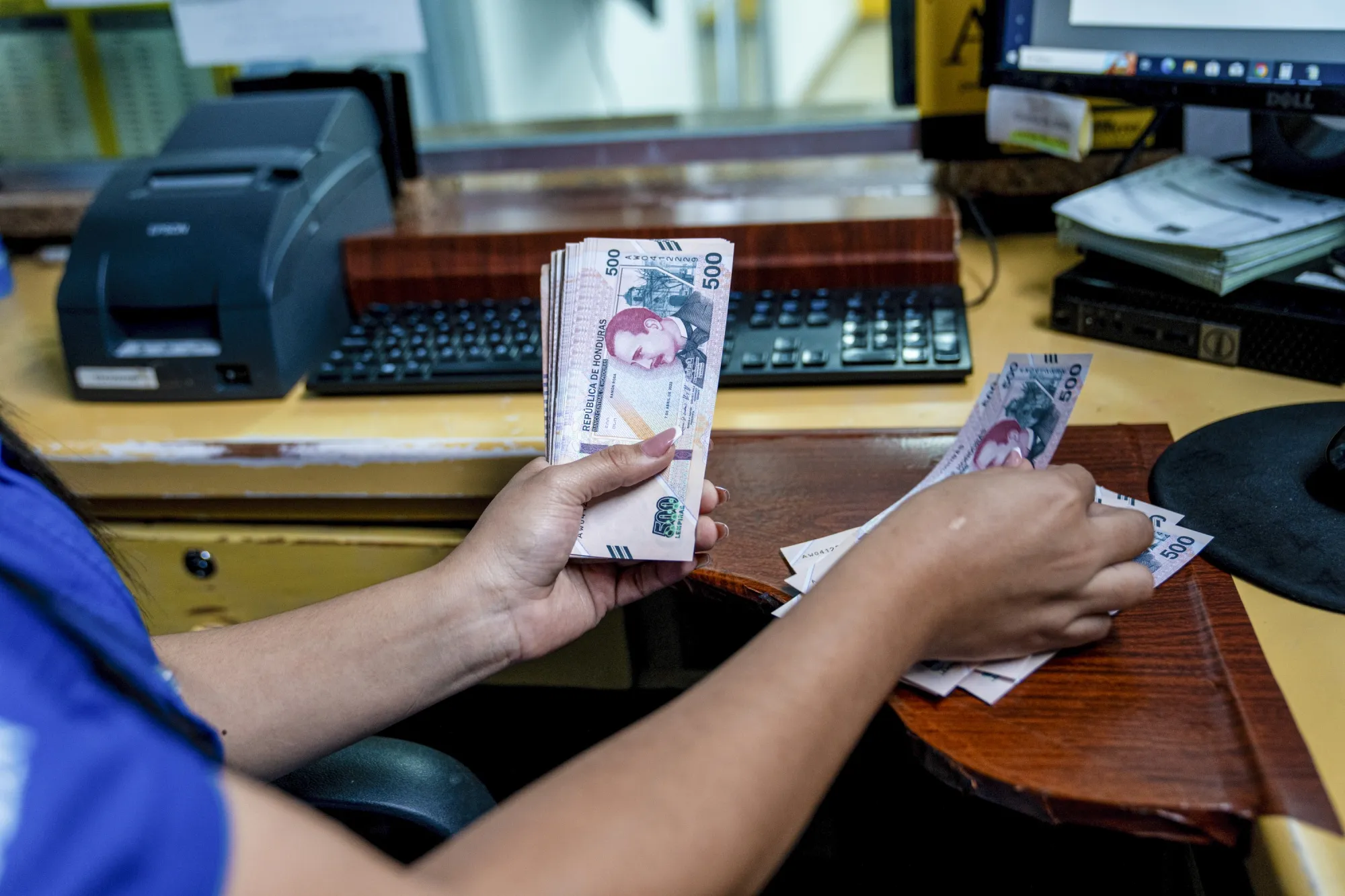
HONDURAS · REMITTANCES
Key Facts
- —The country Honduras is a Central American country whose economy leans on money sent home by relatives working abroad, mostly in the United States.
- —Why it matters Remittances pay for food, health care and schooling in Honduran homes, and they supply the dollars that steady the lempira and the central bank’s reserves.
- —Why now New figures published on Monday 19 October 2026 put this year’s running total of remittances above US$10 billion.
- —What happened Remittances reached US$10.13 billion as of 1 October 2026, which is US$1.03 billion, or 11.3%, more than at the same point in 2025.
- —The numbers Last year’s full-year total was US$12.21 billion, the central bank projects US$13.16 billion for 2026, and growth has slowed from 26.2% to about 11%.
- —What it means for you US readers see how pay earned in the United States feeds a neighbour’s economy, and visitors face a lempira that has slipped about 2.8% against the dollar in a year.
- —Still open Whether 2026 ends near the projected US$13.2 billion, and how US deportations affect the flow of money.
Honduras remittances passed US$10 billion this year, with US$10.13 billion received as of 1 October 2026, La Tribuna reported on Monday 19 October. The figure comes from the central bank, Banco Central de Honduras (BCH), and is 11.3% above the same point in 2025.
For US readers the money matters because it is largely earned in the United States, and El Heraldo put US$12.96 billion of the projected US$13.16 billion for 2026 down to Hondurans living there. That makes the total a gauge of US pay, US immigration policy and the dollars flowing south to a close neighbour.
We reported US$9.3 billion in late September in Honduras Remittances Hit US$9.3 Billion, Up 11% as US Deportations Rise. This article follows the total past the US$10 billion mark.
Honduras Remittances Pass US$10 Billion
La Tribuna put family remittances at US$10.13 billion as of 1 October 2026, citing the BCH. That is US$1.03 billion, or 11.3%, more than the US$9.10 billion received by the same date in 2025.
El Heraldo reported on 19 October that the BCH’s latest monthly report shows US$9.94 billion through September. That compares with US$8.94 billion a year earlier, a rise of US$1.00 billion, or 11.20%.
The two totals appear to use different cutoff dates, and both rest on BCH data. Both put growth at about 11%, so the picture is the same.
Growth has cooled sharply, however. El Heraldo noted that January to September 2025 had risen 26.21%, from US$7.08 billion to US$8.94 billion, so this year’s pace is less than half of last year’s by our comparison.
Last year’s full-year total was US$12.21 billion, the highest on record, La Tribuna wrote, citing a study by the national university UNAH. The BCH projects US$13.16 billion for 2026, according to El Heraldo, or about 7.7% more than 2025 by our arithmetic.
Why the Total Matters for the Economy
The UNAH study, as quoted by La Tribuna, puts 2025 remittances at 29.42% of Honduran gross domestic product. It calls them a structural part of the economy that affects consumption, the exchange rate, financial liquidity and international reserves.
The same study says 90.6% of remittances go to basic household needs such as food, health, education, transport, housing and debt payments. Only 9.4% goes to investment, according to the figures La Tribuna published.
The authors describe a structural paradox, because the money supports the economy and eases social pressure while exposing weak job creation. In their words as summarised by La Tribuna, Honduras has limited ability to create quality jobs, raise productivity and diversify.
Dollars, the Lempira and Reserves
The BCH reference exchange rate was 26.8989 lempiras per dollar on 1 October 2026, with a selling price of 27.0334, La Tribuna reported. The lempira is down 2.79% on a year earlier and 1.99% since the end of 2025.
According to La Tribuna, the BCH said the currency is sliding more slowly than in earlier periods because more dollars are arriving from remittances, exports and external disbursements. Foreign-currency inflows were US$18.11 billion against outflows of US$17.07 billion, a gap of US$1.04 billion.
La Tribuna put remittances at 55.9% of those inflows, which would make them the largest single source of dollars. We did not open the BCH table behind that share, so it stays attributed to the newspaper.
El Heraldo reported on 16 October that net international reserves stood at US$11.56 billion on 13 October, enough for 6.7 months of imports. The 2026 to 2027 monetary programme sets a floor of five months, and the BCH projects 6.5 to 6.6 months at the end of 2026.
El Heraldo credited remittances and coffee exports with helping build those reserves. It also wrote that remittances are expected to exceed US$1.2 billion a month in the final quarter of 2026.
What It Means for You
Hondurans in the United States send most of this money, so US wages, job security and immigration enforcement feed directly into Honduran household budgets. Our report Honduras Deportees Near 38,000 as US Warns covers the other side of that link.
For investors and lenders the flow supports reserves and the lempira, which lowers the near-term risk of a sharp currency swing. The same dependence is a risk, because a drop in US employment or a surge in deportations would be felt quickly in Honduras.
Travellers and residents who convert dollars into lempiras have seen a gentle drift, about 2.8% in a year, rather than a sudden move. Our guides Honduras Explained 2026: The Country, Its Politics, Its Economy and What to Watch and Castro Government Leans on Record Remittances as Honduras Faces 2026 Slowdown give the wider context.
What Is Not Known
The BCH release itself could not be opened for this article, because the bank’s website did not serve the remittance tables. The figures rest on La Tribuna and El Heraldo, two independent Honduran newspapers that both cite the BCH.
The two newspapers give different totals, US$10.13 billion as of 1 October and US$9.94 billion through September. El Heraldo also quotes a figure of US$10.10 billion without a date, so the exact cutoffs are not settled here.
The sources do not show how much of this year’s growth reflects savings sent early because of deportation fears, if any. They also do not show how many Hondurans in the United States have lost work or legal status.
The year-end outcome is open. The BCH projection of US$13.16 billion implies about US$3.02 billion over the last three months, or US$1.0 billion a month by our arithmetic, below the US$1.2 billion a month El Heraldo says is expected.
More: Latin America news in English, every day from The Rio Times.
Frequently Asked Questions
How much did Honduras receive in remittances in 2026?
The BCH data quoted by La Tribuna show US$10.13 billion as of 1 October 2026. That is 11.3% more than the US$9.10 billion received by the same date in 2025.
Where does the money come from?
El Heraldo attributes US$12.96 billion of the US$13.16 billion projected for 2026 to Hondurans living in the United States. The sources reviewed give no breakdown for other countries.
How fast are Honduras remittances growing?
Growth is about 11% this year, down from 26.21% in the first nine months of 2025. The totals are still at record levels for the time of year.
What do Hondurans spend remittances on?
A UNAH study quoted by La Tribuna says 90.6% goes to basic household needs such as food, health, education, transport, housing and debt. The other 9.4% goes to investment.
What does it mean for US readers?
The flow depends on pay earned in the United States, so US jobs and immigration enforcement shape Honduran incomes. It also helps keep the lempira and reserves steady, which matters to lenders and investors.
Sources: La Tribuna, 19 October 2026; El Heraldo, 19 October 2026; El Heraldo, 16 October 2026; Banco Central de Honduras.
This article was produced by The Rio Times’ automated AI newsroom. Editorial responsibility: Matthias Camenzind, Publisher and Editor-in-Chief. How we use AI · Report an error