Vote Shocks and Stock Drops: Unpacking India’s Election Results
India’s financial markets just experienced a whirlwind day, mirroring the drama of the national election results.
Exit polls had set high expectations for a landslide victory for Prime Minister Narendra Modi and his National Democratic Alliance (NDA), but the reality was a stark contrast.
The Sensex plunged 5.7% to 72,079.05, marking its sharpest fall in over four years. The Nifty 50 wasn’t spared either, tumbling 5.9%.
The election results were a mixed bag, with Modi’s coalition securing 292 seats—barely over the halfway mark in the 543-seat Lok Sabha and well below the anticipated 350 to 400 seats.
The BJP itself won 240 seats, losing its outright majority for the first time in ten years.
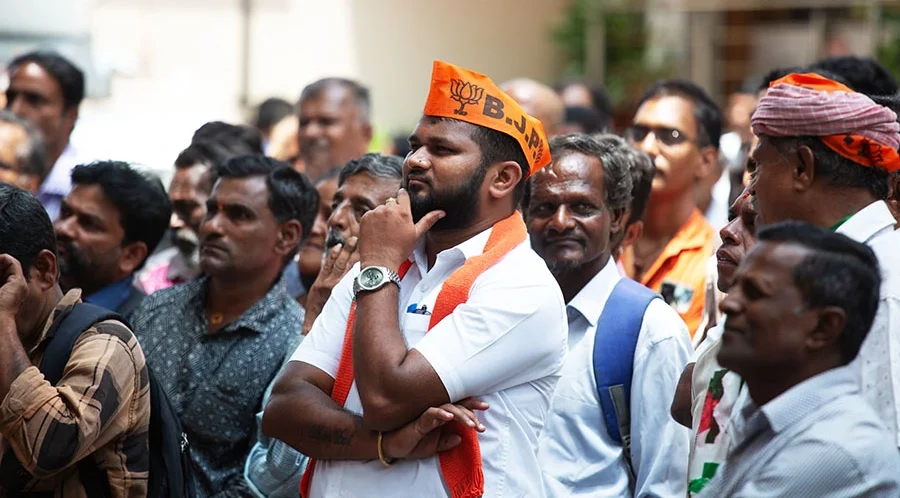
In an unexpected twist, the opposition Congress-led Indian National Developmental Inclusive Alliance (INDIA) bagged 234 seats, surpassing many forecasts.
Major market players bore the brunt of the surprise. Reliance Industries’ stocks fell by 7.5%, and Adani Group‘s companies faced severe losses.
Adani Enterprises, Adani Power, and Adani Ports & Special Economic Zone dropped by 19%, 17%, and 21%, respectively.
Financial giants ICICI Bank and State Bank of India also took heavy hits, plummeting 7.5% and 14%, respectively.
Economic Turbulence and Political Shifts
Amidst this economic turbulence, the Indian rupee weakened by about 0.5% against the U.S. dollar.
Despite the electoral setback, Modi clinched a third term, echoing the tenure of India’s first post-independence leader, Jawaharlal Nehru.
However, this victory comes with diminished authority, as the BJP now relies more on its coalition partners than before, reflecting a significant shift in India’s political dynamics.
Modi’s victory speech highlighted a decade of governance that provided essential services to millions, such as tap water, housing, food, and healthcare.
It underscored his ongoing commitment to India’s development and self-reliance.
This election doesn’t just mark a pivotal moment for Modi; it also sets the stage for India to address pressing issues like inflation and unemployment.
These efforts will shape the nation’s future in its quest to become the world’s third-largest economy.
This story of political resilience and economic challenge is a crucial chapter in India’s evolving narrative.
This article was produced by The Rio Times’ automated newsroom system. How we use AI · Report an error
Read More from The Rio Times