Bangladesh Faces Economic Challenges Head-On: Revised Growth Targets and Bold Plans
Bangladesh has cut its GDP growth target to 6.7% for the upcoming fiscal year, down from 7.5%.
This adjustment comes as the country faces significant economic hurdles, including high inflation, currency depreciation, and dwindling foreign reserves.
The new target was announced with a 7.97 trillion taka ($67.5 billion) budget for the fiscal year starting in July.
Global events, such as the Russia-Ukraine conflict, have worsened Bangladesh’s economic situation.
Escalating inflation and currency devaluation forced the International Monetary Fund (IMF) to lower its growth projection for Bangladesh to 6%.
The World Bank and the Asian Development Bank (ADB) have also revised their forecasts to 6.1% and 6.6%, respectively.
Despite these challenges, Bangladesh still outperforms many South Asian economies, trailing only the Maldives and India.
However, energy shortages and a heavy reliance on imports for essentials like fuel and gas put further pressure on the country’s trade deficit and foreign exchange reserves.
The government plans to control expenses by trimming the budget deficit forecast to 4.6% of GDP from around 5%.
Finance Minister Abul Hassan Mahmood Ali emphasized a cautious approach to fiscal responsibility.
However, he assured that spending cuts would not be prolonged to avoid hindering economic growth.
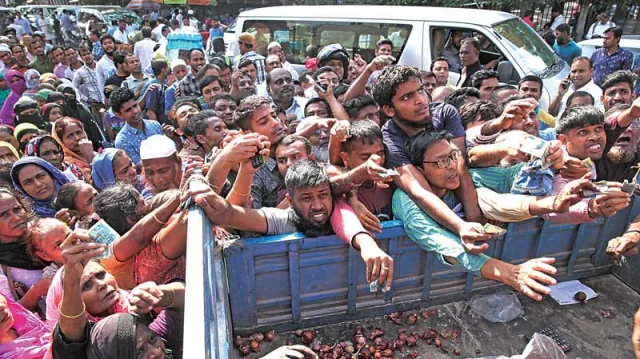
Inflation remains a critical issue, with rates hitting a seven-month high of 9.89% due to rising food prices.
The finance minister aims to reduce inflation to 6.5% in the next fiscal year. Many local economists find this target unrealistic. The real inflation rate exceeds 12%, making this goal challenging.
To tackle exchange rate volatility, Bangladesh’s central bank introduced a new system in May.
This system allows the taka to fluctuate more freely against the dollar, which led to significant depreciation.
Bangladesh’s Economic Strategies
The government aims to boost foreign exchange reserves to $32 billion from less than $19 billion. However, plans to increase imports by 10% could hinder this goal.
In response to these challenges, Bangladesh took a $4.7 billion loan from the IMF last year. This loan supports foreign exchange reserves and commits to financial sector reforms.
The finance minister set an ambitious revenue collection target of 5.41 trillion taka, or 9.7% of GDP, despite the National Board of Revenue’s past struggles.
Economist Ahsan H. Mansur highlighted the central bank’s proactive and hawkish monetary policy stance. If continued, this policy could yield results within six months.
Bangladesh’s government and financial policymakers are actively working to stabilize the economy. Their efforts aim to mitigate immediate economic distress and plan for sustainable growth.
Navigating both domestic issues and global economic shifts will require strategic planning and cautious optimism.
This article was produced by The Rio Times’ automated newsroom system. How we use AI · Report an error
Read More from The Rio Times