Uruguay Homicides Up 21% in Third Quarter
Killings are up and crime overall is down, so expats and visitors in Montevideo face two different risks that call for different habits.

Uruguay | Security
Uruguay’s Interior Ministry, which runs the police, reported on Tuesday 20 October that 111 people were killed in the country from July to September 2026, up 20.7% on the same quarter of 2025. The same report, from its statistics unit AECA (Área de Estadística y Criminología Aplicada), found total reported crime down 2%.
For anyone in Montevideo this week, the two trends point to different risks. Street theft remains the everyday danger, while the interior minister told Parliament on 22 October that 58% of homicides stem from conflicts between criminal gangs.
Key Facts
- Who. Uruguay’s Interior Ministry, through AECA, its statistics unit that counts crime for the police.
- What. 111 homicides in the quarter, up 20.7%, while total reported crime fell 2%.
- When. Report published 20 October 2026 for July to September.
- Power Index. Uruguay ranks 7th of 14 in The Rio Times Latin America Power Index, with 45.2 points (November 2026 edition).
- As of. 25 November 2026, 13:15 GMT.
Killings are up and crime overall is down, so expats and visitors in Montevideo face two different risks that call for different habits.
The rise did not begin in July. The ministry’s half-year report, presented on Monday 20 July, counted 195 homicides from January to June against 183 a year earlier, up 6.6%, and said the increase was concentrated in the second quarter, April to June.
On 18 February, a joint note from the ministry and the Fiscalía General de la Nación, the attorney general’s office, put the 2025 count at 369 intentional homicides for the ministry and 386 for the Fiscalía. The gap exists because the Fiscalía counts every case opened as homicide, while the ministry applies the United Nations statistical standard and excludes justified deaths such as self-defence; the note names the ministry’s series as the reference for the trend.
Adding the two ministry reports gives 306 homicides from January to September 2026 against about 275 a year earlier, roughly 11% more, because the third-quarter report itself gives no nine-month total. That is our sum of two published reports, not a ministry figure, and our Uruguay safety guide carries the full-year 2025 figures and neighbourhood advice.
Interior Minister Carlos Negro gave the ministry’s explanation at a press conference on Monday 1 June, after killings in the Montevideo districts of Cerro, Piedras Blancas and Marconi. “En estos homicidios se ve un denominador común, que es la lucha entre bandas criminales” (in these homicides one common denominator is seen: the fight between criminal gangs), he said.
He added that police intervention in territories, dismantling gangs and jailing their leaders, can set off internal struggles among those who want to lead them. That, he said, produces more violence.
Diego Sanjurjo, who is in charge of the AECA statistics unit, presented the half-year bulletin on 20 July. It found total reported crime down 3.7% even as homicides rose.
Guns sit at the centre of the trend. In the half-year report, 74.9% of homicides involved firearms against 63.9% a year earlier, and the third-quarter report counts 320 people wounded by firearms, up from 250.
Negro gave the ministry’s reading to Parliament’s Security and Coexistence Commission on Thursday 22 October, saying 58% of homicides stem from conflicts between criminal structures. Where the police operation called Atenea applies, he said, homicides fell 42% and firearm injuries 27%, figures that are the ministry’s own and not independently checked.
In the same ministry statement Negro said 1,000 more police recruits would serve “exclusivamente para Montevideo” (exclusively for Montevideo). He said 1,500 police had been added and 1,500 more were in training.
The numbers themselves offer the opposing reading: killings rose and gun injuries climbed from 250 to 320 while the ministry adds officers. The ministry points instead to a fall in overall crime, with extortions down from 143 to 93.
For a visitor or expat, the everyday risk remains theft: the ministry counted 3,650 robberies in the quarter, down 2.1%. Thefts edged up to 24,757 from 24,596, while the minister ties most homicides to gang conflicts.
The UK Foreign Office advises that Montevideo has street crime, including bag-snatching, pickpocketing and sometimes armed mugging, and tells visitors to avoid isolated or poorly lit areas at night. It adds that people should avoid walking downtown or in the port area alone, especially at night and on weekends, and that criminals regularly break into cars left on the street.
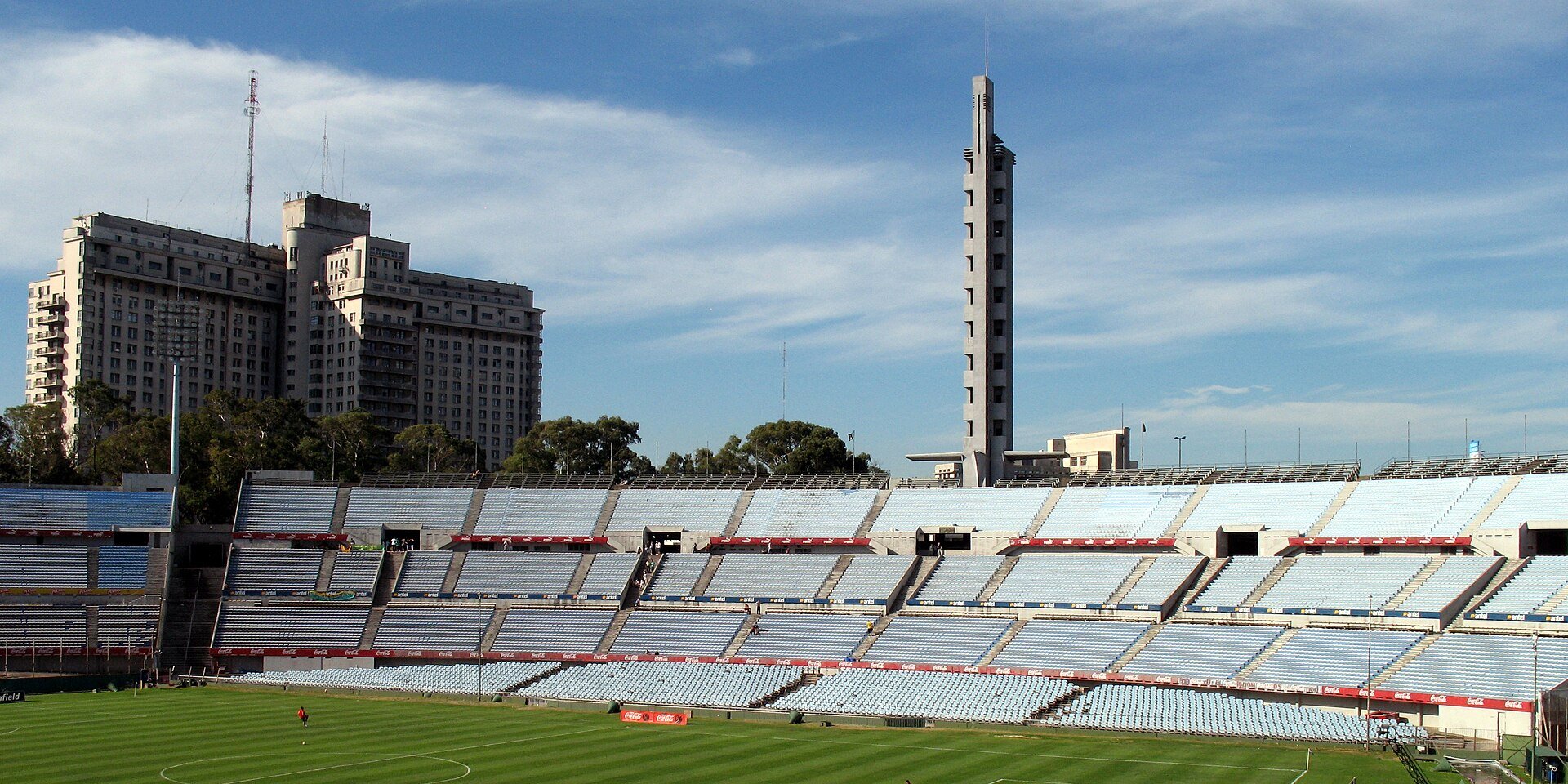
The Copa Libertadores final, South America’s club championship decider, is played at Montevideo’s Estadio Centenario on Saturday 28 November, and CONMEBOL, the South American football confederation, organises it. US readers should check the current State Department advisory before booking.
The latest ministry count covers July to September, and our Uruguay news coverage will follow the next release. Last year the homicide count closed on 23 January, so the full-year 2026 figure is not expected before late January 2027.
Frequently Asked Questions
Is Montevideo safe for visitors right now?
Street theft is the main risk, and the UK Foreign Office advises extra care at night and in the downtown and port areas. The interior minister ties most homicides to fights between criminal gangs.
Why did killings rise while overall crime fell?
The interior minister links most homicides to conflicts between criminal groups, while everyday offences such as robbery moved the other way. Each institution counts homicides differently, so compare figures only within one series.
When will we know whether the trend continues?
The latest ministry count ends in September. Last year it closed its full-year count in late January, so the full-year picture is not expected before then.
Expat Guide to Uruguay
What The Rio Times publishes for foreigners who live in or move to Uruguay.
Start here
- Best Places to Live in Uruguay for Expats 2026, Ranked
- Cost of Living Punta del Este 2026: Half Again Above Montevideo
- Uruguay vs Paraguay for Expats in 2026: Cheap Living or a Tax Holiday
- Uruguay Residency Visa Rules and the 12 Percent Tax on Foreign Income
City guides
Coming up in Uruguay
Understand Uruguay
Sources: Interior Ministry (Uruguay), third-quarter crime indicators, 20 October 2026; Interior Ministry (Uruguay), first-half crime report, 20 July 2026; Interior Ministry and Fiscalía General de la Nación, note on homicide counts, 18 February 2026; Interior Ministry (Uruguay), Minister Carlos Negro before the Security and Coexistence Commission, 22 October 2026; UK Foreign, Commonwealth and Development Office, travel advice for Uruguay.
This article was produced by The Rio Times’ automated AI newsroom. Editorial responsibility: Matthias Camenzind, Publisher and Editor-in-Chief. The Rio Times also runs Ask Rio Times, which answers from 100,000+ of our own articles, the daily Latin America Power Map, and prediction-market odds on elections and markets.. How we use AI · Report an error