Uruguay Arrests Suspected Drug Supplier
Police in Montevideo say the arrest of Tato Moyano ends a long inquiry into drug sales and what they allege was hidden property, though he has not been convicted.

Crime: Uruguay
Uruguayan police arrested Luis Dadian Moyano Termesano, 34, known as Tato Moyano, in an apartment in the Centro, the capital’s downtown district, on Monday 23 November 2026. The Interior Ministry, which oversees the country’s police, called him “a key piece of a drug-trafficking organisation” in a statement.
Moyano is a suspect in a drug-trafficking and money-laundering investigation, and he has not been convicted of anything in this case. The ministry says the case has dismantled one of the nine main criminal groups it has identified in Uruguay.
Key Facts
- Arrest. Police detained Tato Moyano, a drug-trafficking suspect, in a Montevideo apartment.
- Operation. 25 raids in three departments followed 11 months of investigation; firearms and 26 phones were seized.
- Next. He is with prosecutors; no hearing date has been published.
- Power Index. Uruguay ranks 7th of 14 in The Rio Times Latin America Power Index, with 45.2 points (November 2026 edition).
- As of. 24 November 2026, 19:00 GMT.
Police in Montevideo say the arrest of Tato Moyano ends a long inquiry into drug sales and what they allege was hidden property, though he has not been convicted.
Officers from the Montevideo police anti-drug brigade, a specialist unit, made the arrest in the Centro. It was the high point of 25 raids across Montevideo and the neighbouring departments, the country’s provinces, of Canelones and Florida.
The raids followed 11 months of investigation and more than 4,000 pages of evidence, the Interior Ministry said on 23 and 24 November 2026. About a dozen people were detained, and police said they are still looking for three more.
Officers seized five firearms, 228 rounds of ammunition, 26 mobile phones and three vehicles, police said. They also took security cameras and other equipment.
Interior Minister Carlos Negro described Moyano at a press conference as “a true supplier of suppliers, with very great influence in the north-east zone”. In plain terms, the minister portrayed a middleman who feeds the people who sell to users, not a seller on the corner.
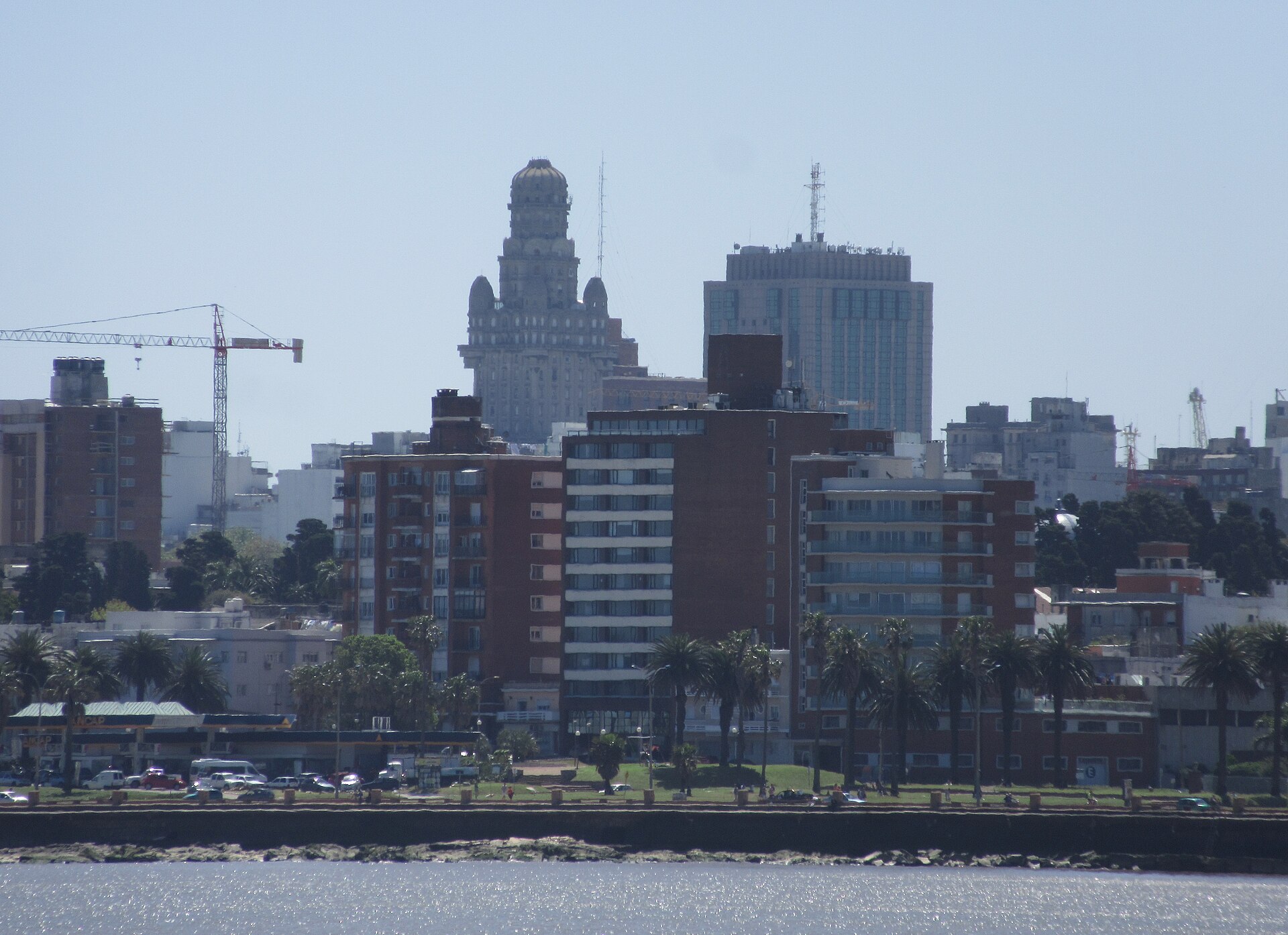
Police said Moyano had been a major supplier to drug-selling points in the north-east of Montevideo. Investigators allege that a valuable house in another person’s name was bought with his money.
Police say Moyano travelled often to Asia, the Middle East and Paraguay. The reports differ on what the trips mean: investigators are checking a possible link to exports, while the Interior Ministry said the probe focused on micro-trafficking, meaning street sales, inside Uruguay.
Much of the case turns on money. Investigators say Moyano used nominees, called testaferros in Spanish, who are people holding assets on someone else’s behalf.
They allege that a house in Solymar, a coastal suburb in Canelones, was bought for about US$300,000 through a front person. That asset sits alongside the house in another person’s name.
Front men matter because they let a suspect enjoy property without leaving a paper trail in his own name. Investigators must then prove who really paid, which helps explain why the file runs to thousands of pages.
Moyano, 34, has several earlier criminal records, police said. Those earlier cases do not prove the new allegations, which a court has yet to test.
Investigators say Moyano moved to the Centro after the arrest of Edgardo “El Meo” Bonino, an alleged drug boss, in Barra de Carrasco, a coastal area east of the capital. The Rio Times reported on 12 November that Bonino was jailed for 180 days: Uruguay Jails Alleged Drug Boss 180 Days.
Negro, who was a homicide prosecutor before he became minister, said Moyano had been a target of his since those days. He presented the case to reporters at a press conference.
Negro said the arrest brings to eight the number of those groups whose leaders have been caught. The ministry had presented its list of nine groups to Parliament.
Moyano is at the disposal of the Fiscalía, Uruguay’s prosecutor’s office. No hearing date, prosecutor, judge or formal charge had been made public at the time of writing.
No further step had been announced beyond the search for the three remaining suspects. Any court hearing would be the first moment when the allegations are formally tested.
Frequently Asked Questions
Who is Tato Moyano?
He is a 34-year-old man whom the Interior Ministry calls a key piece of a drug-trafficking organisation. He is a suspect, not a convicted offender.
Has he been found guilty?
No. A prosecutor and a court must still decide, and no hearing date has been published.
Is this an international cartel case?
Investigators describe a domestic network and are checking whether his trips to Asia, the Middle East and Paraguay relate to exports. No court has tested those claims.
More: Uruguay news
This article was produced by The Rio Times’ automated AI newsroom. Editorial responsibility: Matthias Camenzind, Publisher and Editor-in-Chief. The Rio Times also runs Ask Rio Times, which answers from 100,000+ of our own articles, the daily Latin America Power Map, and prediction-market odds on elections and markets.. How we use AI · Report an error