U.S. Navy Deploys F/A-18F Jets in Guyana Amid Tensions with Venezuela
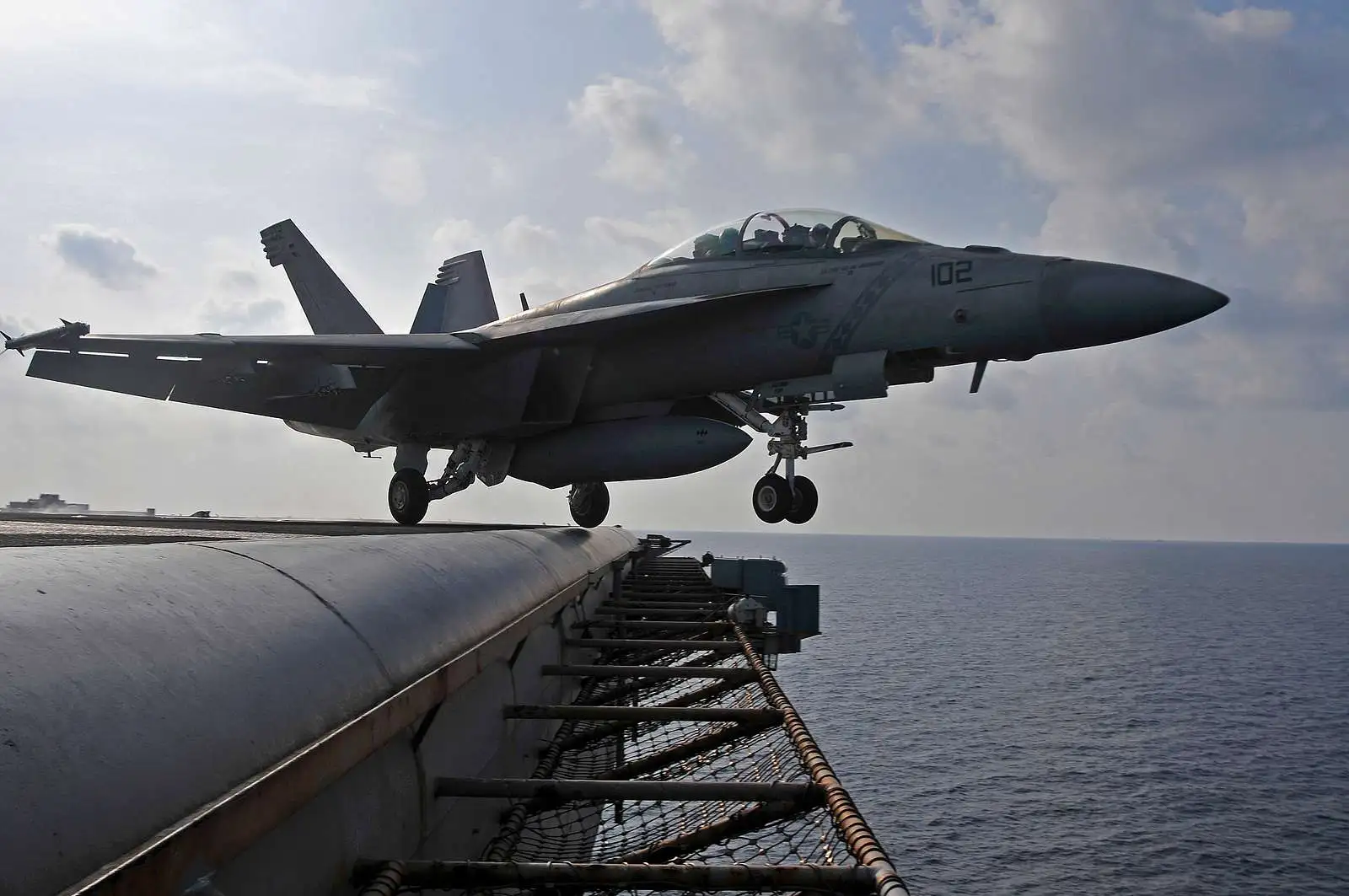
Amid escalating tensions with Venezuela over the disputed Esequibo region, the U.S. Navy deployed two F/A-18F Super Hornet jets to Guyana.
The jets, launched from the nuclear-powered aircraft carrier USS George Washington, flew over Georgetown with the Guyanese government’s approval.
The U.S. Embassy in Guyana confirmed the jets performed their flyover at 2:00 PM local time on Thursday, May 9.
The aircraft were catapulted from the USS George Washington, currently participating in the International Exercise Southern Seas and sailing in the Atlantic Ocean.
On May 6, the U.S. Naval Institute reported the aircraft carrier was east of Puerto Rico, about 780 miles (1,440 km) from Georgetown.
This deployment comes amid Venezuela’s renewed claims over the Esequibo region, which covers two-thirds of Guyana’s territory.
The USS George Washington will continue its journey, engaging in exercises with the naval forces of Argentina, Brazil, Chile, Ecuador, Peru, and Uruguay.
The ship will also visit ports in Brazil, Chile, and Peru.
The carrier left Naval Station Norfolk on April 25. It is accompanied by the destroyer USS Porter (DDG 78) and the oiler USNS John Lenthall (T-AO-189).
This military support demonstrates the U.S. commitment to its regional allies and highlights the strategic importance of stability in South America.
U.S. Navy Deploys F/A-18F Jets in Guyana Amid Tensions with Venezuela
These actions by the U.S. Navy signal support for Guyana against Venezuela’s territorial claims amid regional tensions.
Participating in the Southern Seas exercise shows the U.S. Navy’s readiness to project power and maintain regional peace.
The deployment highlights the need for strong international partnerships and military cooperation to tackle security challenges.
The USS George Washington’s presence demonstrates the U.S. commitment to defending its interests and allies.
This move reassures Guyana and neighboring countries of support against external threats, impacting regional security dynamics.
This article was produced by The Rio Times’ automated newsroom system. How we use AI · Report an error
Read More from The Rio Times