Tuto Quiroga Says Bolivia’s Prosecutors Cannot Credibly Investigate Their Own Chief
POLITICS · BOLIVIA
Key Facts
- —The country Bolivia, where Attorney General Roger Mariaca heads the Public Prosecutor’s Office. The Legislative Assembly chose him in 2024 for a six-year term.
- —What happened On 28 September, ex-president Tuto Quiroga said prosecutors’ credibility is “deeply eroded” after Washington accused Mariaca of taking drug bribes. He wants a congressional commission instead.
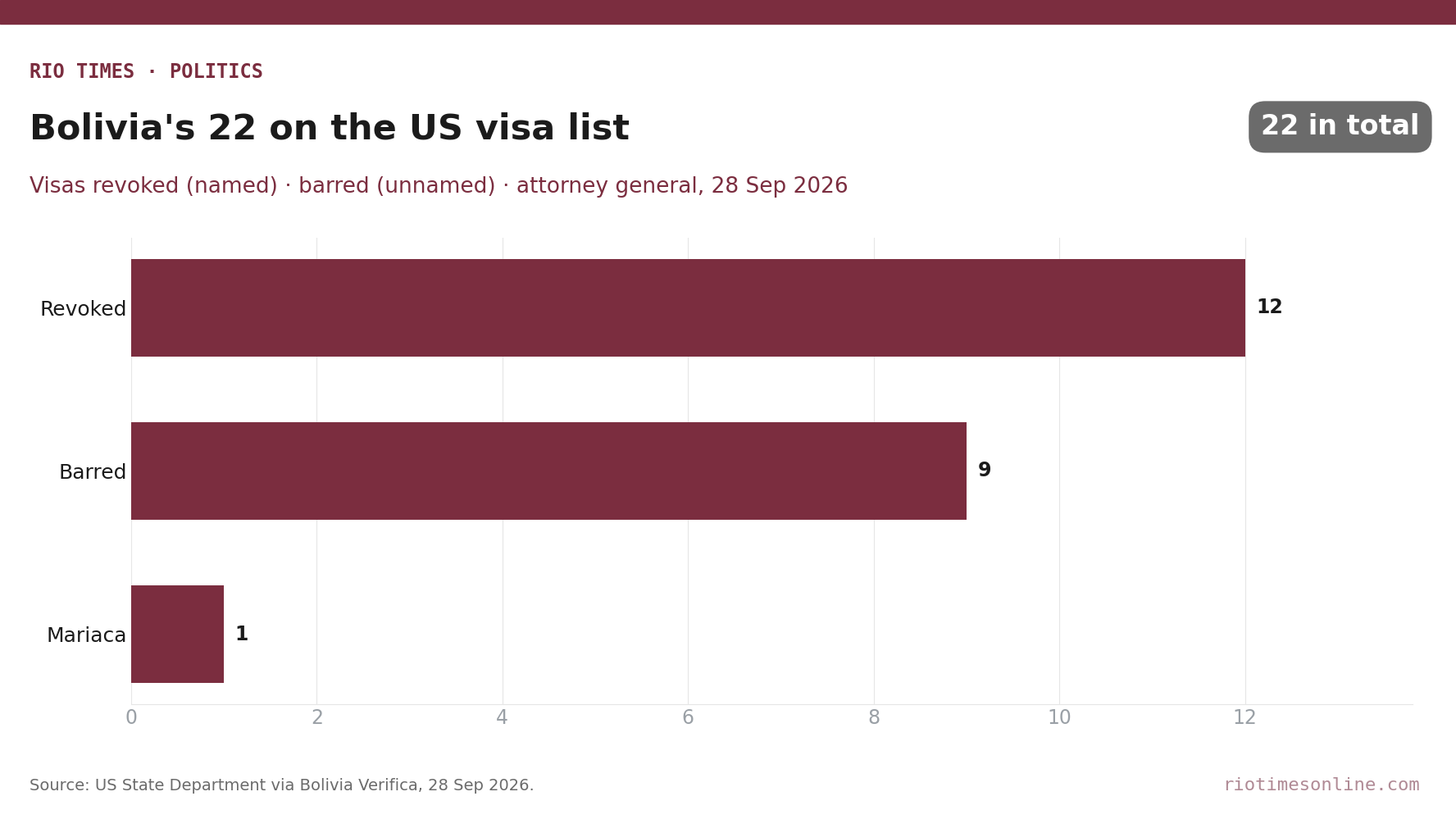
- —The numbers The US action of 28 September covers 22 Bolivians: 12 visas revoked, nine people barred, plus Mariaca (Bolivia Verifica). He denies wrongdoing and calls it interference.
- —What it means for you No change for travellers or businesses yet. A state of exception limiting protests runs until 16 December, approved 100 to 58 on 17 September (Opinión).
- —Still open Whether Vice President Edmand Lara convenes Congress, whether Mariaca steps aside, and what evidence Washington shares. Evo Morales’s camp has set a 3 October diesel deadline.
Former Bolivian president Jorge “Tuto” Quiroga said on 28 September that prosecutors lack the credibility to investigate their own chief. The US had just accused Attorney General Roger Mariaca of taking bribes to facilitate drug trafficking.
Tuto Quiroga, who governed from 2001 to 2002 and leads the Libre alliance, wants Congress to step in. The case now tests trust in Bolivia’s justice system while emergency powers are in force.

What Quiroga Said
The State Department action, covered in full here, reached 22 Bolivians. Bolivia Verifica, a fact-checking outlet, counted 12 revoked visas, nine people barred and Mariaca himself.
“We have fallen into a vacuum,” Quiroga said, because the institution that must receive the complaints has no credibility. He asked with what authority it could investigate “in a country where corruption reigns and impunity gallops”, Brújula Digital reported.
He proposed that the Plurinational Legislative Assembly, Bolivia’s Congress, form a commission to gather information and decide on proceedings. “Let those who harmed the country pay, especially if they protected drug trafficking,” he said.
Asked whether Mariaca should step aside, Quiroga declined to demand it: “each person decides what to do”, Erbol reported. He also urged fully restored ties with Washington and a US Drug Enforcement Administration office in Bolivia.
Congress and Government Respond
On Monday night, Senate President Diego Ávila and lower-house President Roberto Castro asked Mariaca to step aside pending clarification. “An accusation is not a sentence, and no citizen can be convicted without evidence,” Ávila said.
They asked Vice President Edmand Lara, who presides over the Assembly, for an urgent session. They also want the Foreign Ministry to obtain the US documentation through diplomatic channels, Los Tiempos reported.
Lara took a different line in a statement the same day. “A list is not a sentence, and an accusation is no substitute for evidence,” he said, rejecting Mariaca’s removal over a foreign list, Visión 360 reported.
“We are not announcing guilt or replacing prosecutors or judges,” Castro said. The government called the accusations “very serious” and said it would request evidence from Washington, according to ABI, the state news agency.
Mariaca, speaking from the prosecutor’s headquarters in Sucre, called the measure “interference”. He said he would not retreat “even one centimetre” from the cases under his watch, La Patria reported.
A Case Inside a State of Exception
The accusation lands while Bolivia lives under a state of exception, a constitutional regime that allows limits on some rights. The Assembly extended it by 90 days, until 16 December, in a 100 to 58 vote.
A day later, Supreme Decree 5716 ended the diesel subsidy and raised the fuel price. Transport unions responded with a 24-hour national stoppage on 28 September.
The Cochabamba newspaper Opinión set out both sides on Monday. Deputy Ricardo Rada of the governing Christian Democratic Party called the extension “a conditioned licence” to stop protests from regrouping.
Rada said the government had warned of some 12,000 possible mobilisations. Constitutional lawyer Ramiro Orías countered that polarised periods “tend dangerously to normalise the limitation of rights and the concentration of power”.
Orías added that “any excess must be investigated”, which links both debates to trust in prosecutors. Father Giovanni Mendoza of the Bishops’ Conference said restricting rights cannot become a permanent response to unrest.
Evo Morales’s supporters have given the government until 3 October to reverse the diesel decree, as The Rio Times reported. The stabilising side is that all parties, including Tuto Quiroga, say the facts must come first.
What Is Not Yet Known
Vice President Lara, who opposes removing Mariaca over a foreign list, has not said when the Assembly will meet. It is not known whether Mariaca will step aside, or what evidence Washington will share.
The names of the nine barred Bolivians have not been published. It is also unclear whether Morales’s supporters will escalate after the 3 October deadline.
Frequently Asked Questions
Who is Tuto Quiroga?
Jorge “Tuto” Quiroga was Bolivia’s president from 2001 to 2002 and leads the Libre alliance. He lost the 2025 presidential runoff to Rodrigo Paz.
What does the US accuse Mariaca of?
The State Department says he solicited and accepted bribes to facilitate drug trafficking and helped violent criminals evade justice. Mariaca denies it and calls the measure interference.
Has Mariaca stepped aside?
Not as of 29 September. The heads of both chambers of Congress have asked him to, but Vice President Lara says a foreign list is no reason to remove him.
Sources: Brújula Digital, Erbol and Correo del Sur, 28 September 2026; Bolivia Verifica, 28 September 2026; Los Tiempos, 28 September 2026; ABI, 28 September 2026; La Patria, 28 September 2026; Opinión, 28 September 2026; Visión 360, 28 September 2026; Erbol, 26 September 2026.
This article was produced by The Rio Times’ automated newsroom system. How we use AI · Report an error
Read More from The Rio Times