Libya Explained: Two Rival Governments, Africa’s Biggest Oil Reserves and the Road to Europe

GUIDES · LIBYA
Key Facts
- —Capital Tripoli, on the Mediterranean coast. Libya holds Africa’s largest proven oil reserves. It sits a short sea crossing from Italy and Malta, so its troubles reach Europe quickly.
- —Population About 7.46 million in 2025, according to the World Bank. Most people live along the coast; the Sahara covers the rest.
- —Currency The Libyan dinar. The central bank cut it by 14.7 percent in January 2026, to 6.37 per US dollar. It traded near 6.39 per US dollar at the end of September 2026.
- —Language Arabic is the official language. Amazigh (Berber) languages are spoken in the western mountains and the south, and English is common in the oil business.
- —GDP About US$44.7 billion in 2025, with the IMF projecting around US$52.5 billion for 2026. Oil and gas made up about 65 percent of GDP in 2024, per the World Bank.
- —Government Split in two. A UN-recognised government in Tripoli under Prime Minister Abdul Hamid Dbeibah faces an eastern government backed by parliament and Khalifa Haftar’s army.
Libya explained for readers in Europe and the Americas: a rich oil state with two rival governments and a busy migration route to Italy. Here is who runs it, how the money flows and what to watch next.
Libya matters far beyond its 7.5 million people. It holds Africa’s largest proven oil reserves, and it is the main launch point for migrant boats heading to Italy. When its politics wobble, oil markets and European capitals feel it within days.
What kind of country is this?
Libya is a large, thinly populated country on the southern shore of the Mediterranean. Egypt lies to the east, Tunisia and Algeria to the west, and Niger, Chad and Sudan to the south. Nearly all Libyans live in a narrow coastal strip; the interior is desert.
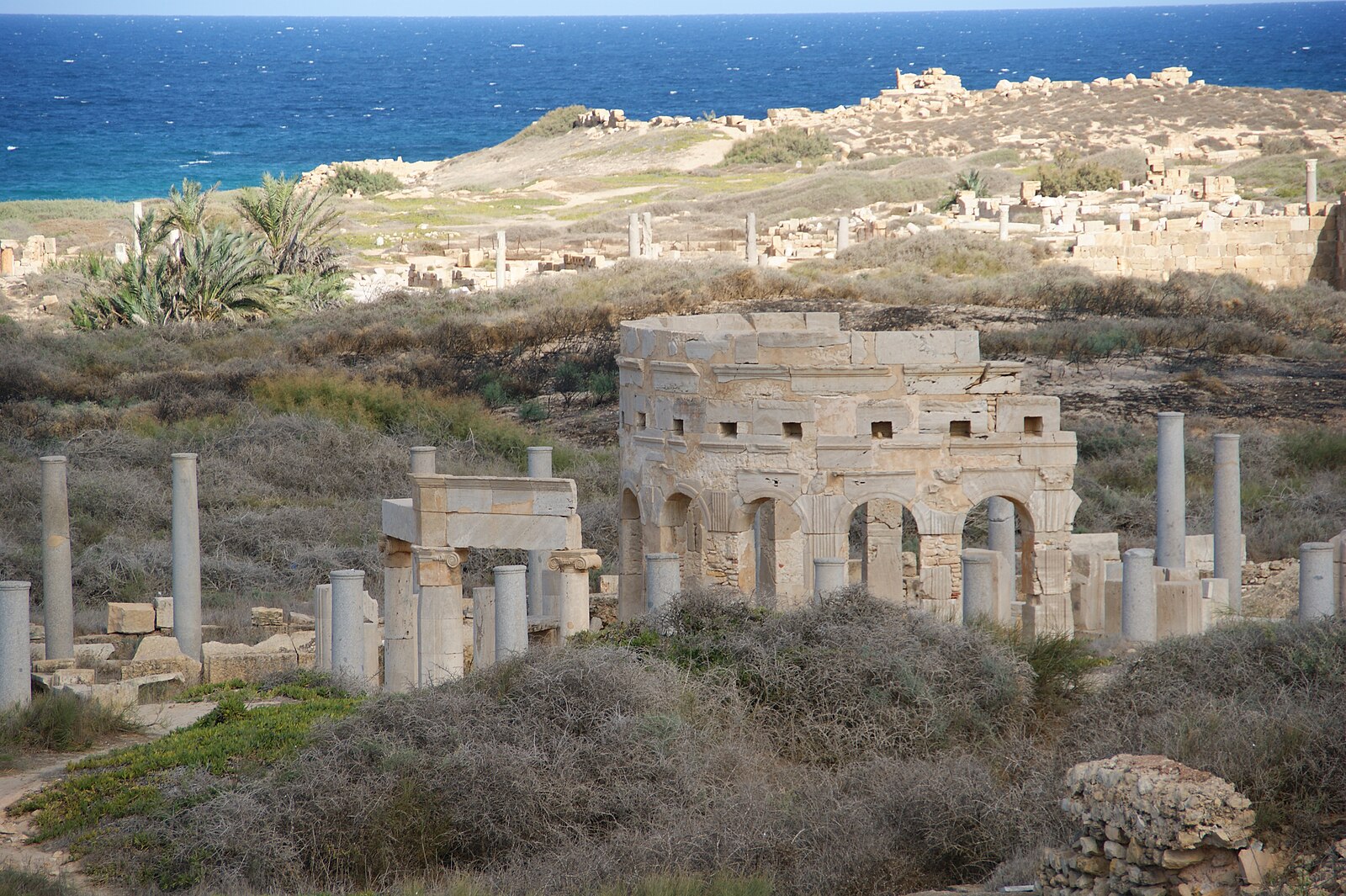
The country has three historic regions. Tripolitania in the west centres on Tripoli. Cyrenaica in the east centres on Benghazi. Fezzan in the south-west holds much of the oil and the desert trade routes. Those old lines still shape today’s politics.
Muammar Gaddafi ruled from 1969 until a NATO-backed uprising toppled him in 2011. He left behind no working parties, courts or army. Militias filled the gap, and by 2014 the country had split into rival camps in the west and the east.
Libya explained in one sentence: a wealthy oil state without a single, accepted government for more than a decade. Elections planned for December 2021 were postponed indefinitely, and no national election has been held since.
Who runs Libya and how
Two governments claim authority. In Tripoli, the Government of National Unity under Prime Minister Abdul Hamid Dbeibah is the one the United Nations recognises. It took office in 2021 through a UN-led process that was meant to end with elections.
In the east, the Government of National Stability is led by Prime Minister Osama Hamad. It is backed by the House of Representatives, the parliament based in Tobruk and Benghazi. Its speaker is Aguila Saleh. Real power there rests with Field Marshal Khalifa Haftar and his Libyan National Army.
Haftar’s sons hold senior posts. Saddam Haftar is deputy commander of the army and is widely seen as a possible successor. His forces control most of the east and the south, including many oil fields and export terminals.
Other bodies complicate the picture. A three-member Presidential Council in Tripoli is chaired by Mohamed al-Menfi. The High Council of State, an advisory chamber drawn mostly from the west, must agree to election laws with the parliament.
Below these institutions sit armed groups. In Tripoli and other western cities, militias are formally tied to ministries but act with wide independence. Control of a pipeline valve or a port gives them leverage over the whole state.
Foreign powers on both sides
Turkey backs the Tripoli camp and supplied arms during the 2014–2020 civil war. That war ended with a ceasefire in October 2020. Russia has backed Haftar for nearly a decade with fighters, equipment and aircraft, according to the Center for European Policy Analysis.
Egypt and the United Arab Emirates have long counted among Haftar’s supporters. The United States has become more active in 2026, with senior adviser Massad Boulos pushing a power-sharing plan between the two camps. Italy and France follow closely because of energy and migration.
How the economy works
Oil is almost everything. In 2024 hydrocarbons made up about 65 percent of GDP and 93 percent of exports, the World Bank says. They also supplied 72 percent of government revenue. The state pays most salaries and subsidises fuel and power.
The National Oil Corporation, known as the NOC, runs the industry from Tripoli. Its foreign partners include Eni, TotalEnergies, Repsol, OMV and Equinor. Revenue is supposed to flow through the Central Bank of Libya, which both camps depend on.
Output has recovered strongly. Total oil and condensate production reached 1,487,723 barrels a day on 21 June 2026, the highest since 2013, according to the NOC. The World Bank puts average 2025 output at about 1.3 million barrels a day.
The money is large for a small population. Oil export revenue reached US$15.2 billion in the first half of 2026, the Ministry of Economy and Trade reported. The target had been about US$14 billion. The IMF estimates the economy grew 15.9 percent in 2025.
The weak point is spending. Two governments have long spent in parallel, which drained reserves and pushed the dinar down. The central bank devalued the currency by 13.3 percent in April 2025 and by another 14.7 percent in January 2026.
In January the bank blamed the lack of a unified budget and runaway spending by both governments. On 11 April 2026 the parliament and the High Council of State finally signed a unified spending agreement. It was the first in more than 13 years.
The IMF still projects inflation of about 10.5 percent in 2026, up from 1.8 percent in 2025. A cheaper dinar makes imports dearer. Ordinary Libyans also face power cuts and recurring cash shortages at banks.
What is happening right now
As of 28 September 2026, Libya is trying to turn a paper deal into a single government. On 30 August 2026 representatives of both camps signed a UN-brokered agreement in Tripoli, known as the 4+4 deal.
The committee behind it has eight members. Two each come from the parliament, the High Council of State, the Dbeibah government and Haftar’s command. The deal calls for presidential and parliamentary elections within 24 months under a single executive authority.
It also reshapes the electoral commission board and loosens candidate rules. Dual nationals may run for president if they give up their foreign citizenship, and officers may stand once they leave the army. Critics say those clauses suit the Haftar family.
Not everyone signed up. High Council of State leader Mohammed Takala boycotted the signing, and Presidential Council chair al-Menfi criticised the arrangement, Al Jazeera reported. The UN Security Council called the accord an important step towards free and fair elections.
On 14 September the House of Representatives endorsed the deal at a session in Benghazi that dozens of members boycotted. The High Council of State objected, but the UN welcomed the vote.
Oil has been the other story. On Monday 21 September an armed group closed a valve on the pipeline from Sharara, the largest field, to the Zawiya coast. Output at Sharara fell by about 200,000 barrels a day, Reuters reported.
The NOC said on 25 September the closure had cost 720,000 barrels of output. On 26 September the UN mission warned that attacks on oil infrastructure could trigger Security Council measures. The pipeline was reopened later that Saturday after five days.
What to watch
The UN mandate. The Security Council extended the UN Support Mission in Libya for twelve months on 31 October 2025. A renewal vote is due by the end of October 2026. Its wording will show how much backing the 4+4 deal has.
A unified government. The next test is whether the rival camps agree on a single interim executive. Watch whether Dbeibah and Hamad both step aside, and what role Saddam Haftar takes. Until then, the election clock matters less than it seems.
The electoral commission. A new board and amended election laws are the first concrete steps. Any published date for voter registration would be a real signal; vague promises would not.
Oil output and blockades. The NOC publishes daily production figures. A return above 1.4 million barrels a day would show the Sharara closure was a blip. Repeated valve closures would show armed groups still hold a veto.
The dinar and prices. Watch the gap between the official rate of about 6.4 dinars per dollar and the parallel market, which exceeded 9 dinars per dollar in January 2026. A widening gap usually means spending discipline is slipping again.
What this means for foreigners
For energy markets, Libya is a swing supplier. With Brent above US$100 in late September amid the Iran conflict, every lost Libyan barrel counts. Blockades are usually political bargaining, and most have ended within days or weeks.
For Europe, Libya is the main migration gateway. The International Organization for Migration counted 943,748 migrants in Libya in March and April 2026, from 44 countries. Sudanese made up 34 percent, followed by Nigeriens and Egyptians.
Departures to Italy have fallen sharply. Italian interior ministry data reported by AGI show 15,570 arrivals from Libya between 1 January and 1 September 2026. That is down 59.3 percent on the same period in 2025, yet still almost 80 percent of all landings.
For investors, the prize is large and the risk is real. BP, Shell and ExxonMobil have agreed to return, drawn by reserves of about 48 billion barrels. But contracts depend on which authority controls the ground, and that can change quickly.
For travellers, most Western governments still advise against all or most travel to Libya. Visas are hard to obtain, security depends on local militias, and consular help is limited. Business visitors usually travel with local sponsors and security arrangements.
Connected Coverage
Libya Loses 200,000 Barrels a Day After an Armed Group Shuts a Valve
Libya Oil Economy Hits 1.49 Million Bpd as UN Election Deal Takes Shape
Libya Pumps Like It’s 2013, but Libyans See Little of It
Tunisia Explained 2026: Saied’s Republic, the Economy, Migration Pressure and What to Watch
Sources: Population, output and fiscal data from the World Bank and IMF, oil figures from the National Oil Corporation, political developments from the UN Support Mission in Libya and the UN Security Council, migration data from the IOM and Italy’s interior ministry. All accessed 28 September 2026.
- World Bank — Libya population, 2025
- World Bank — Libya overview and economic outlook
- IMF World Economic Outlook — Libya GDP, growth and inflation
- Security Council Report — Libya, August 2026 forecast
- Al Jazeera — the 4+4 agreement, 1 September 2026
- Al Marsad — Security Council backs the 4+4 deal
- Euronews — Sharara pipeline closure, 22 September 2026
- NOC statement via Newsquawk — 720,000 barrels lost
- UNSMIL warning on oil infrastructure, 26 September 2026
- Ecofin — Central Bank of Libya devaluation, January 2026
- QNA — unified spending agreement, 11 April 2026
- Ministry of Economy and Trade via North Africa Post — first-half 2026 oil revenue
- IOM Displacement Tracking Matrix, Round 62, via Agenzia Nova
- AGI — Italian arrivals from Libya to 1 September 2026
- Center for European Policy Analysis — Russia in Libya
- Open Exchange Rates API — dinar rate, 30 September 2026
What Is Not Known
Whether the 4+4 deal will produce a single government. Libya has signed similar roadmaps before, and the 2021 elections collapsed over candidate rules. Key players, including the High Council of State leadership, stayed away from the August signing.
Who closed the Sharara valve and why. The NOC did not name the group, and reports linked it to units of the Petroleum Facilities Guard. Whether the protest demands were met, or merely postponed, is unclear.
How large the economy really is. Official statistics are patchy, the two governments kept separate accounts for years, and GDP figures in dollars swing with each devaluation. Treat all Libyan totals as estimates.
Frequently Asked Questions
Who governs Libya in 2026?
Two rival governments. The UN-recognised Government of National Unity in Tripoli is led by Prime Minister Abdul Hamid Dbeibah. An eastern government under Prime Minister Osama Hamad is backed by the House of Representatives and Khalifa Haftar’s Libyan National Army.
Will Libya hold elections?
A UN-brokered 4+4 agreement signed on 30 August 2026 calls for presidential and parliamentary elections within 24 months under a single executive authority. No election date has been set, and elections planned for December 2021 were postponed indefinitely.
How much oil does Libya produce?
Total oil and condensate output reached about 1.49 million barrels a day on 21 June 2026, the highest since 2013, according to the National Oil Corporation. A pipeline closure at the Sharara field cut output by about 200,000 barrels a day for five days in September 2026.
Why does Libya matter for Europe?
Libya is the main departure point for migrant boats to Italy. Arrivals from Libya fell 59.3 percent to 15,570 between January and 1 September 2026, but still made up almost 80 percent of all landings in Italy.
Which foreign powers are involved in Libya?
Turkey backs the Tripoli camp, while Russia has supported Khalifa Haftar with fighters, equipment and aircraft. Egypt and the United Arab Emirates have long backed Haftar, and the United States has stepped up mediation in 2026.
This article was produced by The Rio Times’ automated newsroom system. How we use AI · Report an error · Editorial responsibility: Matthias Camenzind, Editor-in-Chief