
GUIDES · MEXICO
Key Facts
- —Where it comes from The Central Valleys of Oaxaca, a state in southern Mexico. San Antonio de la Cal, in those valleys, is known as the home of the tlayuda.
- —What it is A maize tortilla about 30 cm (12 in) across, per Mexico’s agriculture ministry. It is topped with pork fat, beans, cheese and meat.
- —Price in Oaxaca MXN 60 to 130 (about US$3.30 to US$7.20) at stalls and markets, per Viva México’s July 2026 guide.
- —Price in Mexico City MXN 100 to 230 (about US$5.50 to US$12.70) on the menus listed below, as of October 2026.
- —Exchange rate MXN 18.13 per US dollar, the Banco de México FIX rate of Monday 5 October 2026, used throughout.
- —Status Oaxaca’s Congress declared the tlayuda part of the state’s gastronomic heritage in December 2023.
- —Big date The Feria de la Tlayuda in San Antonio de la Cal. The 13th edition ran from Sunday 19 to Monday 27 July 2026.
Tlayudas are Oaxaca’s giant maize tortillas, spread with pork fat and black beans, then loaded with stringy cheese and grilled meat. The dish comes from the Central Valleys of southern Mexico, and Oaxaca’s Congress has declared it part of the state’s heritage. For a US visitor, one costs about US$3.30 to US$7.20 at Oaxaca’s stalls and up to about US$12.70 in Mexico City.
What Tlayudas Are, and What They Are Not
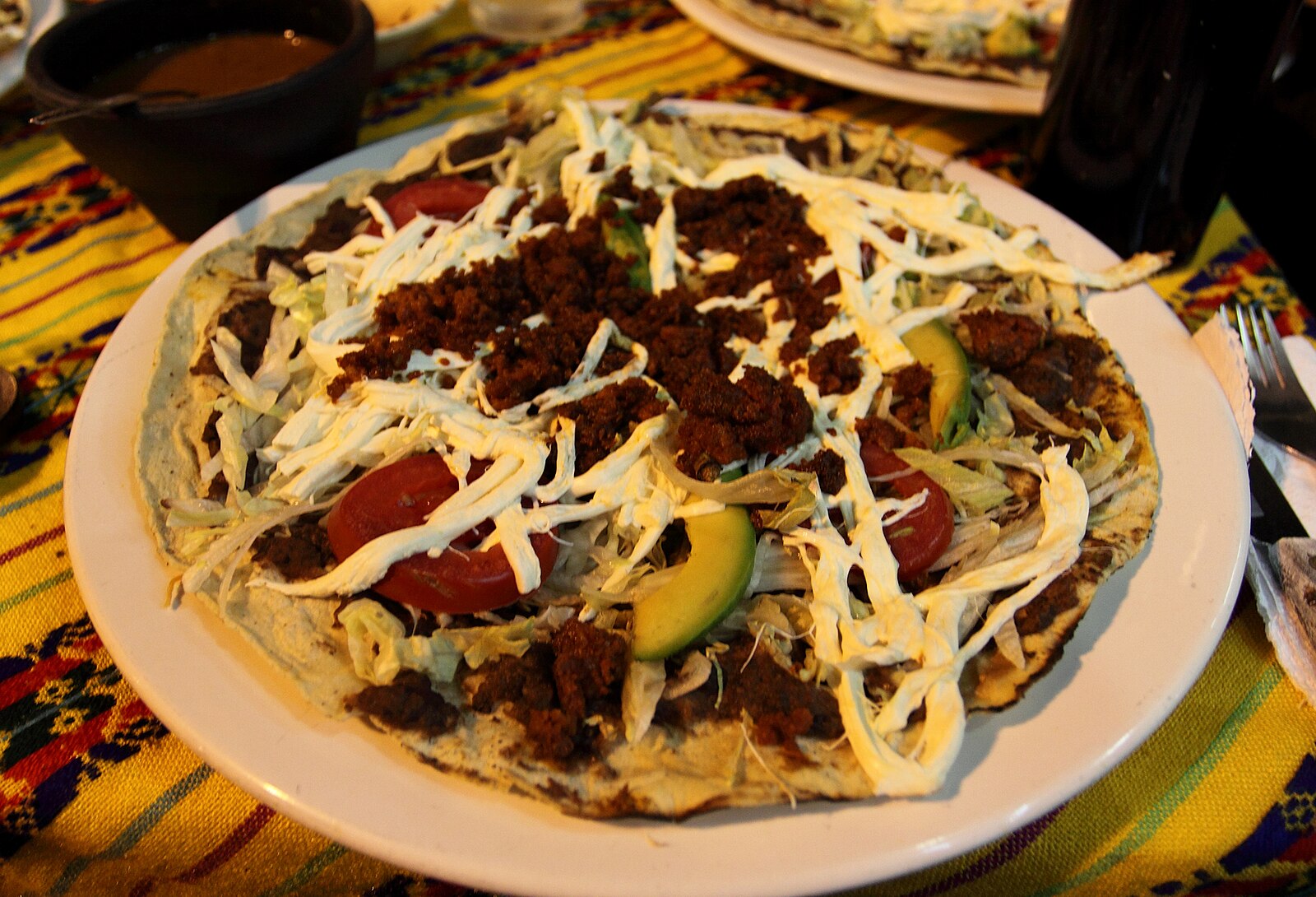
The word tlayuda names two things: the tortilla and the finished dish. Mexico’s agriculture ministry, the federal farm department known as SADER, describes the tortilla as about 30 centimetres (12 inches) across. It is browned on a comal, the flat griddle used across Mexico.
In San Antonio de la Cal, El Universal Oaxaca has reported tortillas up to 50 centimetres wide. They are thicker than the soft everyday tortillas, called blandas, made in the same village.
The classic toppings, per the ministry, are black beans, tasajo (thin dried beef), chorizo, cecina, quesillo and avocado. Quesillo is Oaxaca’s stringy white cheese, sold elsewhere as queso Oaxaca. Vendors also offer chapulines (toasted grasshoppers), escamoles (ant larvae) and even seafood.
English menus often call it a “Mexican pizza”, but the comparison stops at the round shape. There is no wheat dough, no oven and no tomato sauce. The flavour comes from maize, black beans and asiento, the pork fat spread on the base.
Where the Name and the Tortilla Come From
The agriculture ministry traces the name to the Nahuatl word tlao-li, meaning shelled corn. It reads the ending as a suffix suggesting abundance. Some food writers doubt it. A 2025 Mexico News Daily column pointed instead to an old Spanish adjective, tlayudo, for something tough and enduring.
El Financiero has also noted that the word once described anything strong, leathery or resistant, especially tortillas.
The geography is clearer. The ministry says tlayudas are made mainly by Zapotec Indigenous communities in Oaxaca. Rural women from San Antonio de la Cal make the tortillas and carry them into the city to sell.
El Universal Oaxaca reported in 2021 that the town has lived off oversized tortillas for at least 60 years. More than 3,000 women there carry them in tenates, woven baskets, on their backs or heads.
The dish reached a wider audience in 2020. A Twitter vote run by a streaming platform crowned the tlayuda in a “Street Food Latinoamérica” contest, the ministry said. Milenio identified the platform as Netflix.
How Tlayudas Are Made, From Maize to Grill
Everything starts with nixtamalisation, the pre-Hispanic method of cooking maize with lime. In San Antonio de la Cal, El Universal Oaxaca reported, the grain soaks in alkaline water for up to 12 hours.
The softened maize then goes to a mechanical or electric mill. Makers once ground it by hand on a metate, a flat grinding stone. The dough is shaped into wide discs and cooked on comales heated with firewood.
Milenio’s food desk explains that the tortilla stays on the heat until the water in the dough evaporates. That gives it a brittle, leathery texture and a long shelf life, which is why it travels well.
To build the dish, the cook warms the tortilla and spreads asiento, then a layer of black bean paste. Quesillo, shredded cabbage or lettuce, tomato and avocado follow, with the chosen meat on top.
Then there are two styles. Some vendors fold the tortilla in half and crisp it over the coals, while others serve it open, like a giant tostada. In the 20 de Noviembre market, México Desconocido notes, tlayudas usually come open, as in the old days.
Oaxacan kitchens often serve it with grilled spring onions and chile de agua, a local green chilli. Cosecha Oaxaca in Mexico City lists both, plus peanuts, with every tlayuda on its menu.
What to Order: Fillings and Words to Know
Menus are short and use a handful of words. These are the ones a first-time visitor will meet at a stall or restaurant.
- Sencilla or natural: the basic tlayuda with asiento, beans, cheese and vegetables, but no meat.
- Tasajo: thin, salted beef, grilled to order. Milenio calls it the most common topping.
- Cecina enchilada: thin pork rubbed with chilli.
- Chorizo: Oaxacan pork sausage.
- Chapulines: toasted grasshoppers, often the priciest option on the menu.
- Combinada or mixta: two or three meats on one tortilla.
- Doradita: a crisp, open, toasted tlayuda, listed by some menus as a starter to share.
- Asiento: the pork fat spread on the base. Vegetarians should ask for a tlayuda sin asiento.
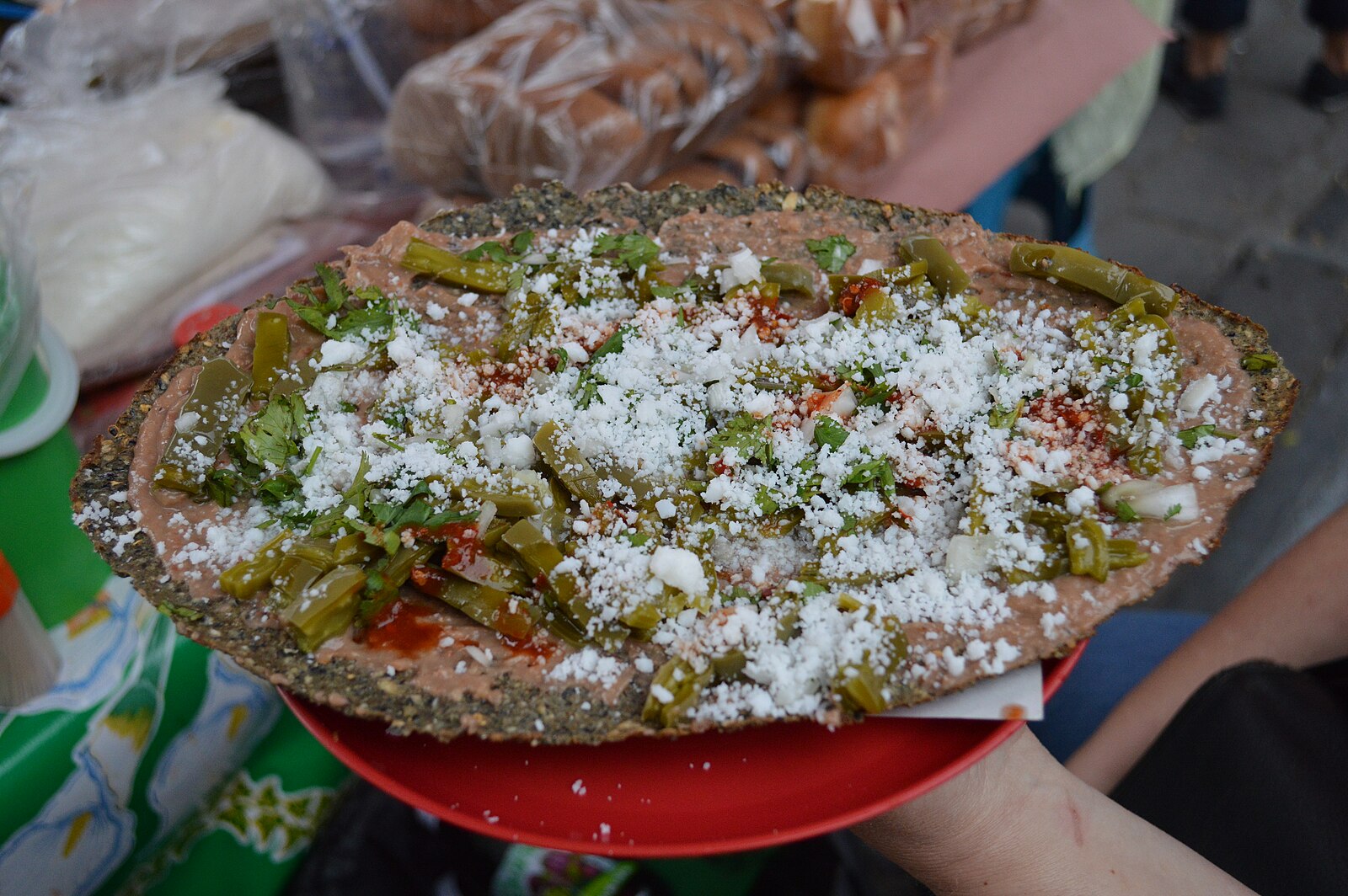
In Mexico City, El Financiero has noted, a smaller street version is sometimes called a doradita. It is made with blue maize and topped with beans, nopales (cactus paddles), cheese, onion, coriander and salsa.
Where to Eat Tlayudas in Oaxaca
Prices in the city of Oaxaca are set stall by stall and are rarely posted online. The figures below come from Mexican media and travel guides, with the year noted.
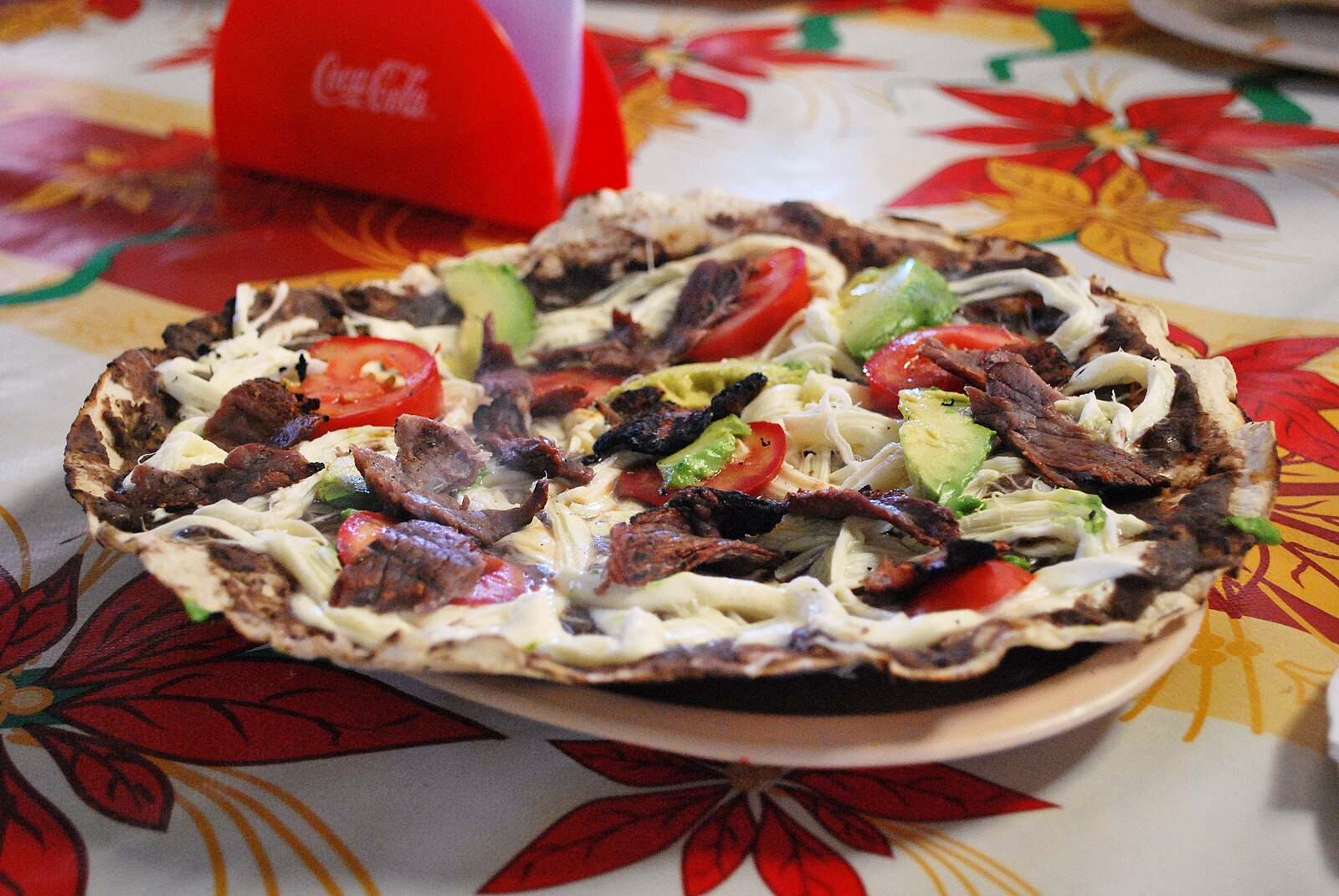
- Mercado 20 de Noviembre, Centro, two blocks from the Zócalo: the historic centre’s main food market, per Viva México. A corridor of grills serves tasajo, cecina and chorizo. México Desconocido put the average tlayuda at MXN 60 (about US$3.30) in 2024.
- Tlayudas Libres Doña Martha, Calle de los Libres 212, Centro: a short menu of natural, tasajo, cecina and chorizo tlayudas. México Desconocido listed them at MXN 40 to 60 (about US$2.20 to US$3.30) in 2024.
- Mercado Benito Juárez, Centro: the agriculture ministry calls it the most traditional place in Mexico to eat a tlayuda.
- Central de Abasto Margarita Maza, which Excélsior calls the largest market in Oaxaca de Juárez: the place to buy the plain tortilla. It found the tortilla at up to MXN 13 (about US$0.70) a piece in December 2025.
- San Antonio de la Cal: the village where the tortillas are made, and host of the July tlayuda fair.
In July 2026, the Mexican travel site Viva México put street tlayudas at MXN 60 to 130 (about US$3.30 to US$7.20). Named restaurants can charge MXN 180 (about US$9.90) or more.
Prices are rising. On Wednesday 31 December 2025, Excélsior reported that vendors in and around the state capital had raised prices, citing input costs.
In 2023, El Universal Oaxaca found producers paying MXN 800 (about US$44) for a 50-kilogram sack of native maize. That was double the price they had paid before.
Where to Eat Tlayudas in Mexico City
Mexico City prices run higher than Oaxaca’s, but menus are easier to check. The four places below publish prices on their own websites or delivery listings, as of October 2026.
- Cosecha Oaxaca, Guanajuato 19, Roma Norte: a sit-down Oaxacan kitchen opened in 2024. The sencilla costs MXN 135 (about US$7.40) and chorizo or cecina MXN 190 (about US$10.50). Tasajo costs MXN 220 (about US$12.10) and chapulines MXN 230 (about US$12.70).
- Xaachila, Santísima 23 C, Centro Histórico: a restaurant with an Oaxacan grocery next door. Its online menu lists the three-meat tlayuda with tasajo, cecina and chorizo at MXN 150 (about US$8.30). It closes at 6 p.m. on weekdays.
- Oaxaca Raíz y Sabor, stall 200, Mercado de Coyoacán: a counter inside the market at Allende and Xicoténcatl. Its Rappi delivery menu lists the sencilla at MXN 100 (about US$5.50) and one with meat at MXN 150 (about US$8.30). Counter prices may differ.
- Ké-Tlayudas, Donizetti 158, Colonia Vallejo, Gustavo A. Madero: a neighbourhood spot in the north of the city. A 32 cm sencilla costs MXN 120 (about US$6.60), and each meat or chapulines adds MXN 35 (about US$1.90). It opens Wednesday to Sunday, 2 p.m. to 9 p.m.
The tlayuda has also reached fine dining. In 2019, Pujol, Enrique Olvera’s restaurant, served a black bean tlayuda on its tasting menu, El Financiero reported.
The Tlayuda Fair and Oaxaca’s Heritage Decree
Every July in recent years, as part of the Guelaguetza festivities, San Antonio de la Cal holds the Feria de la Tlayuda. Oaxaca’s governor, Salomón Jara Cruz, who heads the state government, opened the 13th edition on Sunday 19 July 2026.
Quadratín Oaxaca reported 20 stalls at the El Polvorín sports ground, selling tlayudas made with white, blue and yellow maize. The fair ran until Monday 27 July, according to the state government’s announcement carried by La Onda Oaxaca.
In December 2023, the Oaxaca state Congress approved two decrees on quesillo and the tlayuda, Milenio reported. They declared both tangible gastronomic goods of the heritage of Oaxacan peoples and communities.
The decrees also made the techniques for making the tlayuda, as tortilla and as dish, intangible heritage of the state. A copy is published by the Oaxaca Congress.
At the international level, UNESCO inscribed traditional Mexican cuisine on its intangible heritage list in 2010. The listing is built on the Michoacán model and names nixtamalisation among its core techniques. The agriculture ministry counts the tlayuda among the Oaxacan dishes it covers.
What It Means for US Readers
For travellers, the tlayuda is a full meal at street-food prices. At the central bank rate, an Oaxaca street tlayuda costs about US$3.30 to US$7.20. In Mexico City, expect about US$5.50 to US$12.70.
As of October 2026, the State Department’s Mexico advisory rates Oaxaca state and Mexico City at Level 2, “exercise increased caution”. It sets no restrictions for US government staff in the tourist areas of Oaxaca City, Monte Albán, Puerto Escondido or Huatulco.
For Mexico City, the advisory urges extra caution at night outside popular tourist areas. US government staff must use regulated taxi stands or app-based services such as Uber, and visitors are urged to do the same.
Bringing tlayudas home is harder. US Customs and Border Protection requires travellers to declare all food, and many dried and fresh meats from abroad are prohibited. Failing to declare prohibited items can cost up to US$1,000 for a first offence.
Timing matters too. July brings the Guelaguetza and the tlayuda fair in Oaxaca. For Day of the Dead dates, see Day of the Dead 2026: Mexico City Parade on 31 October.
Connected Coverage
Oaxaca’s Guelaguetza 2026 Opens With Mezcal and Food Fairs
Living in Oaxaca: The 2026 Expat Guide
Mexico Tops World Culinary Destinations List for 2026
Best Time to Visit Mexico in 2026, Region by Region
What Is Not Known
Where the name comes from is unsettled. The Nahuatl derivation is the official account, but some writers argue for a Spanish root and the dispute is unresolved.
There is no official count of tlayuda makers. The figure of more than 3,000 women in San Antonio de la Cal comes from a 2021 press report.
Oaxaca’s street prices are not published, and the 2024 stall figures above predate the December 2025 increase. Expect to pay somewhat more at the same places.
It is not clear that UNESCO’s 2010 listing covers the tlayuda as such. The file is built on Michoacán and does not name the dish in its summary. Dates for the 2027 tlayuda fair have not been announced.
Frequently Asked Questions
What is a tlayuda?
A large maize tortilla from the Central Valleys of Oaxaca, about 30 centimetres across, and the dish built on it. It is spread with asiento (pork fat) and black bean paste, then topped with quesillo, cabbage or lettuce, tomato, avocado and usually meat such as tasajo, cecina or chorizo.
Is a tlayuda the same as a Mexican pizza?
No. The round shape is the only real link. A tlayuda uses a toasted maize tortilla rather than wheat dough, needs no oven or tomato sauce, and is often folded and crisped over coals.
How much does a tlayuda cost in Oaxaca?
Street stalls and markets charge about MXN 60 to 130 (about US$3.30 to US$7.20), per Viva México’s July 2026 guide. Named restaurants can charge MXN 180 (about US$9.90) or more. The plain tortilla costs up to MXN 13 (about US$0.70).
Where can I eat a tlayuda in Mexico City?
Options include Cosecha Oaxaca in Roma Norte, from MXN 135 (about US$7.40), and Xaachila in the Centro Histórico, MXN 150 (about US$8.30) for three meats. Oaxaca Raíz y Sabor sits in the Mercado de Coyoacán, and Ké-Tlayudas in Colonia Vallejo starts at MXN 120 (about US$6.60).
When is the Feria de la Tlayuda?
It is held in San Antonio de la Cal, in Oaxaca’s Central Valleys, during the Guelaguetza festivities in July. The 13th edition ran from Sunday 19 to Monday 27 July 2026, with 20 stalls. Dates for 2027 have not been announced.
Can I bring tlayudas back to the United States?
Declare all food to US Customs and Border Protection on arrival. Many dried and fresh meats from abroad are prohibited, so leave the tasajo and chorizo behind. Failing to declare a prohibited item can cost up to US$1,000 for a first offence.
Sources: Secretaría de Agricultura y Desarrollo Rural, “Los sabores de México presentes en una Tlayuda”; Banco de México, FIX exchange rate; UNESCO, Traditional Mexican cuisine, inscribed 2010; Congreso del Estado de Oaxaca, decree on the tlayuda; Gobierno del Estado de Oaxaca, communiqué of 5 October 2026; US State Department, Mexico travel advisory; US Customs and Border Protection, agricultural products; Quadratín Oaxaca, 13th Feria de la Tlayuda; La Onda Oaxaca, fair dates; Milenio, heritage decrees; Milenio, origin of the tlayuda; El Universal Oaxaca, San Antonio de la Cal; El Universal Oaxaca, producer costs; Excélsior, prices at the end of 2025; México Desconocido, where to eat tlayudas in Oaxaca; Viva México, Oaxaca food guide 2026; El Financiero, tlayudas in Mexico City; Mexico News Daily, Taste of Mexico: Tlayuda; Eat Your World, open and folded styles; Cosecha Oaxaca menu; Xaachila menu; Ké-Tlayudas menu; Oaxaca Raíz y Sabor, Rappi menu. All accessed 6 October 2026.
This article was produced by The Rio Times’ automated newsroom system. How we use AI · Report an error · Editorial responsibility: Matthias Camenzind, Editor-in-Chief