
Key Facts
—Arrest. Mexico announced on 21 October the arrest of an alleged Hells Angels leader in Cancún.
—Formula 1. Mexico City’s Grand Prix runs 30 October to 1 November; its contract ends after 2028.
—Inflation. Annual inflation was 3.62% in early October, with prices up 0.41% in the fortnight.
—Race economics. A business chamber estimates the race weekend at 22.228 billion pesos (about US$1.2 billion).
—Power Index. Mexico ranks 2nd of 14 in The Rio Times Latin America Power Index, with 71.4 points (October 2026 edition).
Mexico’s day brought an arrest in a resort city, a fight to keep Formula 1 beyond 2028, and a small rise in inflation.
In Plain English
- Hells Angels: A motorcycle club founded in the United States, with some members linked by authorities to organised crime.
- Extradition: The legal process by which one country hands a suspect to another country’s courts.
- INEGI: Mexico’s national statistics institute, which publishes the official inflation figures.
- Canaco: The Mexico City chamber of commerce, a business group.
Cancún Arrest Targets an Alleged Hells Angels Leader
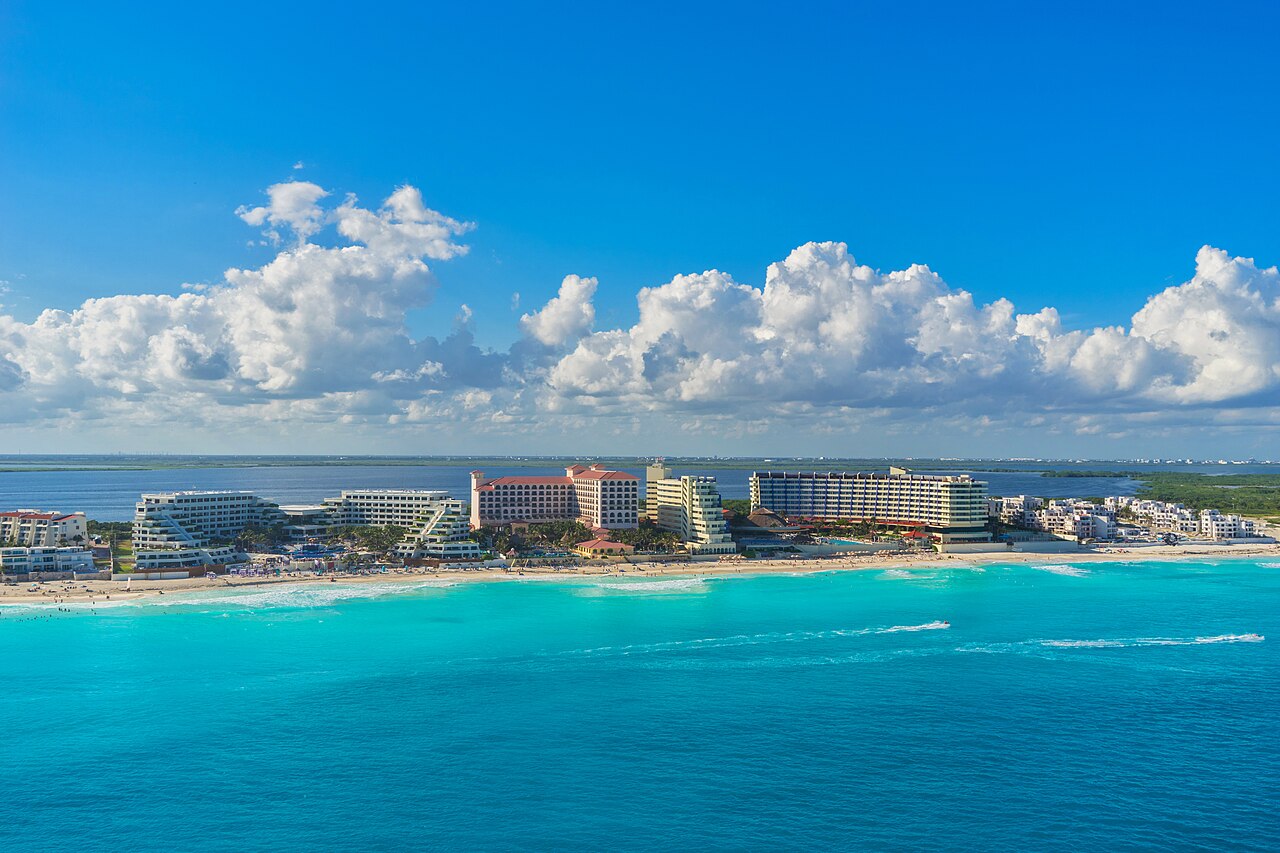
Mexico’s Security Cabinet announced on Wednesday 21 October the arrest in Cancún of a man identified in Mexican media as Robert Skojo (listed by officials as Robert “N”). Reports describe him as a Canadian national and an alleged leader of a criminal group using the Hells Angels name.
The navy, the federal security ministry, the federal prosecutor’s office and Quintana Roo state police carried out three search warrants in Benito Juárez, the municipality that includes Cancún. Officers seized 1.3 kilograms of marijuana, two long guns, one handgun, two vehicles and one phone.
Authorities linked the detainee to drug trafficking, extortion and organised crime, and he was handed to federal prosecutors. Some media reports say Canadian police had sought him, but officials have not confirmed that or said whether an extradition request exists.
In May 2026 Mexican forces detained another alleged Hells Angels figure, Denis Ivziku, in the same area. Authorities have not said whether the two cases are connected.
Mexico City Fights to Keep Formula 1 Beyond 2028
The Mexico City Grand Prix runs from Friday 30 October to Sunday 1 November 2026 at the Autódromo Hermanos Rodríguez. Its contract covers the 2026, 2027 and 2028 races, and organisers want to extend it.
Federico González Compeán, the race’s director general, said talks on a renewal could begin between late 2026 and early 2027. He expects to discuss the future with Stefano Domenicali, Formula 1’s president and chief executive, during this year’s Grand Prix weekend.
Canaco, the Mexico City chamber of commerce, estimates the weekend could generate 22.228 billion pesos (about US$1.2 billion at 18.75 pesos per US dollar, EODHD, 23 October). Organisers say they do not want to alternate the race with another circuit.
Inflation Edges Up as Summer Power Subsidies End
INEGI reported on Thursday 22 October that annual inflation reached 3.62% in the first half of October 2026, with consumer prices up 0.41% in the fortnight. A year earlier, the same reading was 3.63%.
Electricity was the main driver, with prices up 18.51% in the fortnight as summer subsidies ended in 18 cities. Core inflation, which excludes volatile items such as energy and food, was 3.78% year on year.
Non-core inflation was 3.08% year on year and rose 0.98% in the fortnight.
What Links These Stories
Mexico’s biggest stories today do not share one theme, so this Big Read treats them as three signals. What connects them is how Mexico looks to outside visitors and investors: an arrest in a resort city, an international race weekend and a price index watched by bond investors.
Cancún and Mexico City both depend on foreign visitors and spending. Security news, event contracts and living costs all feed into that picture.
The reports behind this Big Read
What It Means for US Readers
For US travellers, the Cancún arrest involves a group with American roots in a destination heavily used by Americans. No incident involving tourists was reported, and travellers can check the State Department advisory for Quintana Roo before they go.
For US companies and investors, inflation of 3.62% is moderate but shows that energy costs can shift quickly. The Formula 1 talks matter to sponsors, broadcasters and hospitality businesses with Mexico exposure.
What to Watch Next
Watch for a court hearing or an extradition filing in the Cancún case, which would show whether Canada or the United States becomes involved. Mexican authorities have not announced formal charges.
The race weekend starts on 30 October, and renewal talks could begin between late 2026 and early 2027. The next INEGI inflation reading will show whether the October rise was a one-off.
What Is Not Known
Mexican authorities have not confirmed the detainee’s nationality in public, and media reports differ on his name and on the arrest date. Nor is it clear whether an extradition request formally exists.
No post-2028 Formula 1 agreement has been signed, and no contract value or hosting fee has been disclosed. The exact date of the talks with Formula 1 is also unknown.
Sources
INEGI, consumer prices (INPC) · La Razón, arrest in Cancún · Yucatán.com.mx, arrest of Robert Skojo · Publimetro, Mexico Grand Prix renewal · Excélsior, Canaco estimate · La Razón, first-half October inflation
This article was produced by The Rio Times’ automated newsroom system. How we use AI · Report an error · Editorial responsibility: Matthias Camenzind, Editor-in-Chief
Frequently Asked Questions
Who was arrested in Cancún?
Mexican media identify him as Robert Skojo, an alleged leader of a criminal group using the Hells Angels name. The Security Cabinet announced the arrest on 21 October and linked him to drug trafficking, extortion and organised crime.
Will the Mexico City Grand Prix stay after 2028?
Nothing is signed. Organisers say talks on a renewal could begin between late 2026 and early 2027, and this year’s race runs from 30 October to 1 November.
How high is inflation in Mexico?
INEGI reported annual inflation of 3.62% for the first half of October 2026, driven mainly by electricity after summer subsidies ended. A year earlier it was 3.63%.