IBOV 188,268.59 ▲ 1.42% IPSA 11,238.63 ▼ 1.16% IPC MEX 64,479.96 ▼ 0.52% MERVAL 3,157,852 ▲ 1.53% COLCAP 2,626.71 ▲ 1.65% BVL PERÚ 60,702.89 ▼ 2.19% USD/BRL5.11▼ 0.05% USD/MXN16.98▲ 0.48% USD/CLP940.47▲ 1.38% USD/COP3,081▼ 1.14% USD/PEN3.35▼ 0.18% USD/ARS1,513▼ 0.08% USD/UYU40.24▲ 3.05% USD/PYG5,868▲ 2.26% USD/BOB12.36▲ 1.91% USD/DOP58.63▲ 0.22% USD/CRC447.58▲ 1.69% USD/GTQ7.63▲ 3.04% USD/HNL26.85▲ 0.57% USD/NIO36.62▲ 0.34% USD/VES830.41▲ 0.45% USD/PAB1.00— 0.00% USD/BZD2.00— 0.00% USD/JMD 157.28 — 0.00% USD/TTD6.73▲ 2.40% EUR/BRL5.93▲ 0.34% BRENT 88.88 ▼ 0.03% WTI 83.11 ▼ 0.11% IRON ORE 161.91 — — COPPER 6.61 ▲ 0.03% GOLD 4,461 ▲ 1.78% SILVER 65.59 ▲ 1.26% SOY 1,184 ▲ 3.20% CORN 480.50 ▲ 10.02% WHEAT 655.00 ▲ 3.93% COFFEE 317.25 ▼ 5.51% SUGAR 16.43 ▼ 1.79% ORANGE JUICE 138.55 ▼ 0.47% COTTON 85.03 ▲ 2.33% COCOA 5,719 ▲ 3.18% BEEF 223.60 ▼ 3.93% CATTLE 339.10 ▼ 3.16% LITHIUM 75.20 ▲ 1.47% PETR4 41.64 ▼ 0.05% VALE3 72.97 ▲ 0.83% ITUB4 38.60 ▼ 1.03% BBDC4 16.85 ▲ 0.36% ABEV3 14.89 ▼ 0.80% BBAS3 19.37 ▲ 0.47% B3SA3 14.26 ▼ 0.21% WEGE3 47.59 ▲ 0.49% PRIO3 59.14 ▼ 0.19% SUZB3 41.33 ▲ 2.35% RENT3 34.68 ▼ 0.09% AZZA3 15.89 ▼ 2.63% CSAN3 3.22 ▼ 1.83% RAIZ4 0.25 — 0.00% PCAR3 2.75 ▼ 0.36% GMAT3 3.65 ▼ 1.08% PSSA3 48.13 ▼ 0.54% CVCB3 1.33 ▼ 2.92% POSI3 3.36 ▲ 2.44% SLCE3 13.34 ▲ 0.30% NATU3 8.14 ▼ 0.73% IBOV 188,268.59 ▲ 1.42% IPSA 11,238.63 ▼ 1.16% IPC MEX 64,479.96 ▼ 0.52% MERVAL 3,157,852 ▲ 1.53% COLCAP 2,626.71 ▲ 1.65% BVL PERÚ 60,702.89 ▼ 2.19% USD/BRL 5.16 ▲ 0.01% USD/MXN 17.06 ▼ 0.24% USD/CLP 913.98 ▲ 0.04% USD/COP 3,140 ▲ 0.03% USD/PEN 3.36 ▼ 0.66% USD/ARS 1,493 ▲ 0.10% USD/UYU 40.27 ▲ 1.24% USD/PYG 5,939 ▲ 1.68% USD/BOB 11.64 ▼ 0.76% USD/DOP 58.34 ▲ 1.25% USD/CRC 445.92 ▲ 0.89% USD/GTQ 7.62 ▲ 2.21% USD/HNL 26.79 ▲ 1.57% USD/NIO 36.62 ▲ 0.69% USD/VES 762.44 ▼ 0.13% USD/PAB 1.00 — 0.00% USD/BZD 2.00 — 0.00% USD/JMD 157.28 — 0.00% USD/TTD 6.70 ▲ 0.61% EUR/BRL 5.95 ▲ 1.01% BRENT 88.88 ▼ 0.03% WTI 83.11 ▼ 0.11% IRON ORE 161.91 — — COPPER 6.61 ▲ 0.03% GOLD 4,461 ▲ 1.78% SILVER 65.59 ▲ 1.26% SOY 1,184 ▲ 3.20% CORN 480.50 ▲ 10.02% WHEAT 655.00 ▲ 3.93% COFFEE 317.25 ▼ 5.51% SUGAR 16.43 ▼ 1.79% ORANGE JUICE 138.55 ▼ 0.47% COTTON 85.03 ▲ 2.33% COCOA 5,719 ▲ 3.18% BEEF 223.60 ▼ 3.93% CATTLE 339.10 ▼ 3.16% LITHIUM 75.20 ▲ 1.47% PETR4 41.64 ▼ 0.05% VALE3 72.97 ▲ 0.83% ITUB4 38.60 ▼ 1.03% BBDC4 16.85 ▲ 0.36% ABEV3 14.89 ▼ 0.80% BBAS3 19.37 ▲ 0.47% B3SA3 14.26 ▼ 0.21% WEGE3 47.59 ▲ 0.49% PRIO3 59.14 ▼ 0.19% SUZB3 41.33 ▲ 2.35% RENT3 34.68 ▼ 0.09% AZZA3 15.89 ▼ 2.63% CSAN3 3.22 ▼ 1.83% RAIZ4 0.25 — 0.00% PCAR3 2.75 ▼ 0.36% GMAT3 3.65 ▼ 1.08% PSSA3 48.13 ▼ 0.54% CVCB3 1.33 ▼ 2.92% POSI3 3.36 ▲ 2.44% SLCE3 13.34 ▲ 0.30% NATU3 8.14 ▼ 0.73%
since 2009
Thursday, September 10, 2026

Africa Western Africa

Strategic Investments Propel The Gambia’s GDP Growth

By · August 6, 2024 · 2 min read

Africa Intelligence

One email, every weekday morning. African markets, politics and business — filed from our newsroom in Rio.

Yesterday’s subject line: “Nigeria's Dangote signs for Africa's biggest IPO ever”

Free. We send a confirmation link first — nothing arrives until you click it. Unsubscribe with one click in any edition. If you stop opening us for 30 days we stop sending by ourselves, as we assume the interest is no longer there. See our privacy policy. We never share your email.

In 2023, The Gambia continued to demonstrate economic resilience and growth amidst global uncertainties.

The country achieved an impressive average real GDP growth of 5.6%, up from 4.1% in the previous year.

This growth was propelled by diverse sectors, including tourism, agriculture, construction, and trade, along with robust private investment and public expenditure.

The nation’s economic policy saw a tightening of monetary controls, which helped reduce inflation from 17.2% in 2022 to 15.9% in 2023.

Efforts by the Central Bank of The Gambia were pivotal in this achievement, demonstrating the effectiveness of their restrictive monetary stance.
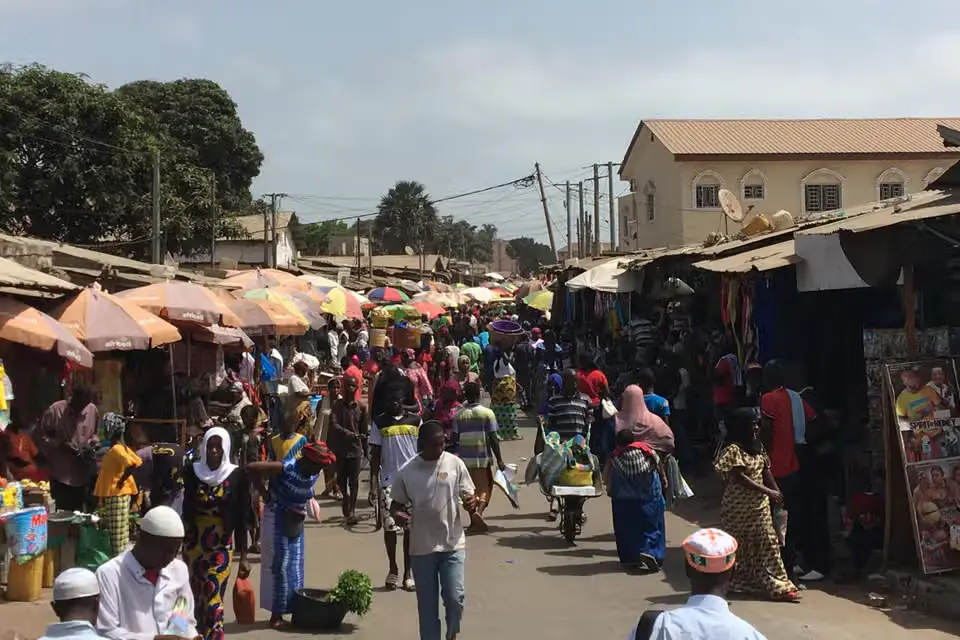
Strategic Investments Propel The Gambia's GDP Growth
Strategic Investments Propel The Gambia’s GDP Growth.
One-stop reference
Company Intelligence
Every listed company in Latin America — financials, ownership and structure for 1,450+ companies across 26 exchanges, in one place.
Browse the directory →
RT
Ask Rio Times
17 years of Latin America reporting, on demand.
Open the full Ask Rio Times →

Further fiscal improvement was evident as the fiscal deficit shrank from 4.9% of GDP in 2021 to 3.5% in 2023, aided by enhanced resource mobilization and strategic international partnerships.

This fiscal prudence facilitated a reduction in public debt from 82.8% of GDP in 2022 to 71.8% in 2023. This reduction contributed to enhanced economic stability.

Despite these gains, The Gambia‘s external financial health remained fragile, with a widening current account deficit from 6.1% to 7.2% of GDP within a year, driven by a burgeoning trade deficit.

This situation underscores the economy’s susceptibility to external shocks and emphasizes the need for careful management of trade and investment flows.

Gambia’s Economic Transformation

Looking ahead, The Gambia expects a favorable economic outlook, with GDP growth projected to peak at 6.1% in 2024 before moderating slightly.

Key drivers for future growth include significant infrastructure projects, such as the expansion of the Banjul port.

Advancements in digital infrastructure and enhancements in the electricity sector also play a crucial role.

These developments are expected to spur further economic dynamism. However, the nation faces potential risks from global geopolitical tensions and climate-related disruptions, which could impede progress.

The journey towards sustainable economic transformation involves addressing structural weaknesses, particularly in agriculture and industry.

Productivity in these sectors remains low due to limited technological adoption and the impacts of climate change.

Structural transformation has been slow, with agriculture still employing a significant portion of the workforce at lower productivity levels.

In addition, this highlights the pressing need for technological innovation and enhanced skill training.

Meanwhile, the shift towards service-oriented sectors like tourism and trade has not fully compensated for the productivity gaps in traditional sectors.

The government is focused on bridging a substantial financing gap. This effort is supported by multilateral development banks (MDBs) and development finance institutions (DFIs).

This effort aims to foster structural changes. This includes leveraging green and blue investments and tapping into new sources of international finance.

However, these strategies aim to boost capital inflows and support critical development projects.

As The Gambia continues its path of economic reform and structural transformation, the international community’s role will be crucial. Providing low-cost financing and risk mitigation tools will be essential.

This support will not only aid in overcoming the immediate financial challenges. It will also help in building a resilient and sustainable economic framework for the future.

This article was produced by The Rio Times’ automated newsroom system. How we use AI · Report an error

Part of our ongoing coverage

Africa: The New Scramble — the great-power contest over the continent.

More from Western Africa

Read More from The Rio Times

The Rio Times · Power Map
See who really holds power in Latin America
Click to open the Power Map

Rotate for Best Experience

This report is optimized for landscape viewing. Rotate your phone for the full experience.