Stelco Hamilton Layoffs Test Canada’s Steel Lifeline

CANADA · ANALYSIS
Key Facts
- What is happening Cleveland-Cliffs idled Stelco’s cold-rolled and coated-steel operations at Hamilton Works in September 2026, and 175 workers had been laid off by late October.
- Why it matters Ottawa says the layoffs breach 34 Investment Canada Act undertakings tied to Cleveland-Cliffs’ 2024 purchase of Stelco, and it has threatened court action.
- The numbers Cleveland-Cliffs said up to 500 workers could be affected across Hamilton Works and Lake Erie Works, but only 175 Hamilton layoffs were confirmed as of October 28, 2026.
- Who is who Industry Minister Mélanie Joly is pressing Cleveland-Cliffs CEO Lourenco Goncalves, while United Steelworkers Local 1005 President Ron Wells represents the laid-off Hamilton workers.
- What to watch Joly gave Cleveland-Cliffs 15 days to reverse the layoffs, and Goncalves said he hopes to recall all 175 workers before Christmas if Canadian demand improves.
- What it means for you US investors in cross-border manufacturing now face a clear precedent: Canadian regulators can treat job promises made during acquisitions as legally enforceable operating conditions.
Stelco Hamilton layoffs have left 175 workers idle as of October 2026, and the Canadian government is now testing whether it can force a US owner to honour employment promises made during a foreign takeover. The dispute matters to American investors because it could redefine what it costs to buy Canadian industrial assets.
Hamilton, Ontario, has been a steelmaking anchor for more than a century, and Stelco is one of Canada’s most politically sensitive industrial names. This analysis explains how a plant-level restructuring became a test of the Investment Canada Act, US tariff policy and cross-border supply chains, drawing on the USA–Canada Intelligence Brief.
How the Hamilton Layoffs Unfolded
Cleveland-Cliffs announced on September 28, 2026, that it would idle Stelco’s cold-rolled and coated-steel operations at Hamilton Works. The company said as many as 500 employees could ultimately be affected across Hamilton Works and Lake Erie Works in Nanticoke, Ontario.
The confirmed number is lower so far. By late October, 175 Hamilton workers had actually been laid off, according to Cleveland-Cliffs and United Steelworkers Local 1005 President Ron Wells.
The union had previously expected approximately 333 Hamilton layoffs. The affected Hamilton operations are finishing-stage facilities producing cold-rolled and coated steel, rather than the entire Hamilton steel complex.
That distinction matters because Cleveland-Cliffs is not announcing a complete closure of Stelco, but it is removing a significant portion of Hamilton’s downstream production and employment. That gap between the company’s framing and the union’s count is central to the political fight now unfolding.
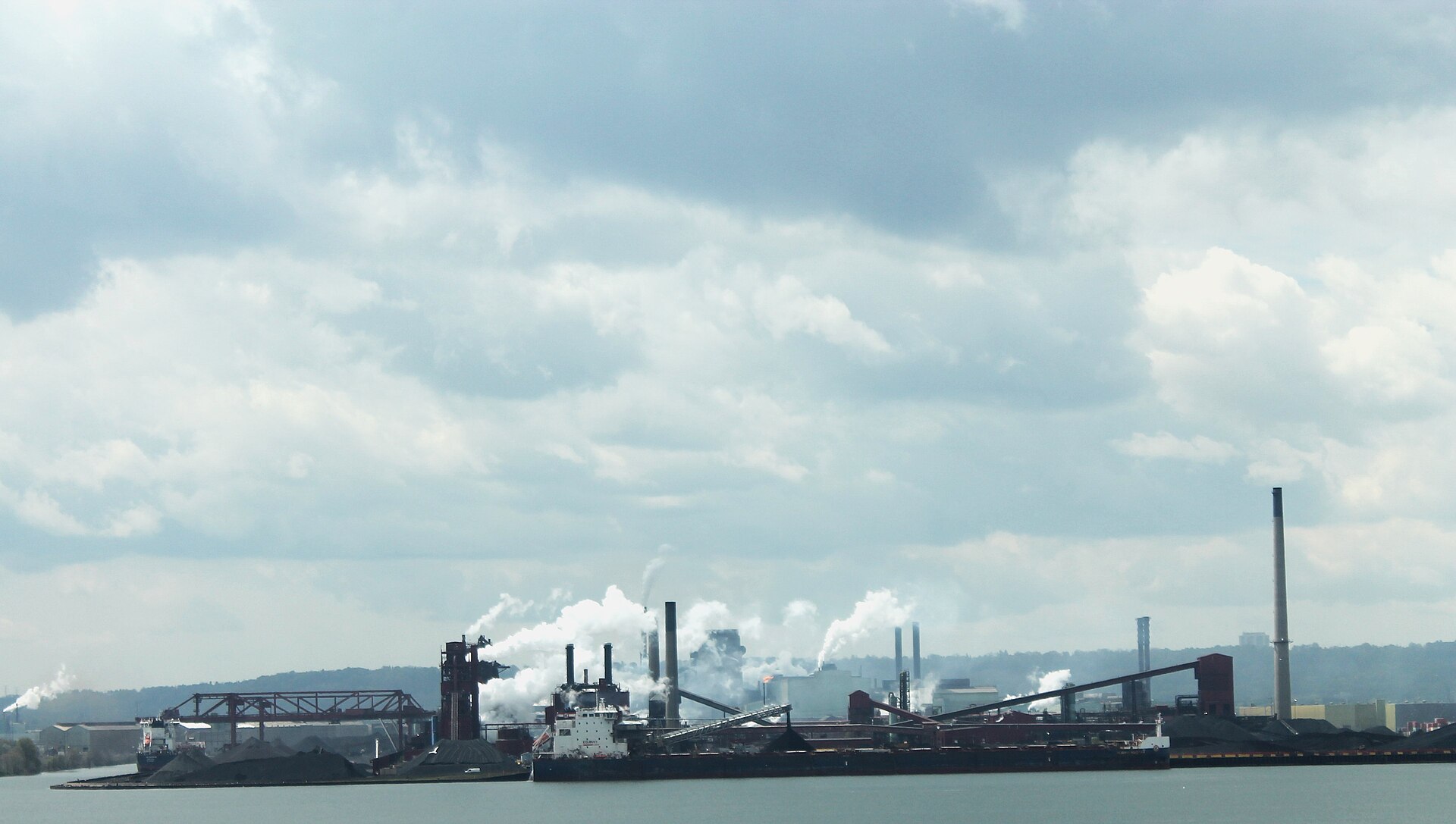
Who Owns Stelco and Why It Matters
Stelco is owned by Cleveland-Cliffs Inc., the Ohio-based US steelmaker led by Chairman and CEO Lourenco Goncalves. Cleveland-Cliffs completed its acquisition of Stelco in 2024.
Stelco had emerged from creditor protection before later listing publicly in Canada.The strategic rationale was North American integration.
Stelco supplied Canadian customers while Cleveland-Cliffs brought a large US customer base, mining assets and steelmaking operations, making the Hamilton and Nanticoke plants part of a cross-border steel portfolio rather than an independent Canadian producer.That ownership structure is now politically significant.
Ottawa negotiated employment and other undertakings from Cleveland-Cliffs when approving the takeover, so the dispute is not simply between a company and a union but between the Canadian government and a foreign purchaser over whether those undertakings permit temporary layoffs during adverse market conditions.
The Investment Canada Act Dispute
The Investment Canada Act allows Ottawa to review significant foreign acquisitions for their likely net benefit to Canada. In practice, approval can be tied to legally enforceable undertakings covering issues such as employment, capital spending, headquarters functions, production and Canadian participation.
Cleveland-Cliffs reportedly gave Ottawa 34 undertakings in connection with the Stelco acquisition. The employment commitments included annual average staffing levels of at least 1,766 full-time-equivalent unionized employees and 603 full-time-equivalent salaried employees.
The undertakings were understood to apply for five years. Industry Minister Mélanie Joly argues that the layoffs breach those commitments, under which the minister may apply to a superior court if an investor fails to comply with an undertaking.
Potential remedies discussed by Ottawa include financial penalties and an order that could ultimately force Cleveland-Cliffs to divest its Canadian operations. Cleveland-Cliffs disputes the government’s interpretation, saying its review found it was complying with all 34 commitments.
The legal question is therefore likely to turn on the wording and measurement of the undertakings. Does the annual-average formula allow temporary layoffs if the five-year average remains compliant, and do the commitments apply specifically to Hamilton or to Stelco’s Ontario operations as a whole?
How US Tariffs Drive the Layoffs
The immediate pressure comes from US tariffs on imported steel, including Canadian steel. Cleveland-Cliffs has said U.S. tariffs on Canadian steel have damaged Stelco’s economics.
The mechanism is straightforward. Stelco produces steel in Ontario, some Canadian steel traditionally moves into US markets, and a 50% US tariff raises the landed price for American buyers, pushing customers to pay more, switch suppliers, reduce purchases or demand lower prices from Stelco.
The effect is not necessarily that all Stelco steel is physically blocked from the United States. Rather, the tariff changes the relative economics of supplying the US market, so a Canadian mill can remain technically able to export while losing its margin or its customer.
Cleveland-Cliffs also points to weak Canadian demand and competition from imported steel. Stelco President and General Counsel Paul Simon said in an October 9 letter that dumped offshore imports and the market-depressing effect of US tariffs were contributing to the company’s difficulties.
Goncalves has publicly supported US steel tariffs, creating a political contradiction. Cleveland-Cliffs welcomed earlier US tariffs and said it understood the rationale for the 50% Canadian tariff, while subsequently citing that same policy as a reason for idling Canadian operations.
The Cross-Border Supply-Chain Problem
The Canada-US steel trade is highly integrated. Mills, processors, automakers, construction firms and distributors often depend on two-way flows rather than purely domestic supply.
Hamilton’s role is particularly exposed because its operations include finishing and coating steel for industrial customers. Those products may be sold directly to Canadian manufacturers or incorporated into goods that cross the border, so tariffs can affect Stelco in several ways at once.
Canadian trade data cited in late October complicates Cleveland-Cliffs’ explanation. That figure does not by itself prove that Stelco’s layoffs are unjustified, because imported steel can enter Canada for different customers, specifications and price points.
But it weakens a simple claim that overseas imports alone caused the Hamilton shutdown, and it highlights the two-way nature of the market. Stelco acknowledged that those measures reduced some overseas volumes but argued that they did not adequately protect Hamilton’s cold-rolled and coated products.
Why the Issue Matters to Investors and Expats
For investors, the Stelco dispute illustrates three risks. Policy risk means government approval of a foreign acquisition may come with enforceable operating conditions that constrain later restructuring.
Tariff risk means a plant can become uneconomic because of a trade measure imposed by the company’s home government, even when the plant itself is outside that country. Jurisdiction risk means Canadian assets owned by US groups may be subject to Canadian employment and investment obligations that differ from US corporate practice.
For expatriates and workers in Ontario, the immediate issue is employment in Hamilton and Nanticoke. The broader issue is whether Canada can attract foreign capital while credibly requiring buyers to preserve jobs and production.
A forced divestiture would also carry uncertainty. It could preserve Canadian ownership or create a new buyer, but it could equally reduce Stelco’s access to Cleveland-Cliffs’ capital, customers and raw materials.
A negotiated recall would be less disruptive, but it would likely require stronger Canadian demand, new customer contracts or government-backed purchasing commitments. The central test is whether the commitments are an annual-average obligation or a practical promise to keep the Hamilton workforce employed.
What It Means for You
If you hold shares in Cleveland-Cliffs or any US company with Canadian manufacturing assets, the Stelco case is a warning that acquisition approvals are not one-time events. Ottawa is treating the 34 undertakings as living obligations that can be enforced years after the deal closes.
The practical consequence is that future cross-border deals may become more expensive. Buyers will have to price in stricter and more enforceable job guarantees, and boards will need to model Canadian employment commitments as fixed costs rather than flexible operating targets.
For US steel customers, the dispute also signals that Canadian supply cannot be taken for granted. If Ottawa responds with procurement rules or further import restrictions, American manufacturers that rely on Canadian coated steel may face new sourcing constraints even without additional tariffs.
What Is Not Known
The exact wording of the 34 undertakings has not been made public in full, so it is impossible to know whether the annual-average employment formula actually permits temporary layoffs. Cleveland-Cliffs says it does, while Joly says it does not, and neither side has released the full text.
It is also unclear whether the 175 layoffs are truly temporary or the first step in a longer restructuring. Goncalves has said he wants to recall workers before Christmas, but that depends on Canadian customers buying more Canadian-made steel, which is not within the company’s control.
Finally, the trade data showing that the United States supplied 54.1% of Canada’s galvanized and coated-sheet imports in the first nine months of 2026 raises questions about whether tariffs alone explain the Hamilton shutdown. The full picture of customer orders, pricing and product mix has not been disclosed.
What to Watch
The immediate deadline is the 15-day window Joly gave Cleveland-Cliffs to reverse the layoffs, which began in late October 2026. If the company does not present a credible re-engagement plan, Ottawa could apply to a superior court under the Investment Canada Act.
Goncalves has said he hopes to recall all 175 workers before Christmas if Canadian demand improves. That makes December 2026 the first practical test of whether a negotiated recall is possible without court action.
The steel tariff-rate quota period running from September 30 to December 29, 2026, will also matter. Any changes to Canadian import restrictions or US tariff policy before that date could shift the economics of Hamilton’s cold-rolled and coated operations.
The scheduled end of the extended steel TRQ regime for non-CUSMA partners is June 27, 2027, which is the next major policy milestone for Canadian steel.
Frequently Asked Questions
Who owns Stelco in 2026?
Stelco is owned by Cleveland-Cliffs Inc., the Ohio-based US steelmaker led by Chairman and CEO Lourenco Goncalves. Cleveland-Cliffs completed its acquisition of Stelco in 2024.
How many workers were laid off at Stelco Hamilton?
As of late October 2026, 175 Hamilton workers had actually been laid off, according to Cleveland-Cliffs and United Steelworkers Local 1005 President Ron Wells. The company had said up to 500 workers could be affected across Hamilton Works and Lake Erie Works.
Why is the Canadian government threatening Cleveland-Cliffs?
Industry Minister Mélanie Joly says the layoffs breach 34 Investment Canada Act undertakings tied to Cleveland-Cliffs’ 2024 purchase of Stelco. She gave the company 15 days to reverse the layoffs or face court action under the Act.
How do US steel tariffs affect Stelco?
Cleveland-Cliffs has said U.S. tariffs on Canadian steel have damaged Stelco’s economics by raising the landed price for American buyers. The company also points to weak Canadian demand and competition from imported steel.
What could happen next in the Stelco dispute?
The most likely paths are a negotiated recall of the 175 workers before Christmas, a partial restructuring, court proceedings, financial penalties or divestiture pressure, or further political intervention by Ottawa.
What does the Stelco case mean for US investors?
The case signals that Canadian regulators can treat job promises made during foreign acquisitions as legally enforceable operating conditions. Future cross-border deals may become more expensive as buyers price in stricter employment guarantees.
Sources: riotimesonline.com, cbc.ca, hcamag.com, cbc.ca, globalnews.ca, btpm.org. Retrieved 30 October 2026.
This article was produced by The Rio Times’ automated newsroom system. How we use AI · Report an error · Editorial responsibility: Matthias Camenzind, Editor-in-Chief