Southern Brazil Storms Kill Four and Leave Hundreds of Thousands Without Power
Brazil · Weather
Key Facts
- —What happened A cold front brought violent winds, hail and heavy rain to three southern states on 21 September 2026.
- —The human toll Four people died in Rio Grande do Sul, the state Civil Defence confirmed on Tuesday, and a mother of two is missing.
- —Who is still in the dark About 248,000 customers in Rio Grande do Sul and 134,000 in Paraná lacked power late on Tuesday morning.
- —The catch The mother, 43, was still missing on Tuesday as firefighters began a second day of searching in Caxias do Sul.
- —What comes next The Taquari river passed flood level in Lajeado, with a flood alert until 7:20 p.m. Tuesday (UTC-3).
Gusts of up to 126 km/h lashed three southern states between Monday and Tuesday. Rio Grande do Sul counts its dead while rivers keep rising.
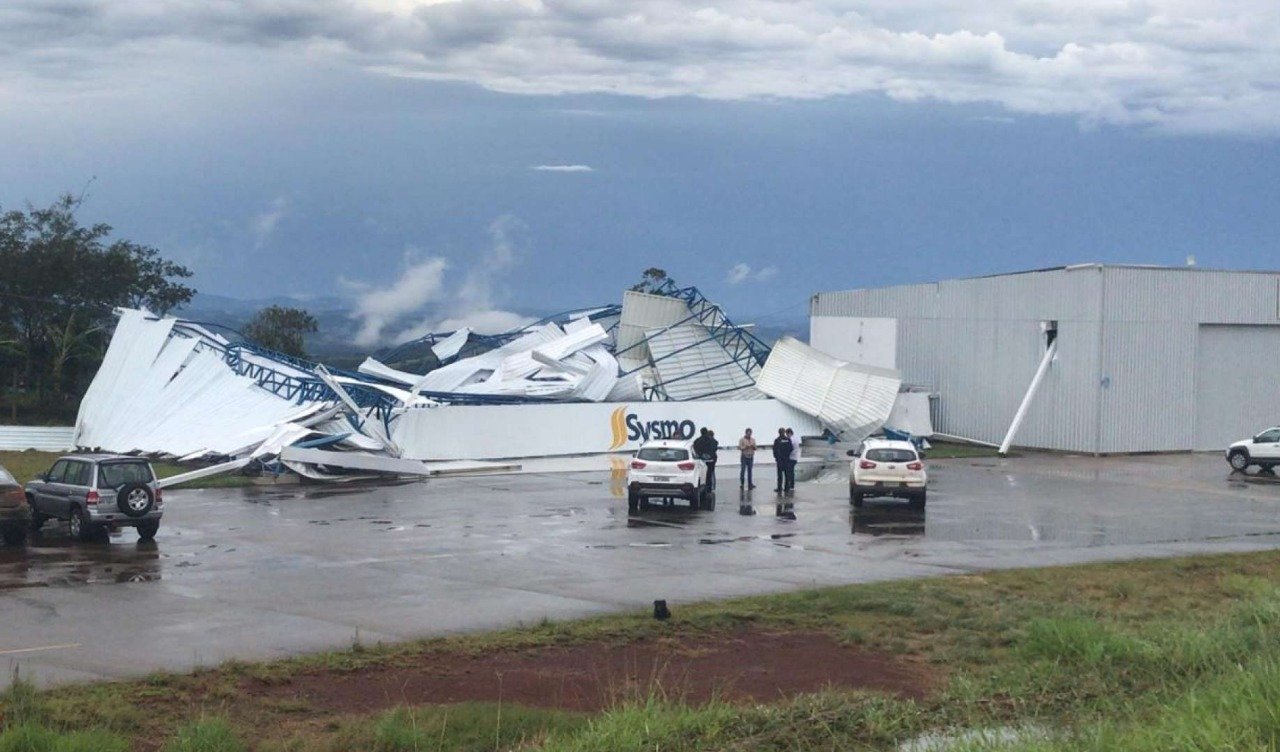
Southern Brazil storms have killed four people and left hundreds of thousands of homes and businesses without electricity. The front swept across Rio Grande do Sul, Santa Catarina and Paraná on Monday 21 September 2026.
Rio Grande do Sul, Brazil’s southernmost state, took the worst of it. By Tuesday morning more than half a million people there had been affected, and rivers were still rising.
Four dead in Rio Grande do Sul
The storm struck Rio Grande do Sul in the early hours of Monday. In Pelotas, a city in the far south of the state, a 70-year-old man died after hitting fallen power cables.
In Caxias do Sul, the hub of the state’s wine highlands, a flash flood swept a car into the São Marcos river. Two children inside, a girl of 13 and her brother of 4, died.
Their mother, Eliane Nunes da Silva, 43, was driving and was still missing late on Tuesday morning, according to g1 and GZH. Her partner, also in the car, escaped.
A fourth victim was a man who had been clearing a blocked drain in Caxias do Sul. The Fire Brigade found his body inside a storm culvert at about 9:30 a.m. Brasília time on Tuesday.
The state Civil Defence’s first bulletin on Tuesday listed two deaths and three missing, before counting the firefighters’ latest recoveries. By midday it confirmed four deaths, Agência Brasil reported at 11:53 a.m. Brasília time.
More than half a million people affected
That Civil Defence report counted 527,669 people affected by storms since Friday 18 September 2026, with damage in 137 municipalities. It recorded 413 people made homeless and 2,732 staying with friends or relatives.
It also listed 1,978 houses with roofs torn off, 21 destroyed, 38 schools damaged and 17 health facilities hit. Nova Santa Rita, near Porto Alegre, alone had 400 unroofed houses.
Gusts reached 126.7 km/h in Hulha Negra, in the southern Campanha region, according to Brasil de Fato. A station in Porto Alegre, the state capital, recorded 106 km/h.
Rainfall was heavy as well. Caxias do Sul registered 159.4 millimetres on Monday alone, according to the public news agency Agência Brasil.
Nearly 250,000 still without power in the south
Two private distributors serve most of Rio Grande do Sul. CEEE Equatorial belongs to the Equatorial Energia group, while RGE is part of CPFL Energia.
CEEE Equatorial said 588,000 of its customers lost power at the peak, at 5:20 a.m. on Monday. Early Monday figures reported by Brasil de Fato put the two companies together at about 887,000.
In figures published at 11:47 a.m. Brasília time on Tuesday, about 248,200 customers were still waiting. CEEE Equatorial accounted for 215,000 and RGE for 33,200, according to the regional news site Agora RS.
CEEE Equatorial said it had restored 63% of affected customers and had about 500 field teams working. Pelotas, with 45,000 customers cut off, and the port city of Rio Grande, with 30,000, were the worst hit.
Paraná hit on Monday night
Further north, the storms reached Paraná between Monday afternoon and the early hours of Tuesday. Copel, the state’s main power distributor, reported 161,900 customers without electricity early on Tuesday.
Almost half of them, 80,500, were in the north of the state, according to Tribuna do Paraná. Copel’s own bulletin at 11:30 a.m. Brasília time on Tuesday put the figure at about 134,000.
The strongest gust came in Apucarana, a northern city, at 124.9 km/h at 7:15 p.m. on Monday. That reading is from Simepar, Paraná’s state weather and environmental monitoring agency.
The wind tore roofing off Apucarana’s cathedral, and in Francisco Beltrão a parked car was lifted onto another. Palotina, Maringá and Apucarana registered the storms as disasters with the state Civil Defence.
No deaths had been reported in Paraná. In Curitiba, the state capital, 15 trees fell and two people were left homeless, according to the city’s Civil Defence.
Floods in Santa Catarina
Santa Catarina, between the two states, reported damage in 60 municipalities at 9 a.m. on Tuesday, according to its Civil Defence. Four towns have declared emergencies.
In Timbé do Sul, more than 150 millimetres of rain flooded homes and families were rescued by air. In Criciúma, three rivers burst their banks across more than 15 neighbourhoods.
Rivers are the next risk
Brazil’s national weather institute, Inmet, had issued its highest red warning on Monday for 708 municipalities in the three states. It forecast gusts above 100 km/h and more than 100 millimetres of rain in a day.
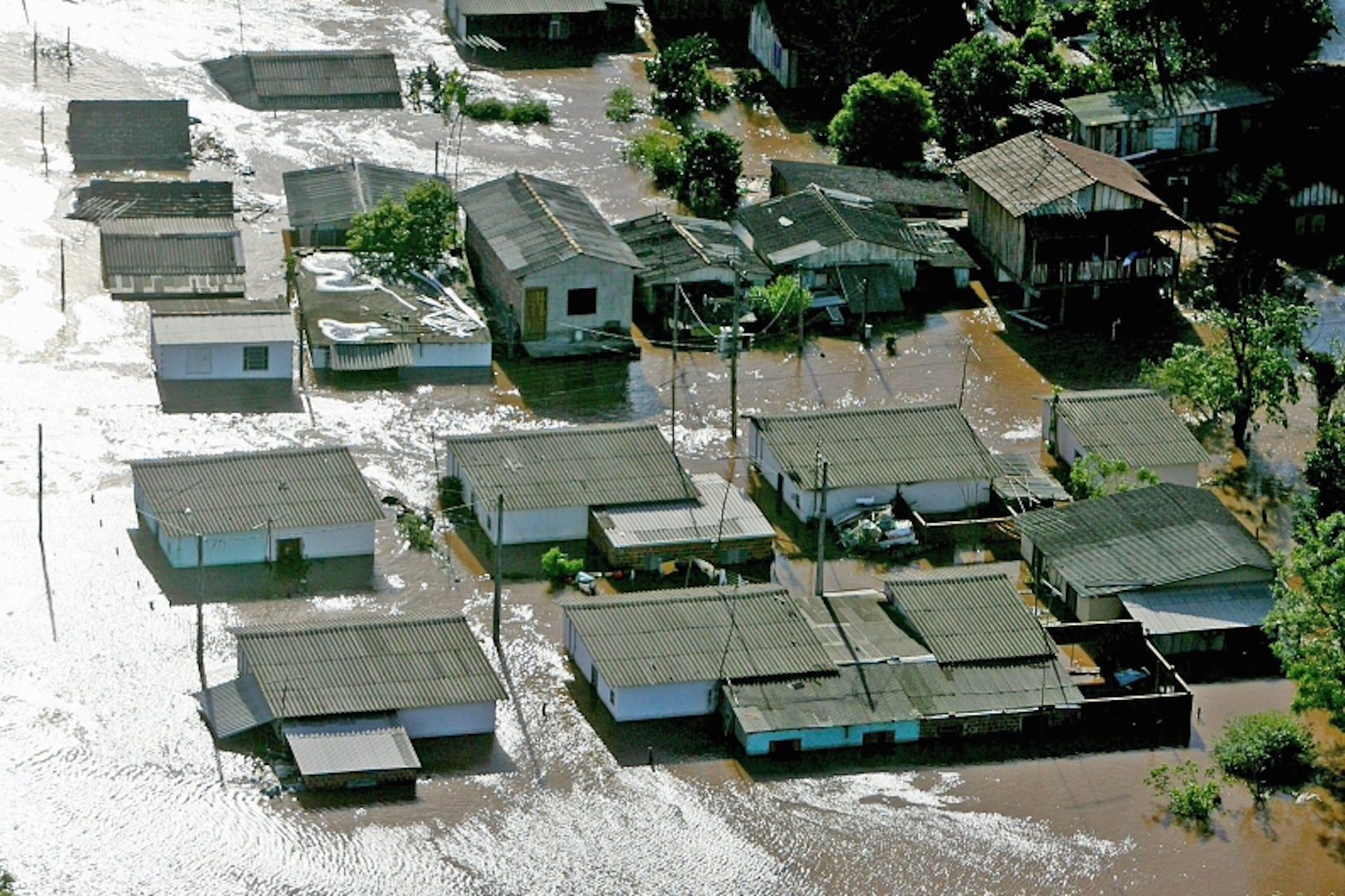
With the southern Brazil storms moving on, the danger has shifted to swollen rivers. The Taquari reached 24 metres in Lajeado at 8 a.m. on Tuesday, above its flood level, g1 reported.
The state Civil Defence has issued a red alert for a very high risk of Taquari flooding downstream from Santa Tereza. The alert is valid until 7:20 p.m. Brasília time on Tuesday.
The Caí river peaked at 14.16 metres in São Sebastião do Caí at 5 a.m., against a flood level of 10.5 metres. It had begun to stabilise by 9 a.m., according to g1.
For Paraná, Inmet kept an orange storm alert in force for most of the state through Tuesday. Simepar forecasts rain continuing across Paraná until Thursday 24 September 2026.
More: Brazil coverage, every day from The Rio Times.
Frequently Asked Questions
Where did the southern Brazil storms hit hardest?
Rio Grande do Sul, Brazil’s southernmost state, suffered the deaths and most of the damage. The state Civil Defence counted 527,669 people affected in its Tuesday morning bulletin. Paraná and Santa Catarina also recorded wind damage, flooding and power cuts.
How many people died?
Four people died in Rio Grande do Sul, according to the state Civil Defence and the Fire Brigade. Three died in Caxias do Sul and one in Pelotas. A woman whose car was swept away in Caxias do Sul was still missing on Tuesday.
When will power come back?
Neither CEEE Equatorial nor Copel has given a date for full restoration. CEEE Equatorial said repair times depend on the extent and complexity of the damage. RGE said it had restored service to 91% of customers affected at the peak.
Is more bad weather expected?
In Rio Grande do Sul, the main risk now is river flooding, especially along the Taquari. In Paraná, the weather agency Simepar forecasts rain until Thursday 24 September 2026.
Sources: g1 RS on the four deaths and rising rivers, GZH on the Civil Defence bulletin, Rio Grande do Sul government on the Taquari alert, Agora RS on CEEE Equatorial and RGE outages, Brasil de Fato on Monday’s gusts and peak outages, Tribuna do Paraná on Copel and Simepar data, Copel’s 11:30 a.m. storm bulletin, Agência Brasil on the Civil Defence’s four confirmed deaths, g1 on the Inmet red warning, WH3 on the Santa Catarina Civil Defence update
This article was produced by The Rio Times’ automated newsroom system. How we use AI · Report an error
Read More from The Rio Times