Sargassum Quintana Roo Record Collides With the Wedding Season
Mexico · Travel
Key Facts
- —What happened Quintana Roo has collected a record 133,646 tonnes of sargassum in 2026, according to the state environment ministry.
- —Why it matters The Mexican Caribbean is the country’s main destination-wedding market, with about 110,000 ceremonies a year on 2022 figures.
- —The industry estimate The president of Concanaco Servytur said on 17 September 2026 that 10,000 wedding reservations had been affected.
- —The catch The same 10,000 figure came six months earlier from a wedding planner, and no methodology has been published.
- —Who is paying Hotels spend more than US$150 million a year on removal, El Financiero reports; Hosteltur gives up to US$30 million.
- —What is being done A federal plan worth 2,635.6 million pesos, about US$153.0 million, funds vessels, barriers and beach cleaning.
A record 133,646 tonnes of seaweed has been collected from the sea and beaches of Quintana Roo this year. One business leader says 10,000 wedding bookings have been affected.
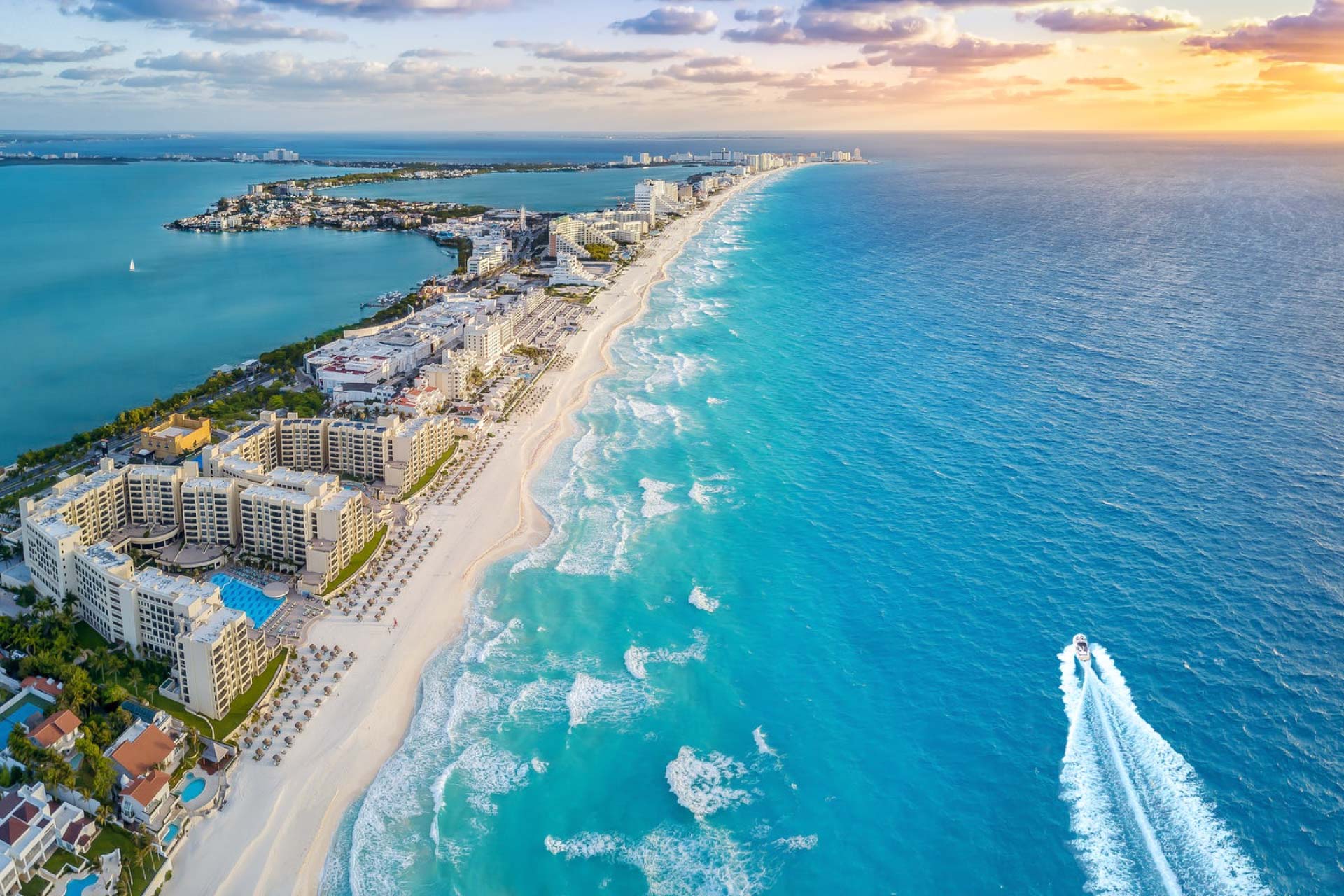
The sargassum Quintana Roo has removed from the sea and its beaches this year has already broken every record. The Mexican Caribbean is having its worst seaweed season yet.
The state environment ministry put the 2026 total at 133,646 tonnes collected as of 18 September 2026.
The cost is being counted in tourism, and above all in weddings. Quintana Roo is Mexico’s wedding coast.
What sargassum actually is
Sargassum is a brown macroalga, a seaweed that floats free on the open ocean. It does not anchor to the seabed, so currents carry it thousands of kilometres.
The sargassum Quintana Roo receives drifts in from the Great Atlantic Sargassum Belt. Excélsior published a spring satellite reading on 1 May 2026 of about 40 million tonnes across the Atlantic.
Esteban Amaro runs the state’s sargassum monitoring network. He blames nitrogen and phosphorus washing into the Atlantic from South American and African rivers.
Failing wastewater treatment plays a part too, he says, but to a lesser degree. Rising sea temperatures are the other half of his explanation.
A record season, and a very uneven one
The Centro de Monitoreo de Sargazo de Quintana Roo forecast 130,000 tonnes for 2026 back in May. The season passed that mark in September.
The state ministry reported two components: 75,148.95 tonnes collected by the ministry and municipalities, and 57,497.24 by the Mexican Navy. The published components do not sum exactly to the state total.
Published 2025 totals range from 92,782 tonnes in 24 Horas Quintana Roo to about 98,000 in El Quintanarroense. Excélsior gives 96,000, so this year is running roughly 35 to 45 percent higher.
On the ministry’s count to 18 September 2026, Playa del Carmen accounted for 44,547.64 tonnes. That is a third of the state total, ahead of Cancún on 32,179.09.
Puerto Morelos recorded 18,346.52 tonnes on the same count and Tulum 17,990.27. The southern municipality covering Chetumal and Mahahual added 15,014.02 tonnes.
The 10,000 weddings claim
On 17 September 2026 Octavio de la Torre de Stéffano said sargassum had affected at least 10,000 wedding reservations. He is president of Concanaco Servytur, Mexico’s national confederation of chambers of commerce.
Diario de Yucatán reported that “affected” covers bookings cancelled, postponed or cut back in scope. The number is an industry estimate rather than an official count.
The same round figure had appeared six months earlier, from someone else. On 27 March 2026 the event organiser José Mac-Liberty said 10,000 weddings booked for 2026 had been cancelled.
He was speaking to the Quintana Roo newspaper Por Esto! He called that about 10 percent of the celebrations held in the state each year.
He added that he did not know the economic value.
No methodology, baseline or period has been published for either version. Nor was a basis for the figure given by El Financiero or by Por Esto!
Why weddings matter so much here
Quintana Roo hosts about 110,000 weddings a year, counting civil, religious and symbolic ceremonies. That 2022 figure came from Javier Aranda of the state tourism promotion council.
Mexico earns around US$1.5 billion a year from weddings nationally. The United States supplies 40 percent of the weddings the state captures.
Clarisa Pat Maza of the Tulum civil registry gave Diario de Yucatán a starker local measure. The town recorded at most two weddings a month in April and May 2026.
For the same months of 2014 she gave a figure of at least 80. El Congresista frames the fall differently, from 23 in 2023 to two this year.
Tourism secretaries from Playa del Carmen, Tulum and Benito Juárez signed a pact in early September 2026. It aims to promote the romance industry.
They signed at the fifth Summit of Wedding Associations of the Mexican Caribbean, at Hotel Nizuc. Private operators signed too, among them Patricia Lizárraga of the hotel.
The Navy, the barriers and the budget
President Claudia Sheinbaum announced a federal plan on 30 July 2026. It commits 2,635.6 million pesos, about US$153.0 million, to fighting the seaweed.
Peso figures here use a rate of 17.23 to one US dollar, reported by El Financiero for 18 September 2026.
The first stage costs 768.7 million pesos, about US$44.6 million. It buys two tugboats and six coastal sargassum vessels, and lifts open-water collection from 1,227 to 1,870 tonnes a day.
It also funds about 50 kilometres of containment barriers, according to MVS Noticias. They go at Cancún, Playa del Carmen, Tulum, Puerto Morelos and Mahahual.
24 Horas Quintana Roo puts the planned barrier length at 35 kilometres.
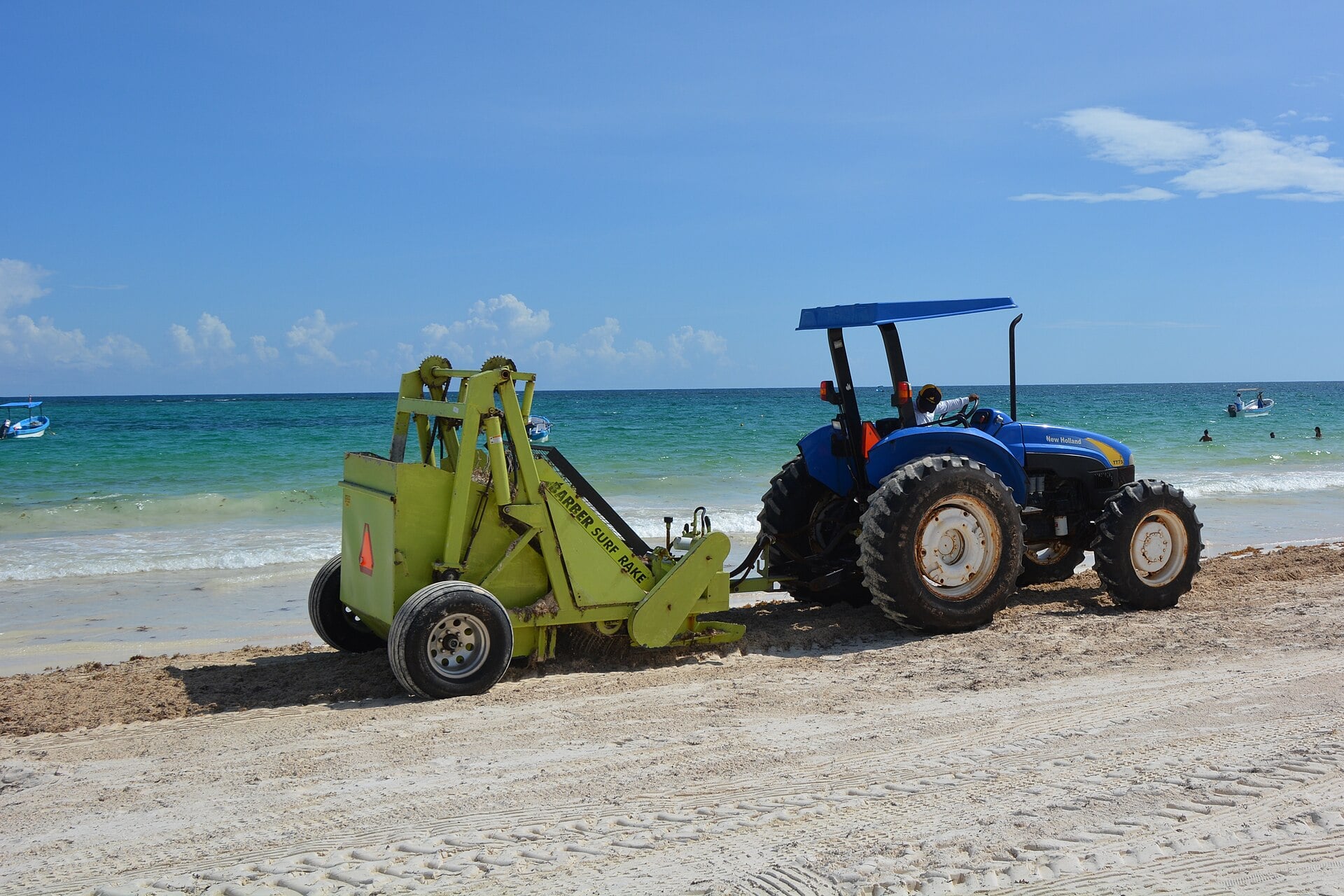
By 8 September 2026 the Navy had 11 coastal vessels and the ocean-going ARM Natans at work. It had laid 13,230 metres of barriers and assigned 191 personnel to beach collection.
El Financiero put hotel spending on removal at more than US$150 million a year on 17 September 2026. An EFE wire story carried by Hosteltur the same day gives up to US$30 million.
The two published figures are five times apart. They appeared on the same day.
What a traveller can actually do
The sargassum Quintana Roo faces is seasonal and very unevenly spread. Arrivals peak between May and July, so a trip outside those months meets less of it.
This year broke that pattern, with weed arriving from January. Esteban Amaro’s monitoring network tracks conditions along the coast through the season.
The second lever is location. Cozumel collected 1,465.60 tonnes to 18 September and Isla Mujeres 4,099.30.
Some hotels maintain their own barriers, among them Moon Palace and Grupo Lomas at Destino Maroma. Whether a particular beach is protected is worth asking before booking.
For couples already booked the levers are the same: move the date, or move the beach.
More: Mexico coverage, every day from The Rio Times.
Frequently Asked Questions
What is sargassum and where does it come from?
Sargassum is a brown macroalga, a seaweed that floats free on the open ocean instead of anchoring to the seabed. It reaches Mexico from the Great Atlantic Sargassum Belt, a vast raft of weed that drifts across the tropical Atlantic. Excélsior reported on 1 May 2026 that satellite monitoring by LANOT, a laboratory at Mexico’s national university, had measured about 40 million tonnes, against 38 million in 2025 and 24.2 million in 2022. That was a spring reading.
Which beaches are worst affected?
On the state environment ministry’s collection figures to 18 September 2026, Playa del Carmen is worst hit, with 44,547.64 tonnes, a third of the state total. Cancún follows on 32,179.09 tonnes, then Puerto Morelos, Tulum and the southern municipality that covers Chetumal and Mahahual. The two island destinations are far lighter: Isla Mujeres recorded 4,099.30 tonnes and Cozumel 1,465.60.
Are 10,000 weddings really being lost?
Two people have put that number into circulation. On 27 March 2026 the event organiser José Mac-Liberty told Por Esto! that 10,000 weddings booked for 2026 had been cancelled, roughly 10 percent of the state’s annual total. On 17 September 2026 Octavio de la Torre de Stéffano, president of the business confederation Concanaco Servytur, said at least 10,000 wedding reservations had been affected, which Diario de Yucatán reported covers bookings cancelled, postponed or reduced in scope. Neither outlet published a methodology, a baseline or a period for the figure.
What are the authorities doing about it?
President Claudia Sheinbaum announced a federal plan on 30 July 2026 worth 2,635.6 million pesos, about US$153.0 million at 17.23 to one US dollar. A first stage of 768.7 million pesos, about US$44.6 million, buys two tugboats and six coastal vessels and deploys about 50 kilometres of containment barriers, on the figures reported by MVS Noticias. By 8 September 2026 the Navy had 11 coastal sargassum vessels at work, 13,230 metres of barriers in the water and 191 personnel on beach collection.
Sources: El Quintanarroense on the record 133,646 tonnes, El Financiero on the 10,000 affected wedding reservations, Diario de Yucatán on what “affected” covers and on Tulum, Por Esto! on the March cancellation claim, Excélsior on the Atlantic sargassum belt and reef damage, UnoTV on daily arrivals and the causes, MVS Noticias on the federal plan, 24 Horas Quintana Roo on the Navy’s vessels and barriers, La Devi on the size of the wedding market, El Financiero on the peso rate used here
This article was produced by The Rio Times’ automated newsroom system. How we use AI · Report an error
Read More from The Rio Times