São Tomé Election on Sunday Tests a Ruling Party That Split in Two
São Tomé and Príncipe · Elections
Key Facts
- —What happens Sunday São Tomé and Príncipe votes on Sunday 27 September 2026 for parliament, local councils and Príncipe’s regional government.
- —What is at stake All 55 seats in the National Assembly; a majority needs 28. Six parties and one coalition are standing.
- —Who votes 146,510 people are on the provisional electoral roll, according to the National Electoral Commission in August 2026.
- —The catch Former prime minister Patrice Trovoada, ousted as leader of the biggest party, has urged its members to abstain.
- —Why it matters The vote decides whether Prime Minister Américo Ramos wins his own mandate after being appointed by the president in 2025.
- —What comes next The campaign opened on 12 September 2026. No date for provisional results has been reported.
The prime minister now controls the party that once fought his appointment. Its ousted leader is telling supporters to stay at home.
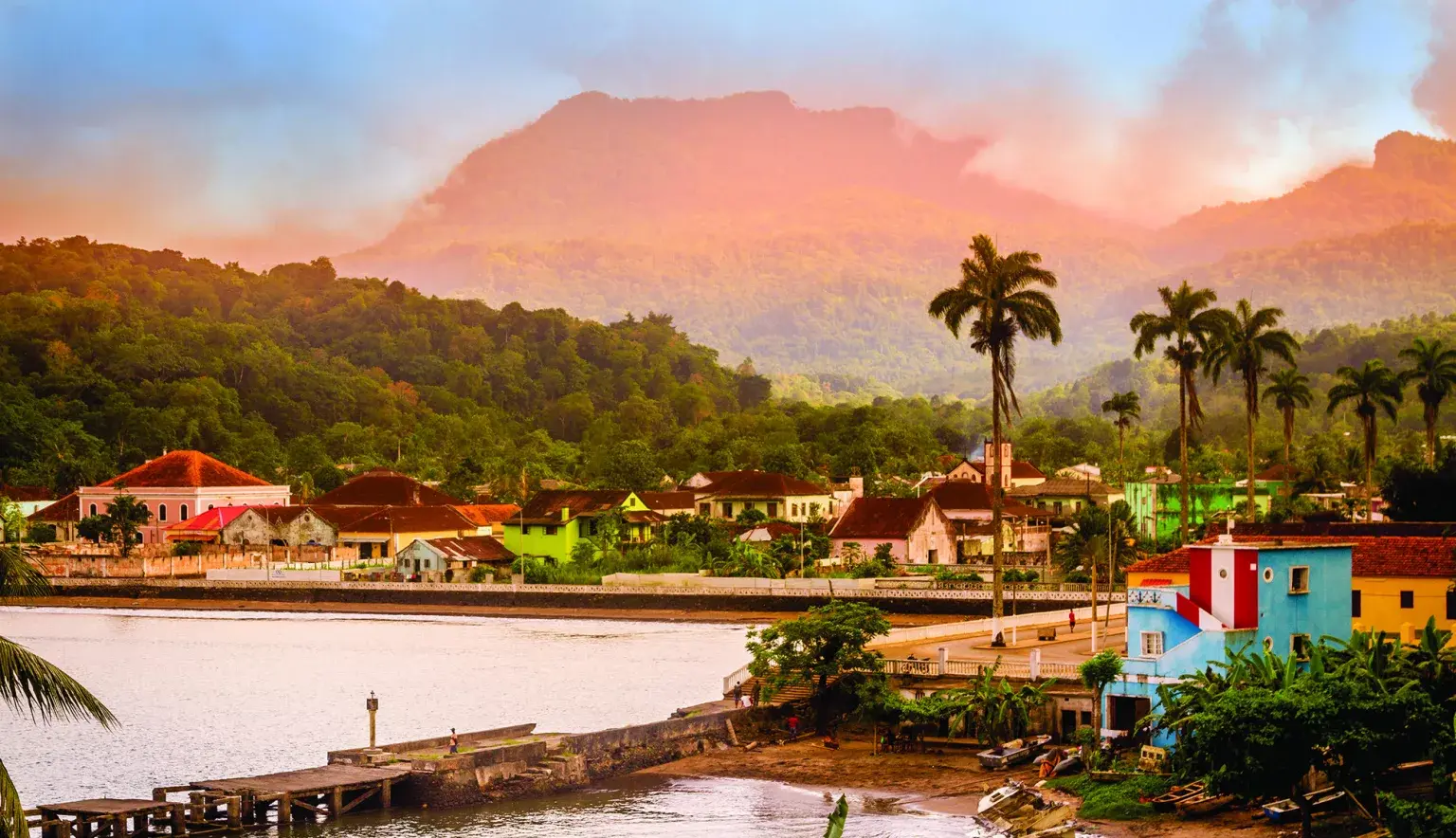
The São Tomé election on Sunday 27 September 2026 will choose a new parliament, local councils and the regional government of Príncipe. It follows a court ruling that handed the country’s biggest party to the prime minister.
São Tomé and Príncipe is a two-island republic in the Gulf of Guinea, off the coast of Central Africa. The legislative vote will show whether Prime Minister Américo Ramos can turn an appointment into a mandate.
What voters are choosing
The National Assembly, the single-chamber parliament, has 55 seats, and a party needs 28 to govern alone. Seats are shared out by proportional representation from party lists.
Fifty-three members come from seven home districts, including the capital district, Água Grande, and the island of Príncipe. Citizens living abroad elect two more members, one for Africa and one for Europe.
The same ballot day also renews local councils and the government of Príncipe, the smaller island, which has autonomous status.
The National Electoral Commission counted 146,510 voters on its provisional roll in early August, Lusa, the Portuguese news agency, reported. That was 4,319 more than for the presidential vote in July.
The official campaign opened on Saturday 12 September. Six parties and one coalition submitted lists before the deadline of 13 August, according to Lusa.
A party taken over by the prime minister
The Independent Democratic Action party, known by its Portuguese initials ADI, won 30 seats in the last legislative vote in September 2022. Its leader, Patrice Trovoada, became prime minister.
On 6 January 2025 President Carlos Vila Nova dismissed Trovoada, who called the decision unconstitutional. Vila Nova then appointed Ramos, a former ADI secretary-general, against the wishes of the party leadership.
The fight then moved inside the party. After a congress on 27 June 2026, the Constitutional Court recognised Ramos as ADI president.
Trovoada’s camp had challenged that congress as illegitimate, the Portuguese newspaper Observador reported on 29 July.
In a Facebook video, Trovoada said a stage of his own political journey might be ending. He would accept that “with perfect calm, serenity”, he said, because “no leader is irreplaceable”.
On 12 August he went further in another Facebook video, as reported by the Portuguese broadcaster RTP. He urged ADI members to protest by “not going to vote, not leaving home to vote in the legislative and municipal elections”.
He left supporters free to vote in the Príncipe regional contest. Ramos replied that a call to abstain “is not a good strategy for a politician”.
Voting, he added in remarks carried by Observador, “is a civic duty”.

A president re-elected on low turnout
Vila Nova won a second five-year term on 19 July with 55.88% of the vote, the Constitutional Court confirmed. His rival, Nito d’Abreu, took 41.46% with the official backing of the ADI.
Only about four in ten registered voters cast a ballot in that contest. In the 2022 legislative vote, turnout was just over 65%.
Vila Nova was sworn in again on 3 September, and his own term runs to 2031. Whoever wins on Sunday will govern alongside him for a four-year legislature.
The other contenders
The main opposition is the Movement for the Liberation of São Tomé and Príncipe/Social Democratic Party, or MLSTP/PSD. It led the country to independence from Portugal in 1975.
The party won 18 seats in 2022 and is led by Américo Barros.
The party opened its campaign on 12 September. “Spending must be cut where it is unnecessary: travel, posts, fossil fuels,” Barros said.
He also pledged to court foreign direct investment, Téla Nón reported.
A new party, Nossa Terra, meaning Our Land, is led by Abnildo d’Oliveira, who presides over the National Assembly. He was elected to parliament for the ADI.
His party proposes opening EMAE, the state water and power company, to private capital. In August opposition deputies blocked a session to demand he step down as speaker.
The coalition of the Independent Citizens Movement, the Socialist Party and the National Unity Party won five seats in 2022. Its slate of candidates has since been cut back sharply.
The Constitutional Court rejected its lists in Mé-Zóchi, Lobata, Cantagalo, Lembá and the diaspora over forged signatures, Lusa reported on 12 September. The coalition’s leadership rejects the accusation, the Brazilian site Africas Play reported.
The court referred the case to the Public Ministry, the state prosecutor’s office. It noted that forging signatures is a crime under the penal code.
The coalition may still compete in Água Grande, Caué and Príncipe. The Basta movement, the Democratic Convergence Party and the Democratic Movement Force for Change complete the field.
What the winner inherits
Campaigning in Caué district, Ramos said the economy was growing by 1% to 2% a year. It has to grow by more than 3% or 4%, he told Lusa in a report published on 20 September.
He pointed to a solar park that, he said, would install 11 megawatts of panels by December. By his estimate it would cover about half of current electricity needs.
The São Tomé election will not settle everything on its own. If no party reaches 28 seats, coalition talks would follow before the president names a prime minister.
For Ramos, the test is simple. He must show that the ADI’s voters followed the party, not the man who led it for years.
More: Africa coverage, every day from The Rio Times.
Frequently Asked Questions
When is the São Tomé election?
Voting takes place on Sunday 27 September 2026. The president announced the date in January 2026, together with the presidential vote held on 19 July. The official campaign opened on 12 September.
What is being elected?
Voters choose all 55 members of the National Assembly, local councils and the regional government of Príncipe, the autonomous smaller island. Fifty-three members are elected in seven districts at home, and two represent citizens living in Africa and Europe.
Who leads the ADI now?
Prime Minister Américo Ramos. The Constitutional Court recognised him as party president after a congress on 27 June 2026. Former leader Patrice Trovoada has asked ADI members not to vote in the legislative and municipal contests.
Who is the president?
Carlos Vila Nova, re-elected on 19 July 2026 with 55.88% of the vote and sworn in for a second term on 3 September. He dismissed Trovoada as prime minister in January 2025 and appointed Ramos.
Sources: Téla Nón on the electoral calendar, Téla Nón on the campaign opening, Lusa via Forbes África Lusófona on the electoral roll, Lusa via Executive Digest on the lists submitted, Lusa via Correio da Manhã Canadá on the Constitutional Court ruling, Observador on the presidential result, Observador on the ADI leadership ruling, RTP on Trovoada’s abstention call, Observador on the prime minister’s reply, Téla Nón on the Nossa Terra launch, Téla Nón on the MLSTP campaign opening, Lusa via Executive Digest on the prime minister’s campaign, 2022 parliamentary results, Africas Play on the coalition’s response
This article was produced by The Rio Times’ automated newsroom system. How we use AI · Report an error
Read More from The Rio Times