Remembering Anderson Leonardo: A Samba Legend’s Final Bow at 51
Anderson Leonardo, the charismatic frontman of the iconic 90s samba group Molejo, passed away at 51.
Renowned for his vibrant performances and infectious energy, Anderson left an indelible mark on Brazil’s music scene.
His journey began in the bustling streets of Rio de Janeiro, where he co-founded Molejo, a group that would become synonymous with samba’s evolution.
Under his leadership, Molejo soared to national fame, releasing hits like “Cilada” and “Dança da Vassoura.”
These songs not only dominated charts but also shaped the soundtrack of an era.
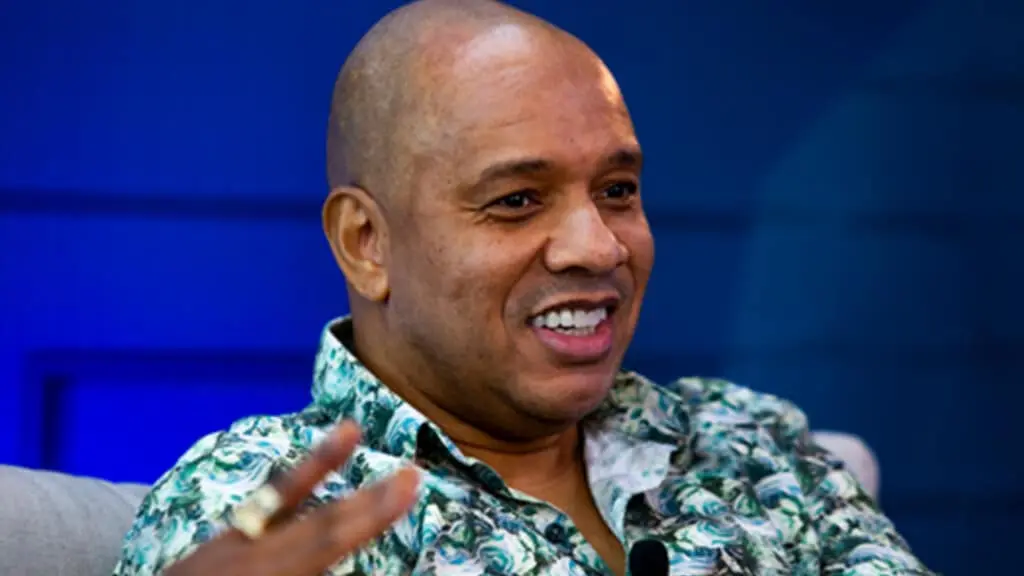
Anderson’s talent extended beyond vocals; he was a prolific songwriter and skilled cavaquinho player, contributing to over 118 songs.
Despite his diagnosis with a rare cancer, Anderson’s spirit remained unbroken. He continued to perform, drawing strength from the music that defined his life.
Even as his health declined, he was a fixture on stage, embodying resilience and passion.
His legacy extends through his family, with two of his children following in his musical footsteps, ensuring that the rhythm of Molejo continues.
Remembering Anderson Leonardo: A Samba Legend’s Final Bow at 51
Anderson’s life was a testament to the power of music to inspire and unite, leaving a legacy that will resonate across generations.
As tributes pour in, fans and fellow musicians remember a man who brought joy and samba to countless hearts.
Anderson’s story transcends music, highlighting the courage and love he shared, making every note significant in his remarkable journey.
Who Was Anderson Leonardo?
Anderson Leonardo — stage name of Anderson de Oliveira (born August 18, 1972, in Rio de Janeiro; died April 26, 2024) — was the frontman, cavaquinho player and principal songwriter of Molejo, one of the defining samba and pagode groups of the 1990s. He registered 118 compositions and helped take the sound of Rio’s suburbs to diamond-record sales.
- Born: August 18, 1972, in Rio de Janeiro, raised between Abolição and Méier in the city’s North Zone
- Family: Son of music producer Bira Haway; nephew of samba legend Elza Soares
- Role in Molejo: Lead vocalist, cavaquinho player and composer
- Compositions: 118 registered works, including the anthem “Dança da Vassoura”
- Died: April 26, 2024, aged 51, after a two-year battle with cancer
A Childhood Inside Brazilian Music
Anderson grew up surrounded by samba royalty. His father, Bira Haway, was a well-known music producer, and his aunt was Elza Soares, one of the greatest voices in Brazilian music history. His own stage debut came remarkably early: at 14, he performed alongside Roberto Carlos on a Globo television special — a first taste of the spotlight that would define his life.
Molejo: From Rio’s Suburbs to Diamond Status
In the late 1980s, Anderson co-founded Molejo with Andrezinho, Claumirzinho, Lúcio Nascimento, Robson Calazans and Jimmy Batera. The group emerged from Rio’s pagode scene — the informal, percussion-driven backyard samba that conquered Brazil in the 1990s — and released its debut album, featuring “Caçamba,” in 1993/94.
The commercial peak came in 1997 with “Brincadeira de Criança,” which sold over one million copies and earned diamond certification. The group’s string of hits — “Cilada,” “Dança da Vassoura” (written by Anderson), “Paparico,” “Clínica Geral” and “Samba Rock do Molejão” — made Molejo a fixture of Brazilian radio, television and Carnival seasons, and turned Anderson’s grinning stage persona into one of the most recognizable in samba.
Molejo never fully left the spotlight, but 2016 brought an unexpected second act: the group’s choreography went viral through internet memes — including edits pairing their routines with Lady Gaga tracks — introducing Anderson to a generation born after the group’s heyday. Molejo rode the revival with the album “Molejo Club.”
Illness and Final Months
In October 2022, Anderson was diagnosed with inguinal cancer. After initial treatment he announced a remission, but in May 2023 the disease returned, this time affecting a testicle. A pulmonary embolism in September 2023 further weakened him. By February 2024 he underwent a hypogastric plexus block — a procedure to control severe pelvic pain — and on April 22, 2024, he was hospitalized with a urinary tract infection. He died four days later, on April 26, 2024, in Rio de Janeiro.
Through most of the illness he kept performing. Bandmates and fans recall him on stage between treatment cycles, embodying the joy his songs preached even as his health failed.
He was buried on April 28, 2024, at the Jardim da Saudade cemetery in Sulacap, Rio de Janeiro, mourned by family, bandmates and figures from across Brazilian music.
Family and Legacy
Anderson is survived by his wife, Paula Cardoso, and four children: Leozinho Bradock, Alissa (also spelled Alessa), Rafael Phelipe and Alice. Two of his children have followed him into music, keeping the family’s connection to samba alive into a third generation — from Elza Soares through Anderson to his children.
His legacy rests on more than sales figures. Molejo’s catalog remains a staple of Brazilian parties and Carnival soundtracks, “Dança da Vassoura” still fills dance floors three decades on, and the 2016 meme revival proved his work could outlive every format change the music industry threw at it.
Frequently Asked Questions
Who was Anderson Leonardo?
Anderson Leonardo was the frontman of the Brazilian samba and pagode group Molejo, famous for 1990s hits like “Cilada” and “Dança da Vassoura.” He was also a cavaquinho player and the composer of 118 registered songs.
What did Anderson Leonardo die of?
He died on April 26, 2024, aged 51, after a two-year battle with inguinal cancer that relapsed in 2023, compounded by a pulmonary embolism and, in his final days, a urinary tract infection.
What were Molejo’s biggest hits?
The group’s best-known songs include “Cilada,” “Dança da Vassoura,” “Paparico,” “Clínica Geral” and “Samba Rock do Molejão.” The 1997 album “Brincadeira de Criança” sold over one million copies, earning diamond status.
Was Anderson Leonardo related to Elza Soares?
Yes. Elza Soares, one of Brazil’s greatest samba singers, was his aunt; his father, Bira Haway, was a music producer. Two of Anderson’s four children have also pursued music careers.
More on Brazilian music and culture: Brazil news in English, every day from The Rio Times.
This article was produced by The Rio Times’ automated newsroom system. How we use AI · Report an error
Read More from The Rio Times