Putin Criticizes Sanctions at Africa Summit

RUSSIA · AFRICA SUMMIT
Key Facts
- The country Russia hosts the third Russia-Africa summit in Moscow, co-chaired with the African Union.
- What happened Putin said countries that think in colonial terms use tariff wars and illegitimate sanctions.
- When Wednesday 28 October 2026 at the opening forum; the summit continues on Thursday 29 October.
- Who attended Representatives of almost 50 African countries, led by African Union chairperson Évariste Ndayishimiye of Burundi.
- The numbers Putin puts Russia-Africa trade at US$27 billion last year and wants it above US$50 billion.
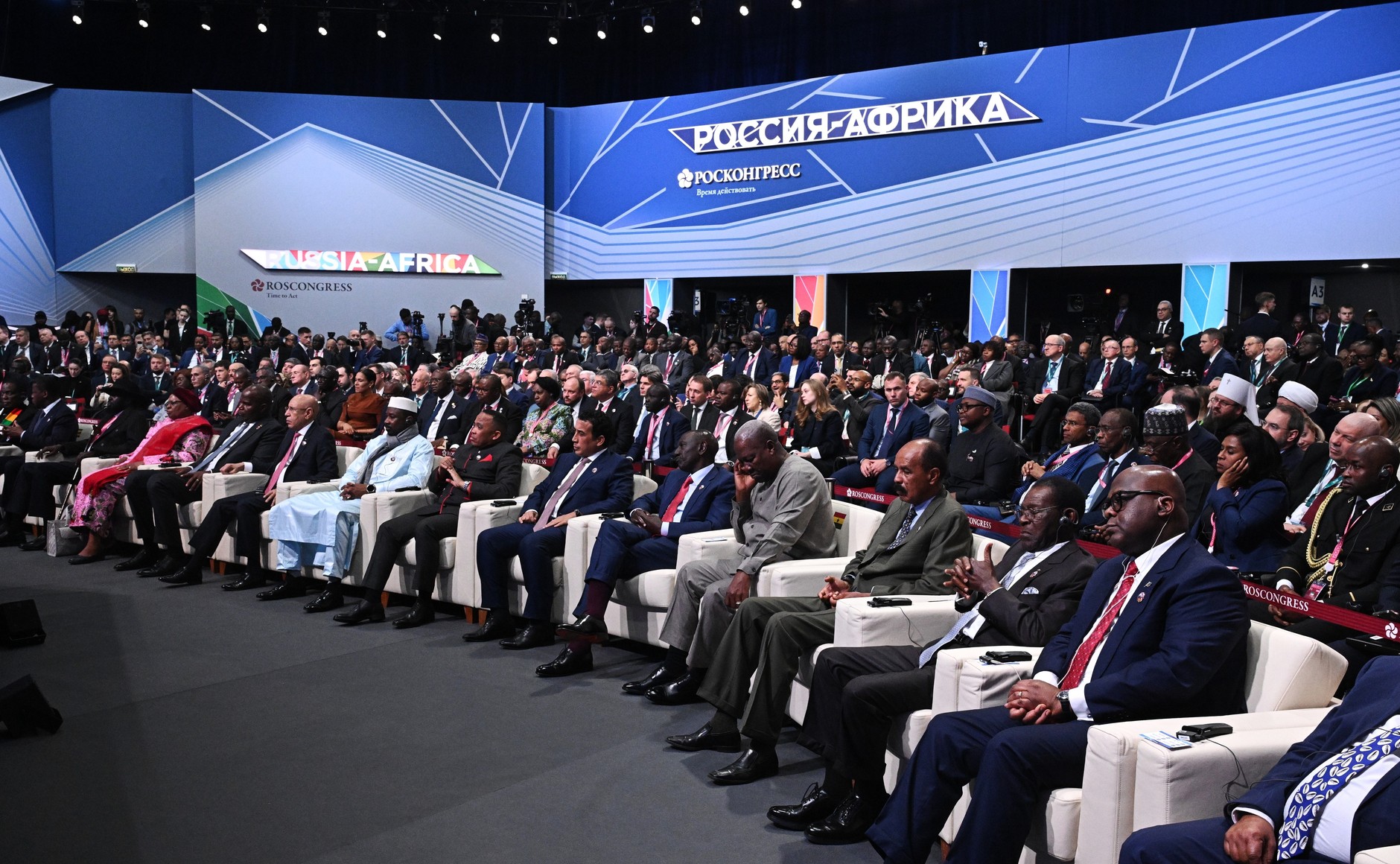
Putin criticized sanctions at the Africa summit in Moscow on 28 October 2026, saying that those who use them think in colonial terms. The Kremlin, the Russian president’s office, says representatives of almost 50 African countries are taking part in the two-day meeting.
For US readers, the speech challenges the sanctions and tariffs that Washington and its allies use as foreign-policy tools. It also shows how Moscow courts a continent of 54 countries with large mineral reserves and many votes at the United Nations.
What Happened at the Africa Summit
Putin spoke at the plenary session of the Russia-Africa Economic and Humanitarian Forum, which opened the third Russia-Africa summit. The Kremlin has published his speech.
The summit is co-chaired by Putin and by Évariste Ndayishimiye, president of Burundi. He is the current chairperson of the African Union, the continent’s 55-member political body.
Putin said some countries are “accustomed to thinking in colonial terms and becoming fabulously – yes, fabulously – rich at the expense of others”. He said they use means including “tariff wars, illegitimate sanctions, economic dictate, blackmail and interference in the internal affairs of others”.
He added that “Western countries are making aggressive attempts to drive Africans back into financial bondage” through loans on “extortionate terms”. He quoted Thomas Sankara, Burkina Faso’s former president, who called debt “neo-colonialism” in 1987.
Putin held talks with presidents Daniel Chapo of Mozambique and Teodoro Obiang Nguema of Equatorial Guinea, and greeted Ghana’s John Mahama and Kenya’s William Ruto. He also spoke with Egypt’s president Abdel Fattah el-Sisi and Libya’s Mohamed Al-Menfi, chairman of the Presidential Council.
Why It Matters
Putin offered trade at the Africa summit as the alternative to Western pressure. He said Russia-Africa trade passed US$27 billion last year, up from US$18 billion in 2022, and should pass US$50 billion.
He said more than 40 African countries already import Russian grain and fertiliser. Russia shipped 13 million tonnes of farm products to Africa in the first nine months of 2026, he said.
On energy, he said more than 30 projects are under way in 16 African countries. He urged African and Russian banks to settle in national currencies.
He also named the Pan-African Payment and Settlement System, which he said would “shield settlements from politically biased interference by unfriendly countries”. Egypt’s president Sisi asked Putin for help with grain supplies and the Russian-built El Dabaa nuclear power plant.
On security, Putin said Russia will help African states fight terrorism, cross-border crime and drug trafficking. The Kremlin expects three documents on Thursday 29 October: a declaration, an action plan for 2027 to 2029 and an artificial-intelligence declaration.
Minerals are part of the pitch, and Putin said Russian companies in Africa “do not practice predatory neo-colonial exploitation”. Sisi added that Egypt wants to cooperate with Russia on uranium and rare-metal extraction.
What It Means for You
The speech changes no US sanction or tariff. It shows how Moscow tries to turn resentment of Western pressure into trade and payment ties outside Western banking channels.
Putin did not name the United States in the passages quoted here. He spoke of “Western countries” and of “tariff wars”.
Investors in grain, fertiliser, uranium and rare metals should watch the documents due on Thursday 29 October. Companies that deal with Russian partners in Africa should note that US sanctions law still applies to them.
Our report on Putin’s 2023 free-grain pledge shows what the previous Africa summit promised. Our report on Burundi’s push for African seats on the UN Security Council covers the African Union chair’s own agenda.
What Is Not Known
The Kremlin has not yet published the signed summit documents, so the content and value of the agreements are not known. A full list of the leaders who attended has not been published either.
We found no statement by the US government or the European Union on the summit by the evening of 28 October. Putin’s figures on trade, grain and energy are his own and have not been independently verified.
More: Africa news in English, every day from The Rio Times.
Background: 11 BRICS Members in 2026 and 10 Partner Countries.
Frequently Asked Questions
What did Putin say about sanctions at the Russia-Africa summit?
He said countries that think in colonial terms resort to tariff wars and illegitimate sanctions. He named no country in those passages and spoke of “Western countries”.
Who is attending the Russia-Africa summit?
The Kremlin said representatives of almost 50 African countries are taking part, with African Union chairperson Évariste Ndayishimiye of Burundi as co-chair. The summit runs on Wednesday 28 and Thursday 29 October 2026 in Moscow.
What agreements are expected at the Africa summit?
The Kremlin lists a final declaration, an action plan for 2027 to 2029 and a declaration on civilian artificial intelligence. A package of government agreements is also expected, but its details are unpublished.
Sources: Kremlin, announcement of the third Russia-Africa Summit, 26 October 2026; Kremlin, transcript of the Russia-Africa Economic and Humanitarian Forum plenary session, 28 October 2026; Kremlin, meeting with heads of African regional organisations, 28 October 2026; Kremlin, conversation with President of Egypt Abdel Fattah el-Sisi, 28 October 2026; Kremlin, gala reception for participants in the summit, 28 October 2026.
This article was produced by The Rio Times’ automated newsroom system. How we use AI · Report an error · Editorial responsibility: Matthias Camenzind, Editor-in-Chief