Private Credit Surges, Outpacing BNDES in Infrastructure Funding in Brazil
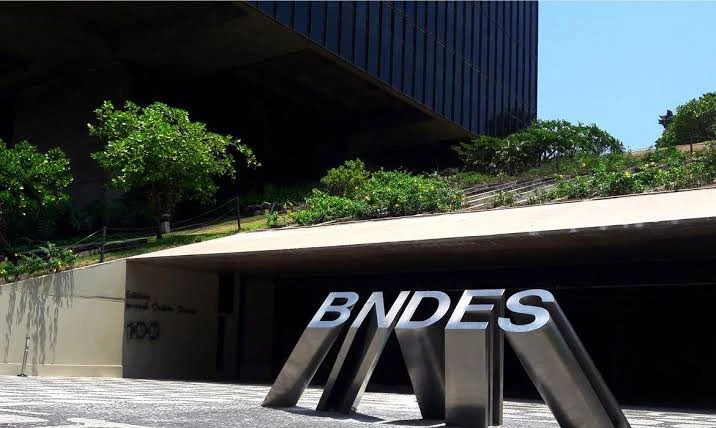
The Brazilian infrastructure sector is witnessing a significant shift. Private credit has taken the lead, outpacing the Brazilian Development Bank (BNDES) by three times in funding.
From January to September 2024, BNDES disbursed R$30.7 billion ($5.1 billion), while incentivized debentures raised R$96.1 billion ($16.0 billion), a 213% increase.
High interest rates, disappointing multi-market fund performance, and tax changes are driving this surge. Luciana Aparecida da Costa from BNDES notes that market demand has been so high that BNDES has been crowded out, allowing it to allocate resources elsewhere.
Despite this growth, the sector still needs R$462.0 billion ($77.0 billion) annually, but only R$213.0 billion ($35.5 billion) was invested in 2023.
BNDES has adapted, sharing guarantees with private institutions to expand funding sources. This partnership benefits both sides, with private banks aiding in pricing and BNDES providing technical expertise.
The trend reflects a broader shift in Brazil‘s financial system. Bank credit focuses on short-term loans, capital markets on medium to long-term financing, and development banks on projects for SMEs and innovation.
The lack of IPOs has pushed companies towards the credit market for investments and refinancing. Individual investors, attracted by tax exemptions, play a crucial role. However, attracting insurers and pension funds is essential for long-term stability.
In short, this evolution highlights private credit’s potential as a substitute for traditional fixed income. It aligns with global trends where institutional investors diversify into alternative assets.
For the full picture, see our Brazil Tax Reform: Complete Guide.
More: Brazil news in English, every day from The Rio Times.
Live Market IntelligenceBrazil — Live Market Board
Rio Times · Live Market Intelligence
Brazil — Live Market Board
-0.86%
206,495.23
-0.86%
69,583.42
+0.47%
10,985.55
+0.54%
3,017,221
—
2,560.37
+1.07%
59,870.67
-0.52%
| Instrument | Last | Change | YoY | Prev. | High | Low | Volume |
|---|---|---|---|---|---|---|---|
| IBOV | 206,495.23 | -0.86% | +21.85% | 208,295.98 | 168,310 | 167,142 | — |
| USD/BRL | 5.16 | +0.01% | -5.13% | 5.16 | 5.18 | 5.14 | — |
| SELIC | 14.00% | — | — | — | — | — | |
| PETR4 | 41.64 | -0.05% | +35.19% | 41.66 | 41.97 | 41.15 | 41,499,400 |
| VALE3 | 72.97 | +0.83% | +30.75% | 72.37 | 73.54 | 72.66 | 17,658,000 |
| ITUB4 | 38.60 | -1.03% | +4.57% | 39.00 | 39.34 | 38.39 | 29,487,800 |
| BBDC4 | 16.85 | +0.36% | +3.50% | 16.79 | 16.90 | 16.67 | 19,416,900 |
| BBAS3 | 19.37 | +0.47% | +0.73% | 19.28 | 19.44 | 19.16 | 11,069,200 |
| B3SA3 | 14.26 | -0.21% | +12.73% | 14.29 | 14.47 | 14.11 | 33,037,800 |
| ABEV3 | 14.89 | -0.80% | +21.91% | 15.01 | 15.07 | 14.81 | 16,453,100 |
| WEGE3 | 47.59 | +0.49% | +29.99% | 47.36 | 48.08 | 47.36 | 3,364,600 |
| PRIO3 | 59.14 | -0.19% | +50.67% | 59.25 | 59.81 | 58.74 | 3,325,600 |
| SUZB3 | 41.33 | +2.35% | -23.55% | 40.38 | 41.48 | 40.35 | 3,914,900 |
| RENT3 | 34.68 | -0.09% | +0.84% | 34.71 | 34.96 | 34.35 | 7,979,100 |
| AZZA3 | 15.89 | -2.63% | -53.76% | 16.32 | 16.42 | 15.82 | 1,330,300 |
| CSNA3 | 4.30 | +0.47% | -42.65% | 4.28 | 4.41 | 4.26 | 10,076,100 |
| GGBR4 | 24.69 | +2.19% | +51.38% | 24.16 | 24.85 | 24.18 | 7,047,600 |
| ENEV3 | 24.21 | -1.38% | +70.49% | 24.55 | 24.64 | 23.99 | 9,297,000 |
This article was produced by The Rio Times’ automated newsroom system. How we use AI · Report an error · Editorial responsibility: Matthias Camenzind, Editor-in-Chief