Porto Digital Built a Tech Hub on a Tax Break Brazil Is Phasing Out
Brazil · Technology
Key Facts
- —What happened Porto Digital ended 2025 with 541 companies and 24,079 employees in Recife’s old port district, its own figures show.
- —Where this is The Bairro do Recife, an island district in Recife, capital of Pernambuco state in Brazil’s Northeast.
- —How the money works Technology firms inside the perimeter pay a 2 percent municipal services tax, set by city law and the lowest Brazil allows.
- —What the companies bill They billed R$7.4 billion in 2025 (about US$1.4 billion), 19 percent more than in 2024.
- —The catch Brazil’s tax reform strips municipalities of that power and cuts services-tax rates in stages from 2029, abolishing the tax in 2033.
- —What comes next The state and the park are spending R$51 million (about US$9.9 million) to 2028 on units outside Recife.
Porto Digital turned a derelict port district in Brazil’s Northeast into one of the country’s largest technology clusters. The city tax rule that built it starts winding down in 2029 and disappears in 2033.
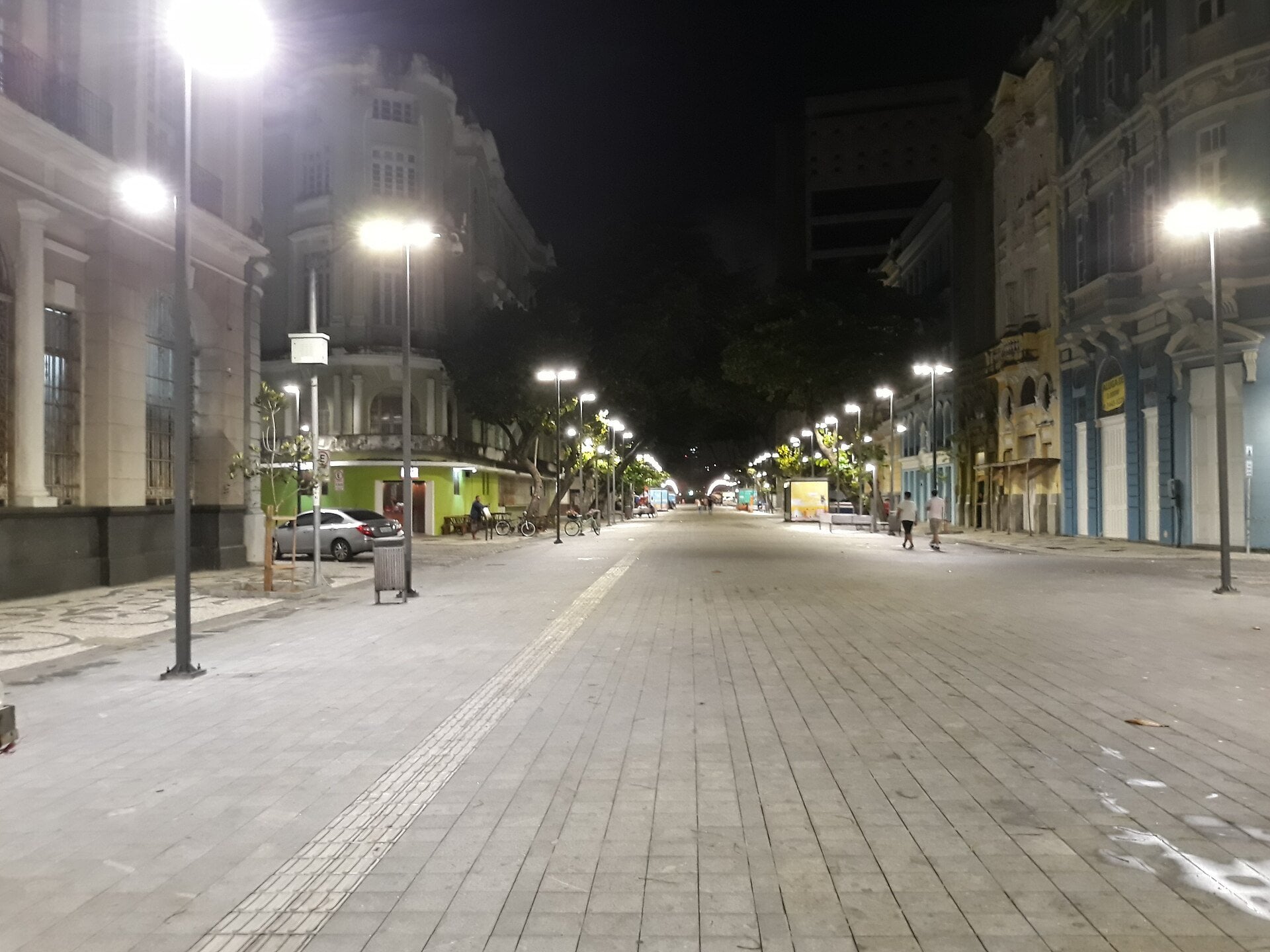
Porto Digital, the technology park inside Recife’s old port district, ended 2025 with 541 companies and 24,079 employees. Those companies billed R$7.4 billion (about US$1.4 billion), 19 percent more than in 2024.
Recife is the capital of Pernambuco, a state in Brazil’s Northeast. The park occupies a small island of warehouses and period buildings that had fallen derelict.
For anyone weighing where to put a technology operation in Brazil, the mechanism matters more than the totals. Porto Digital rests on a city tax rate that Brazil’s tax reform will take away.
A 2 percent tax rate, written into city law
The park began in 2000 as a state policy rather than a private venture. Its address is Cais do Apolo, 222, on the island known as the Bairro do Recife.
Recife’s council cut the municipal services tax, known by its Portuguese initials ISS, to 2 percent. That applied to information technology firms in the old port, under a city law of 2004.
Later laws widened both the map and the list of eligible trades. A 2011 law brought in the neighbouring Santo Amaro district and creative-economy work.
Laws of 2013 and 2015 widened the perimeter again. It now covers the historic port site, a block of Santo Amaro and two downtown avenues.
The building rule is a separate law
Relief tied to restoration came later, and it is a different instrument. Recife’s Recentro law, number 18,869 of 9 December 2021, rewards owners who rebuild central properties.
Exemption from IPTU, the property tax, runs at 100 percent for ten years for recovery and renovation work. Ordinary repairs earn 60 percent for three years.
The same law cuts the services tax to 2 percent for listed activities for ten years. It also refunds the transfer tax on first sales and waives urban and environmental licensing fees.
City hall publishes those terms on the programme’s own site. The covered area is Boa Vista, Santo Antônio, São José and the Bairro do Recife.
Live Company IntelligencePorto Seguro S.A — the full investor dossier
Valuation & profitability
Price & risk
$42.8752-wk high
$55.55
Revenue trend · 6y
Ownership
Dividend
Who runs the park, and on whose money
The park is run by the Núcleo de Gestão do Porto Digital, a private non-profit set up in December 2000. Pernambuco and Recife both qualify it as a social organisation.
That status in Brazilian law lets a government contract a non-profit to deliver a public service. The body says it works with industry, government, universities and civil-society groups.
In December 2024 the state signed a four-year management contract worth R$44.5 million (about US$8.7 million). The money flows through the state science, technology and innovation secretariat.

The tax lever has an expiry date
Brazil’s 2023 constitutional amendment and its 2025 implementing law replace the services tax with national levies. Cities lose the power to grant their own consumption-tax breaks.
The amendment sets the timetable itself. Services-tax rates fall to nine tenths of their legislated level in 2029, then to six tenths by 2032.
Local tax breaks shrink in the same proportion, and the tax disappears in 2033. Until 2029 Recife’s 2 percent rate applies in full.
Two percent is already the lowest rate Brazil’s constitution lets a city charge. Lawyers writing in the legal journal Conjur on 21 September 2026 expect effective rates to fall below it.
An analysis published by the digital imprint of Pernambuco’s bar association reaches the same conclusion for the park. Unlike the state tax, it notes, the services tax carries no compensation scheme.
The new code does keep one thing for old districts. Its article 158 cuts the new levies by 60 percent on rehabilitation work in historic zones.
Municipalities must define those zones by their own law. Projects then go to a commission of two federal ministries and the new tax committee.
What holds the district up, and what could tip it
Research sits inside the perimeter, not beside it. CESAR, an innovation institute founded in Recife in 1996, four years before the park, is among its largest employers.
Restoration is real and countable. Porto Digital has itself requalified 19 historic buildings, about 40,000 square metres, Folha PE reported in April 2026.
More than 200 further buildings inside the perimeter were restored by their private owners, the same report said. Housing has started to follow the offices.
Moura Dubeux, a Recife developer, delivered 251 flats on 28 January 2026. They sit in two towers retrofitted from the century-old Moinho Recife grain silos.
The wider centre is in worse shape. Recife’s civil defence rated 136 buildings there at high or very high risk in 2025, Diário de Pernambuco reported.
Pay is the other pressure. Movimento Econômico reported in May 2026 that senior Brazilian developers earn R$12,000 to R$18,000 a month (about US$2,300 to US$3,500).
Foreign employers pay far more for the same people without asking them to move. The hiring platform Deel recorded a 53 percent rise in foreign hiring of Brazilian technology workers in 2024.
Public support also carries dates. The state management contract runs four years from December 2024, and the inland programme is funded through 2028.
The next bet is inland
In June 2026 the state and the park announced R$51 million (about US$9.9 million) through 2028 for sites outside Recife. Of that, R$12.9 million (about US$2.5 million) goes to Petrolina.
Petrolina sits on the São Francisco river in Pernambuco’s irrigated fruit belt. Its unit will take about 2,500 square metres on the campus of the federal university there.
Smaller outposts are planned for Garanhuns and Araripina. An inland site opened in Caruaru in August 2025, inside the old Caroá factory.
Conversion figures here use a rate of 5.14 to the US dollar. That is the Brazilian Central Bank PTAX reference for 23 September 2026.
More: Brazil coverage, every day from The Rio Times.
Frequently Asked Questions
What exactly is Porto Digital?
It is a technology park in the Bairro do Recife, the old port district of Recife, capital of Pernambuco state in north-eastern Brazil. It started in 2000 as a state public policy, not as a private development. It is an open urban park rather than a gated campus, so its companies occupy ordinary buildings across the district. Its own figures for 2025 give 541 companies, 24,079 employees and combined billings of R$7.4 billion (about US$1.4 billion).
What tax break do companies get there?
Recife’s council cut the municipal services tax, ISS, to 2 percent for information technology firms in the old port under a city law of 2004. Later laws of 2011, 2013 and 2015 widened the area and added creative-economy activities. A separate city law, Recentro, number 18,869 of 9 December 2021, deals with buildings. It exempts owners from the property tax for up to ten years when they recover or renovate central properties, and waives licensing fees.
Is the tax break really ending?
Brazil’s 2023 constitutional amendment and its 2025 implementing law replace the municipal services tax with national levies, and municipalities lose the power to grant their own consumption-tax breaks. Under the amendment itself, services-tax rates fall in stages from 2029 and the tax is abolished in 2033. A study published by the digital imprint of Pernambuco’s bar association notes that, unlike the state tax it replaces, the services tax carries no compensation scheme for lost benefits.
Which companies are based in the park?
Exame reported in March 2026 that the largest by revenue included Accenture, Avanade, CESAR, Deloitte, Extreme Group, Incognia, Neurotech, Globo, Safetec and Tempest. The largest employers it listed were Accenture, Avanade, CESAR, Datamétrica, Deloitte, FITec, Neurotech, Provider, Serttel and Speedmais. Movimento Econômico reported in August 2026 that Banco Inter was setting up its technology base in the district.
Sources: The park’s own 2025 results, published 27 March 2026, its page on how the park is managed, its page on the park’s origins in 2000, the four-year state management contract signed in December 2024, the June 2026 announcement of the inland units, Recife city hall on the Recentro law and its exemptions, a Pernambuco bar association analysis of the tax reform, Conjur on the 2029-2032 services-tax transition, Constitutional Amendment 132 of 2023 on the 2029-2033 transition, Complementary Law 214 of 2025, including article 158 on historic districts, Migalhas on the new relief for historic districts, Folha PE on the buildings restored, Diário de Pernambuco on derelict buildings downtown, Movimento Econômico on salaries and remote hiring, Moura Dubeux on the grain-silo flats delivered in January 2026, Exame on the largest firms in the park, CESAR on its founding in 1996, the Brazilian Central Bank PTAX reference rate
This article was produced by The Rio Times’ automated newsroom system. How we use AI · Report an error
Read More from The Rio Times