Brazil’s Biggest Oil Field Sets a Record as Crude Prices Fall
Energy
Key Facts
Brazil oil production hit a fresh high this week, with a single offshore field now pumping more than a million barrels a day, a milestone that arrives at an awkward moment, just as the price of crude is tumbling around the world.
Brazil’s energy story keeps getting bigger. Petrobras, the state-controlled oil company, says its largest field has set a new production record, pumping one and a tenth million barrels of oil in a single day.
The field is called Búzios, and it lies deep beneath the Atlantic off Rio de Janeiro. The record was reached on June 23, beating the one-million mark the field first crossed last October.
For a reader far from Brazil, the scale is the point. A single field now produces about a third of all the oil Petrobras pumps in the country, making it one of the most important pieces of South American energy.
Why this Brazil oil production milestone matters
Búzios sits in what Brazilians call the pre-salt. That is a layer of oil trapped far below the seabed, under a thick blanket of salt, in waters around two kilometres deep.
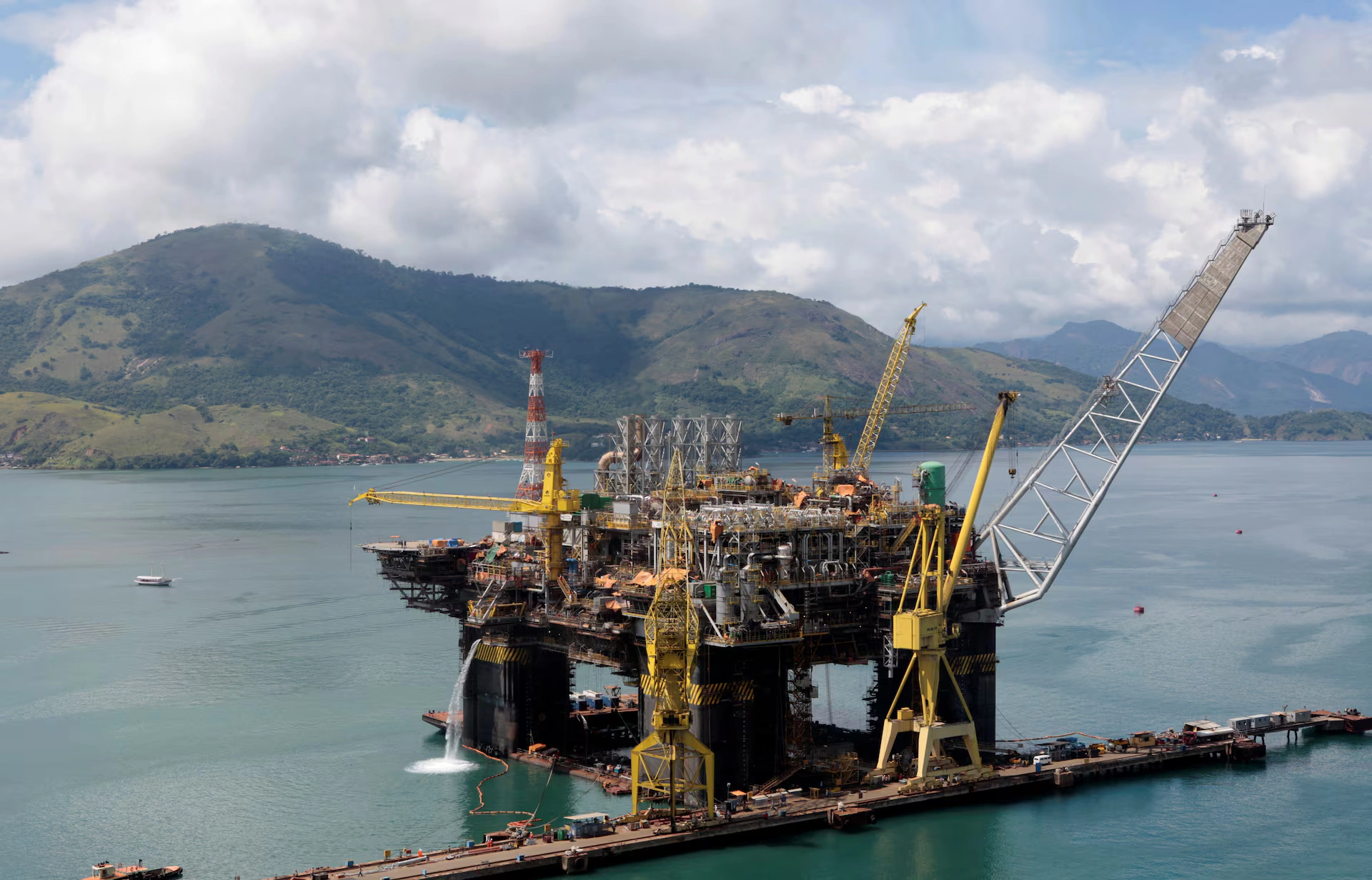
Reaching it is a feat of engineering. The oil is pumped up by giant floating vessels, and Búzios now has eight of them working, each a small factory at sea.
It is only the second Petrobras field to top a million barrels a day. The first was Tupi, another pre-salt giant nearby whose output has begun to slip as it matures.
The company is not done expanding. Its chief executive, Magda Chambriard, said Búzios will keep breaking records as new wells and platforms come online, with a long-term goal of doubling its output.
The newest vessels are giants in their own right. The largest, named Almirante Tamandaré, can process up to two hundred and twenty-five thousand barrels a day on its own, the biggest such capacity in the country.
The field sits within a wider boom. Petrobras posted record company-wide output early this year, averaging more than three million barrels of oil equivalent a day in the first quarter, up sharply from a year earlier.
A Chinese stake in Brazil’s prize field
Búzios is not wholly Brazilian. Petrobras operates the field, but two Chinese state oil firms, CNOOC and CNODC, hold stakes alongside it, a reminder of how closely the two countries’ economies are tied.
That partnership reflects a wider pattern. China is both a major investor in Brazilian oil and its biggest buyer, so a record at Búzios feeds directly into the trade between them.
The field is also a national engine. According to Petrobras, the pre-salt now supplies the bulk of its output, and the government leans on the royalties these fields generate.
Brazil oil production versus a falling market
The timing is the twist. The record comes just as oil prices have slumped, with the global benchmark sliding back toward seventy dollars a barrel after a brief war-driven spike, a familiar bind our reporting has shown.
That puts Petrobras in a familiar bind. Pumping more oil into a weakening market means each extra barrel earns less, even as the company spends heavily to lift production.
Yet there is a strategy behind the push. By driving down its costs and raising volume, Petrobras aims to stay profitable even when prices are low, squeezing more from a world-class asset.
Live Company IntelligencePetroleo Brasileiro Petrobras SA ADR — the full investor dossier
Wall Street view
Valuation & profitability
Price & risk
$10.7852-wk high
$26.12
Revenue trend · 6y
Ownership
Dividend
What it means for investors
For investors, the record is a double-edged signal. It confirms Petrobras can grow output fast, but it also ties the company’s fortunes ever more tightly to a single field and a volatile price.
The dividend question looms large. Petrobras has been one of the world’s most generous payers, and steady production from Búzios is what underpins those hefty shareholder payouts.
There is a national stake, too. Oil royalties help fund Brazil’s budget, so a stronger Búzios quietly strengthens the country’s public finances as well as the company’s accounts.
The wider lesson is about timing and nerve. Brazil is betting it can keep raising output while rivals hesitate, wagering that low-cost barrels will still pay off long after the current price dip has passed.
Brazil oil production questions, answered
What record did Búzios set?
Petrobras says the Búzios field reached a daily average of one and a tenth million barrels of oil on June 23. That beats the one-million mark the field first crossed in October last year.
Why does it matter?
Búzios alone produces about a third of all the oil Petrobras pumps in Brazil. Its strong output underpins both the company’s large dividends and the royalties that help fund the national budget.
Who owns the field?
Petrobras operates Búzios and is the main owner. Two Chinese state oil companies, CNOOC and CNODC, hold stakes alongside it, along with a Brazilian state entity that manages pre-salt contracts.
More: Brazil news in English, every day from The Rio Times.
Frequently Asked Questions
What production record did the Búzios field set, and when did it happen?
The Búzios field reached a record of 1.1 million barrels of oil in a single day on June 23. This beat the one-million barrel mark the field first crossed in October of the previous year.
How significant is the Búzios field to Petrobras's overall Brazilian output?
The Búzios field accounts for about a third of all the oil Petrobras pumps in Brazil, making it one of the most important energy assets in South America. Eight floating platforms currently operate at the field, with more planned as Petrobras aims to eventually double its production.
Who are the ownership partners involved in the Búzios field?
Petrobras operates the field alongside two Chinese partner firms, CNOOC and CNODC. The record production milestone comes at a challenging moment, as global oil prices are falling.
Connected Coverage
This article was produced by The Rio Times’ automated newsroom system. How we use AI · Report an error · Editorial responsibility: Matthias Camenzind, Editor-in-Chief