Fujimori Government Unveils US$20.6 Billion Lima Metro Shock
Infrastructure: Lima
Key Facts
—Government. Keiko Fujimori was sworn in on 28 July 2026 for the 2026-2031 term, with Luis Galarreta as prime minister and economist Elmer Cuba leading the Ministry of Economy and Finance (MEF).
—Appointments. The MEF confirmed Fabrizio Orrego Peche as vice-minister of Economy and Erick Lahura as vice-minister of the Treasury on 3 August; the government also named Evelin Coloma to head labour regulator Sunafil and Teresa Mera as president of trade-and-tourism board PromPerú.
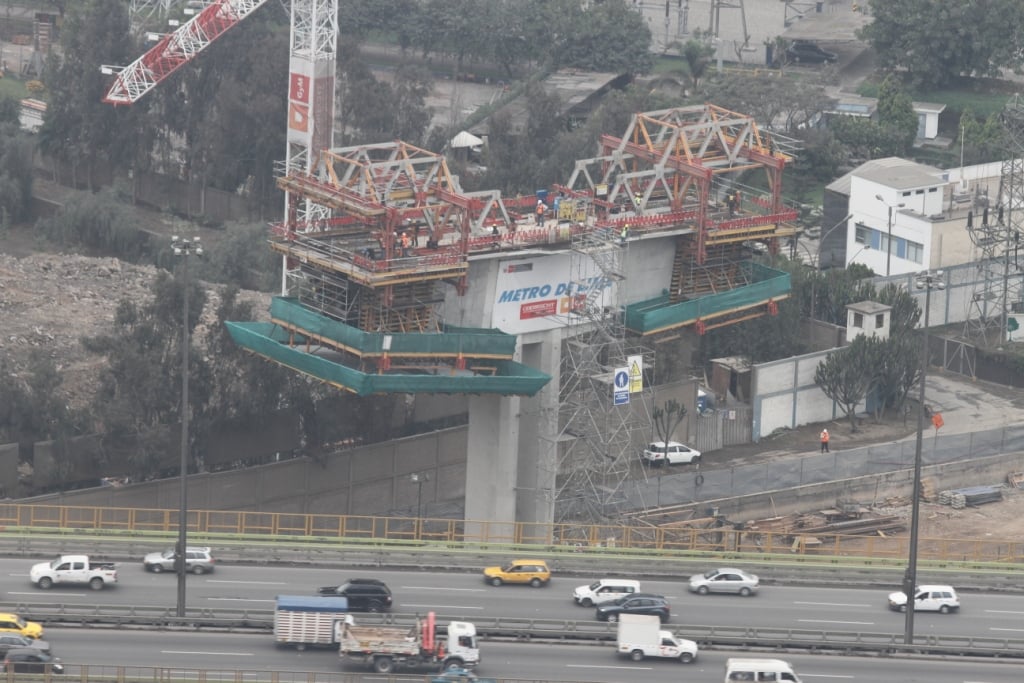
—Transport ‘shock.’ Authorities unveiled a plan to finish Metro Line 2 and build Lines 3, 4, 5 and 6 in Lima, an investment the state agency ProInversión estimates at more than US$20.6 billion.
—Line 2. Excavation of the roughly 27-kilometre Line 2, billed as Peru’s first fully underground metro, is complete, with work now shifting to track-laying, systems and stations.
—Context. Fujimori inherits an economy that is still growing but strained by insecurity and a divided Congress, and is casting large infrastructure as a growth and jobs lever.
Peru’s new Keiko Fujimori government is filling out its economic team and has announced a Lima Metro shock worth more than US$20.6 billion to finish Line 2 and build Lines 3 through 6.
A New Government Takes Shape
Keiko Fujimori took office on 28 July 2026, opening a five-year term that runs to 2031. Her first cabinet is led by Prime Minister Luis Galarreta, with economist Elmer Cuba at the MEF and Carlos Espá as foreign minister, according to Peruvian outlets and a cabinet tracker by the Americas Society/Council of the Americas.
In her inaugural address, Fujimori promised a larger role for the armed forces in fighting crime and a contingency plan for the ‘El Niño’ weather pattern. She takes over a country with steady growth but persistent insecurity and a fragmented legislature.
The Second Tier: MEF, Sunafil and PromPerú
The clearest sign that the administration is settling in came on 3 August, when the MEF confirmed two senior deputies. Fabrizio Orrego Peche was named vice-minister of Economy and Erick Lahura vice-minister of the Treasury, in resolutions countersigned by Minister Cuba, according to Infobae.
Beyond the MEF, the government moved to staff key agencies. It named Evelin Coloma as superintendent of Sunafil, the national labour-inspection authority, for a three-year term, and appointed Teresa Mera — a former trade minister — as executive president of PromPerú, the export and tourism promotion board.
These are technical but consequential posts. Sunafil polices labour compliance across a heavily informal economy, while PromPerú shapes how the country courts tourists and export buyers. Filling them signals the shift from campaign to day-to-day governing.
Inside the US$20.6 Billion Transport ‘Shock’
The headline economic announcement is a self-styled transport ‘shock’ centred on Lima’s rail network. The plan is to complete Metro Line 2 and execute Lines 3, 4, 5 and 6, the business daily Gestión reported.
ProInversión, the agency that structures public-private partnerships, puts the estimated investment for the four new lines at more than US$20.6 billion. Lines 3 and 4 were folded into the priority PPP portfolio in April 2026, with an estimated cost of S/36 billion (about US$10 billion).
For foreign readers, the scale is easier to grasp in context: it is one of the largest urban-transport programs in the Americas, aimed at a metropolitan area of more than 10 million people where surface traffic is chronic.
Where Line 2 and the New Lines Stand
Line 2 is the most advanced piece. The roughly 27-kilometre, fully underground east-west line linking Ate to Callao reached a milestone when excavation of its tunnels was completed, its builder, the Italy-based Webuild group, announced. Work now focuses on track, signalling and station fit-out.
The remaining lines are at earlier stages and depend on tenders, financing and private concessions that can take years to close. Delivering all of them on the promised timeline is the central question hanging over the plan.
Peru has a mixed record on megaprojects, with Line 2 itself running well behind its original schedule after years of delays. That history is why analysts treat the new targets as ambitions to be tested rather than guarantees.
Why It Matters for Lima and Investors
A functioning metro network would reshape daily life in Lima, cutting commutes that can run to hours and pulling riders off congested roads. The government frames the program as both a mobility fix and a generator of construction jobs.
For investors, the plan signals a pipeline of concessions and contracts in engineering, rolling stock and systems. Much of the delivery is meant to run through public-private partnerships, spreading cost and risk between the state and private operators.
The fiscal question is how the state funds its share without straining accounts, especially as the new economic team sets its priorities. Execution risk, not intent, is the recurring caveat.
What Comes Next
The immediate steps are procedural: finishing Line 2’s systems and stations, and advancing tenders for the newer lines through ProInversión. Markets and commuters will watch whether announced timelines hold.
The broader test is whether Fujimori’s team can convert a headline figure into steel and concrete. For now, the Lima Metro shock is a statement of intent from a government still assembling itself.
More: Peru news in English, every day from The Rio Times.
Frequently Asked Questions
What is Peru’s US$20.6 billion transport ‘shock’?
It is a government plan to finish Lima’s Metro Line 2 and build Lines 3, 4, 5 and 6. State agency ProInversión estimates the four new lines at more than US$20.6 billion.
Who leads Keiko Fujimori’s economic team?
Economist Elmer Cuba is finance minister, with Fabrizio Orrego Peche as vice-minister of Economy and Erick Lahura as vice-minister of the Treasury, both confirmed on 3 August 2026. Luis Galarreta is prime minister.
What is the status of Lima Metro Line 2?
Excavation of the roughly 27-kilometre, fully underground Line 2 is complete, according to builder Webuild, with work now on track-laying, systems and stations. It is billed as Peru’s first fully underground metro line.
Sources
Gestión · Infobae · Gestión — Sunafil · La República · Webuild
Sources: Gestión, Infobae, La República, Webuild, ProInversión, AS/COA.
This article was produced by The Rio Times’ automated newsroom system. How we use AI · Report an error
Read More from The Rio Times