Key Facts
- What happened: Paris police banned the union march route agreed a day earlier for Saturday, 24 October.
- The numbers: About 70,000 police and gendarmes deploy nationwide, the French government says.
- The new route: Police offered a route between Porte d’Italie and Porte de Vincennes, 7 a.m. to 1 p.m. ET (1 p.m. to 7 p.m. Paris).
- What happens next: Unions announced an emergency challenge in Paris’s administrative court; no ruling is known yet.
- Prediction markets: Polymarket puts a French state of emergency by 31 October at 8.5% (24 October 2026, 3:10 a.m. ET, 9:10 a.m. Paris).
This story is part of our coverage of the why France is in crisis. Dates, times and how to follow it are in our guide.
Published Saturday, 24 October 2026, 3:14 a.m. ET (9:14 a.m. Paris) · Source: Paris police prefecture, unions, French media
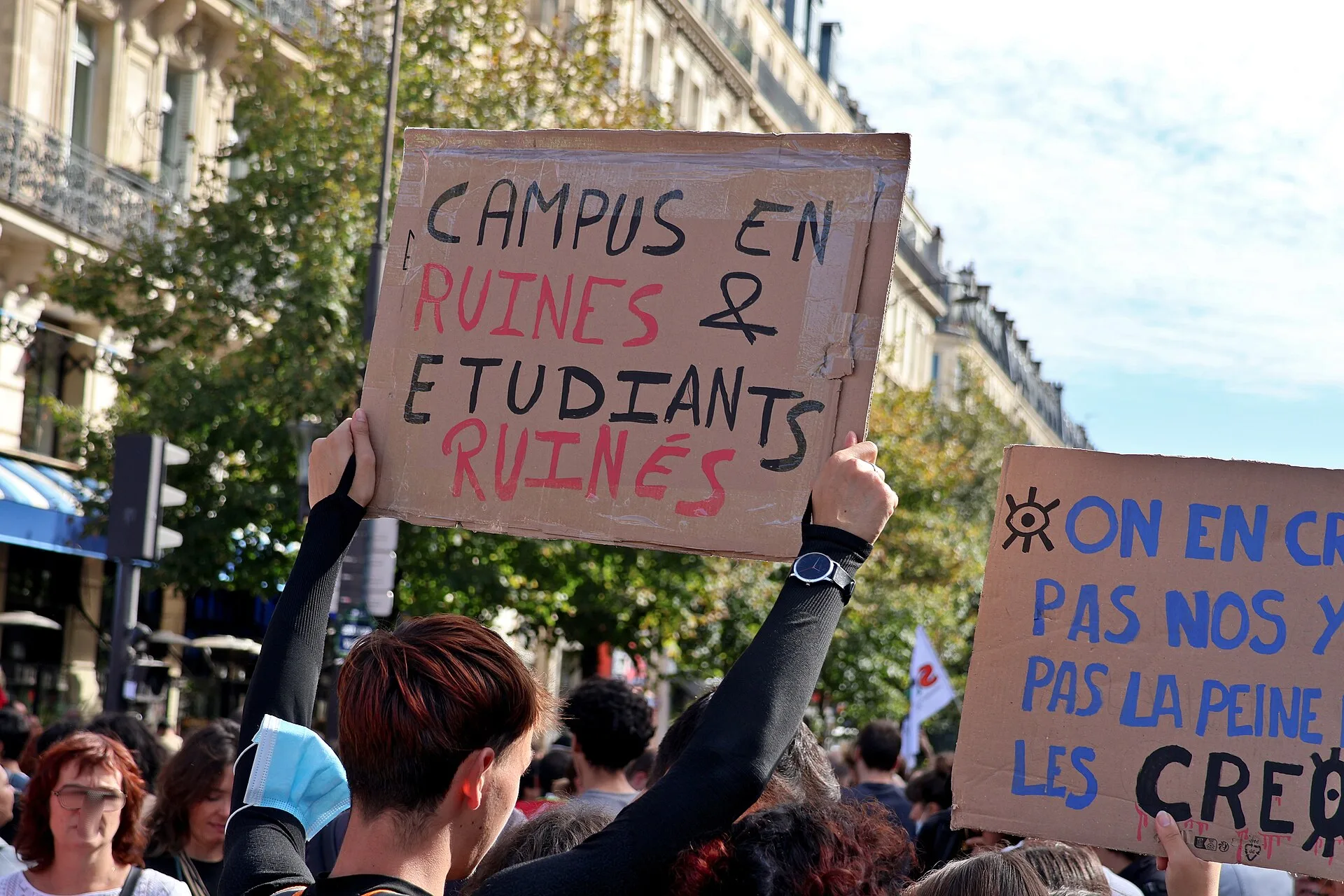
Paris police have banned the union march route that they agreed with unions on Thursday for Saturday, 24 October, hours before a day of France protests under tight security. Unions rejected the replacement route and announced an emergency court challenge.
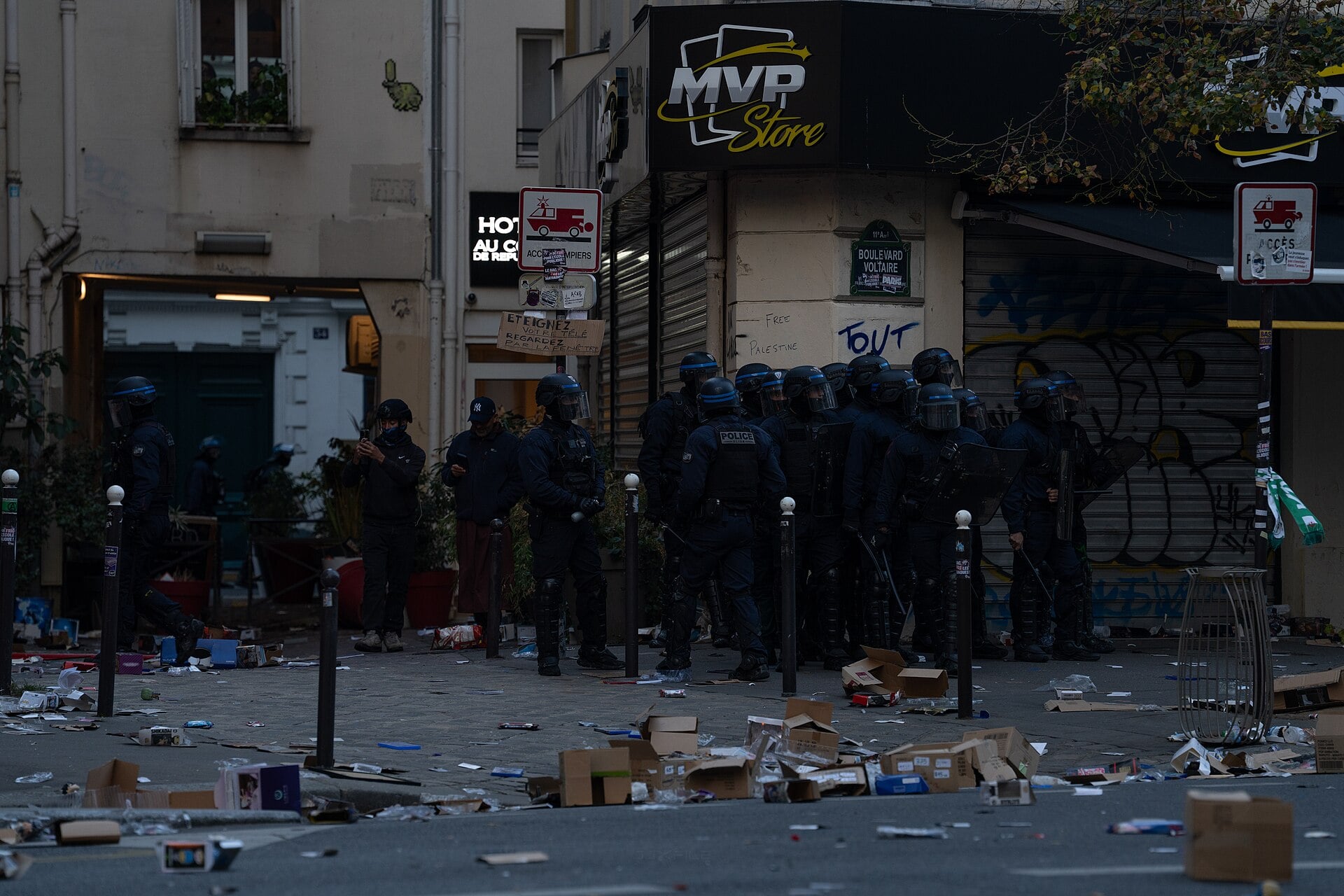
About 70,000 police officers and gendarmes (the military police who patrol rural France and back up city forces) are deployed across the country. Last Saturday, 17 October, riots and looting hit several cities.
In plain English
France’s unions and student groups called a national day of protest over living costs and public services. The Paris police chief, called the prefect, decides which streets a march may use. Unions say the new route cannot be kept safe, and a judge may now decide.
The Route Dispute
The Paris police prefecture signed off on a march from Place de la Bastille to Place de la Nation on Thursday, 22 October, with the union coalition for the Paris region. On Friday afternoon it reversed course and banned that route.
It offered a path between Porte d’Italie and Porte de Vincennes along the boulevards des Maréchaux, the ring of roads on the city’s edge. The march was authorised from 1 p.m. to 7 p.m. in Paris, which is 7 a.m. to 1 p.m. ET.
The unions refused. Karl Ghazi, co-secretary general of the CGT in Paris (one of France’s largest unions), said the proposed route was “impossible to secure”.
The Fage, a major student federation, called the change an “unacceptable last-minute reversal”. The Île-de-France union coalition, backed by the CGT and the Fage, then announced an urgent request to the Paris administrative court, with filing set for Saturday morning.
Security Across France
Elite police and gendarmerie units, RAID and GIGN, are part of the deployment, along with about 20 armoured vehicles and 15 water cannon. Several Paris museums, among them the Louvre and the Musée d’Orsay, are closed for the day.
The 17 October protests drew about 550,000 people, according to the Interior Ministry (organisers said 800,000), but ended in rioting and looting in several cities. Prime Minister Sébastien Lecornu said on Friday the threat level remains high and singled out the far left and opportunistic crime.
What Prediction Markets Say
On Polymarket, a state of emergency in France by 31 October trades at 8.5%, and by 31 December at 14.0%, with about US$666,000 traded across the market’s deadlines (24 October 2026, 3:10 a.m. ET, 9:10 a.m. Paris).
Why we show this: prediction markets turn real-money bets into a live probability that moves within minutes of the news, which is why investors, campaigns and newsrooms in the United States now follow them closely. We show them next to polls and official results, never instead of them.
What It Means for US Readers
Travellers in Paris on Saturday should expect road closures, closed museums and heavy police presence around Bastille and Nation. The standoff also shows how French police can change a march route at short notice, a power that courts can review.
Another union-led day of action is planned for Thursday, 5 November, so disruption may continue into next week.
What Is Not Known
It is not known whether the court will overturn the ban or where marchers will actually gather. Final turnout, arrests and any violence will be known only after the day ends.
Frequently Asked Questions
Why did Paris police ban the Bastille to Nation march?
The prefecture reversed an agreed route on Friday and proposed a different one on the city's edge. The unions say it cannot be secured, and they announced a request for an urgent ruling from the Paris administrative court.
What route did police propose for 24 October?
Police proposed a march between Porte d'Italie and Porte de Vincennes along the boulevards des Maréchaux. It was authorised from 1 p.m. to 7 p.m. Paris time, which is 7 a.m. to 1 p.m. ET.
How many police are deployed in France?
About 70,000 police officers and gendarmes are deployed nationwide on 24 October, according to the French government. Elite units and armoured vehicles are included.
Is it safe to travel to Paris this weekend?
Expect disruption near protest routes and closed museums, and check official transport updates. Avoid crowds and follow police instructions.
Sources: Franceinfo; France 24; Public Sénat; ICI; France 3 Paris Île-de-France; Polymarket.
This article was produced by The Rio Times’ automated newsroom system. How we use AI · Report an error · Editorial responsibility: Matthias Camenzind, Editor-in-Chief