Namibia Chases US$250 Million to Fund Its Green Industrialisation Plan
Namibia · ENERGY
Key Facts
—CIF invitation: Namibia has been invited to develop an investment plan to access up to US$250 million (about N$4.1 billion) in concessional financing. Nothing has been committed or disbursed yet.
—Loan terms: Then green hydrogen commissioner James Mnyupe described the facility as carrying a 30-year tenor, an 8-year grace period and a cost of capital of about 1.1 percent. He left the post in November 2025.
—Blended use target: The government aims to blend the CIF anchor capital with World Bank, IFC and African Development Bank funding to mobilise more than US$1 billion (about N$16.4 billion) in total.
—SDG Namibia One Fund: A separate blended finance vehicle targeting about €1 billion (roughly US$1.15 billion), backed by the EU Global Gateway strategy and Dutch development finance, channels investment into green hydrogen.
—Hyphen project: Germany has classified Hyphen Hydrogen Energy’s planned US$10 billion green ammonia facility near Lüderitz as a strategic foreign project, targeting about 2 million tonnes per year of output.
—Blueprint targets by 2040: The government’s Green Industrialisation Blueprint projects GDP growth of about US$10 billion, roughly 250,000 jobs, and exports quadrupling to about US$20 billion.
Namibia is positioning itself as a flagship African test case for green industrialisation, targeting up to US$250 million in highly concessional climate finance from the Climate Investment Funds to anchor a broader blended-finance push exceeding US$1 billion.
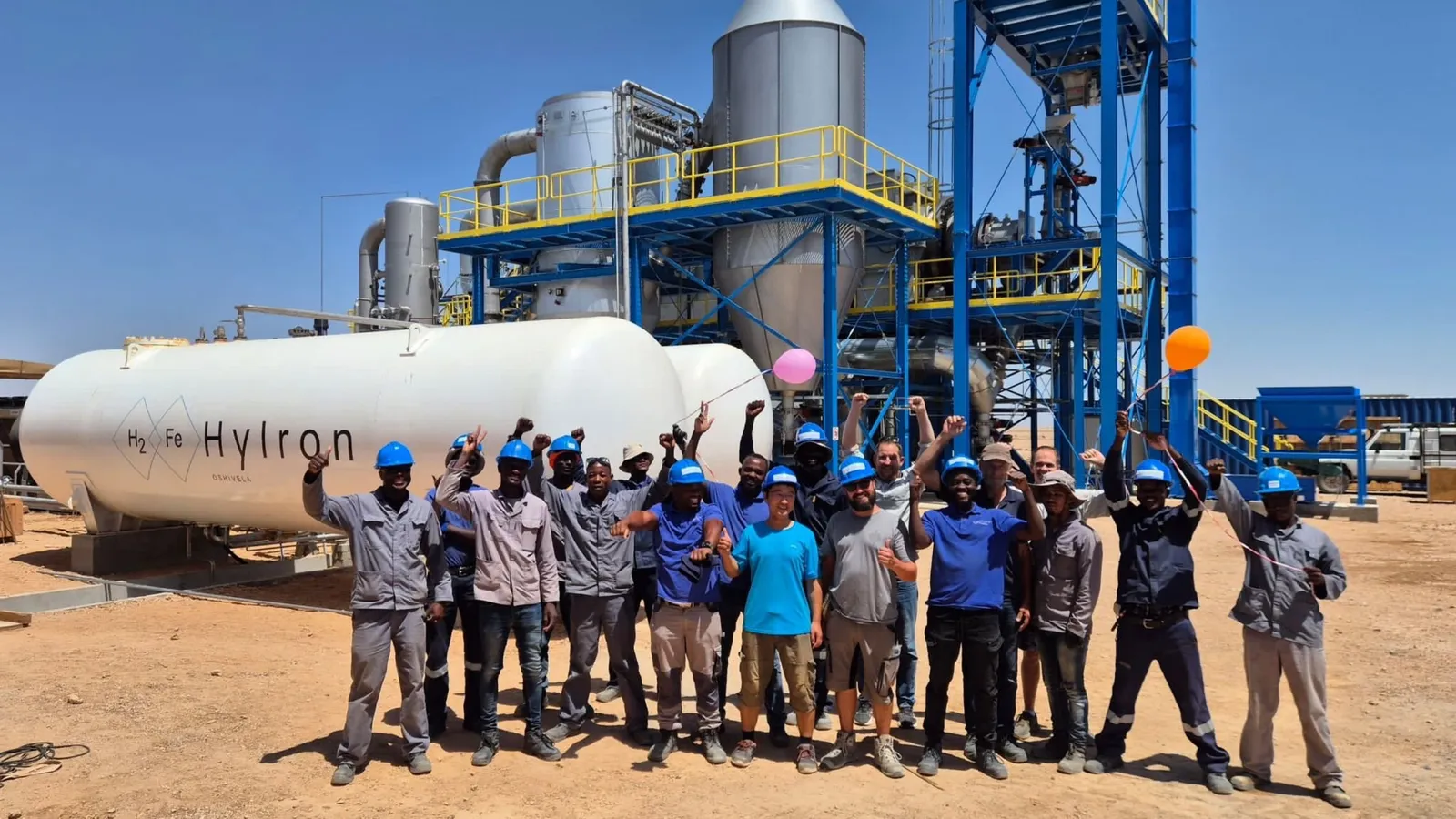
Where the green industrialisation plan stands now
A joint mission of multilateral development banks launched on 23 June 2026 to finalise the Sectoral Transformation Investment Plan, the document Namibia has to produce before any of the US$250 million can be drawn. The World Bank is coordinating, with preparation funded by a US$500,000 (about N$8.2 million) grant, and the team visited Erongo and ||Kharas. Seventy-eight projects were shortlisted in May.
National Planning Commission director-general Kaire Mbuende has framed the ambition plainly: “Namibia’s ambition is clear. We do not seek merely to export raw materials; we seek to industrialise.”
The US$250 million anchor: what it is and how it works
Namibia has been selected as one of the first countries in the Climate Investment Funds (CIF) Industrial Decarbonisation Programme, a US$1 billion global window targeting hard-to-abate sectors such as steel, cement and chemicals. The country’s allocation stands at up to US$250 million in concessional financing, channelled through multilateral development banks on very favourable terms.
James Mnyupe, then green hydrogen commissioner and economic adviser to the president, set out the terms in 2025: a 30-year tenor, an 8-year grace period, and a cost of capital of roughly 1.1 percent. The government initially requested US$150 million, but the CIF indicated the envelope could rise to the full US$250 million.
Accessing the money depends on a Sectoral Transformation Investment Plan, or s-TIP, which Namibia is now developing. The plan will provide a roadmap for industrial decarbonisation, support green industrialisation, and focus on shared infrastructure, micro and small enterprises, and community participation in new industrial projects.
Where the money goes: minerals, hydrogen and manufacturing
The CIF capital is designed as anchor concessional money, a risk-absorbing base meant to crowd in far larger private and multilateral flows. The plan is to blend it with World Bank, International Finance Corporation and African Development Bank money to mobilise more than US$1 billion (about N$16.4 billion) in total. Mnyupe, who set out this framing, stepped down as commissioner on 1 November 2025 and is now senior vice-president for sub-Saharan Africa at the German engineering group thyssenkrupp Uhde, which sells electrolysers and ammonia plants into this market. Since April 2026 the Namibia Green Hydrogen Programme has sat under the National Planning Commission.
Priority sectors include mineral beneficiation, particularly local processing of lithium and rare earths rather than raw export. Green hydrogen and synthetic fuels form another pillar, feeding into the Southern African Power Pool and hard-to-abate industrial uses, alongside low-carbon manufacturing in fertiliser, shipping and building materials.
Enabling infrastructure such as transmission lines, logistics corridors, industrial parks and water systems also falls within the scope. Namibia has even proposed an Africa-wide green industrialisation centre, using the CIF capital combined with multilateral development bank funding to build a continental platform for green value chains.
A broader green finance architecture takes shape
The CIF envelope sits within a much wider financing architecture that Namibia has assembled over the past five years. At its centre is the SDG Namibia One Fund, a blended finance platform launched at COP27 in Sharm El-Sheikh in November 2022, targeting about €1 billion (roughly US$1.15 billion) to mobilise investment in the green hydrogen sector and associated infrastructure.
The fund was created through a partnership of the Environmental Investment Fund of Namibia, the Dutch climate investment manager Climate Fund Managers, and the Dutch development finance institution Invest International. An initial €40 million (about US$46 million) grant from Invest International served as the anchor investment, and the European Union later approved an additional €25 million (about US$29 million) under its Global Gateway strategy.
A letter of intent for a €500 million (about US$576 million) concessional loan from the European Investment Bank was also signed at COP27, part of which is proposed to flow via SDG Namibia One. The fund is managed by Nam-H2 Fund Managers, a partnership of the Environmental Investment Fund of Namibia, Climate Fund Managers and Invest International, with a €1 billion (about US$1.15 billion) target and explicit backing from EU Global Gateway.
Great-power competition and the European hydrogen play
Namibia’s green industrialisation drive sits squarely at the intersection of great-power competition and critical mineral security. The European Union is the dominant financial backer, with then EU energy commissioner Kadri Simson announcing a €50 million (about US$58 million) package for renewable hydrogen funds in Namibia and South Africa at the Global African Hydrogen Summit in Windhoek.
Germany has gone further still. In March 2024, Berlin classified Hyphen Hydrogen Energy’s planned green ammonia project near Lüderitz as a strategic foreign project, signalling it as part of Germany’s national hydrogen import strategy. The planned US$10 billion investment targets roughly 2 million tonnes per year of green ammonia output, making it one of the largest such projects on the continent.
The United States is present but far less financially dominant. USAID’s Mobilizing Investment project granted N$19 million (about US$1.2 million) to Nam-H2 Fund Managers to help scale the SDG Namibia One Fund, before the agency was dismantled in 2025. The pattern is clear: European capital and institutions are outpacing US engagement, as the broader dynamics explored in Africa: The New Scramble continue to unfold.
The domestic growth model and its ambitions
In August 2024, the government announced a two-pillar growth model that directly dovetails with the CIF and SDG Namibia One structures. The first pillar focuses on sustainable infrastructure, particularly transport and logistics systems connecting Namibia to regional and global markets, delivered through public-private partnerships and multilateral funding.
The second pillar targets competitive green industries and services: green hydrogen, critical minerals, low-carbon manufacturing and high-value services. Concessional capital is used to underwrite long-tenor infrastructure such as transmission lines and ports, while blended structures crowd private money into industrial projects.
The Green Industrialisation Blueprint released in 2024 sets out economic targets that are striking in scale. By 2040, the government projects GDP growth of about US$10 billion, roughly 250,000 jobs, and national exports quadrupling to about US$20 billion, with roughly US$12 billion coming from green hydrogen alone. Namibia has also created the Welwitschia Fund, a sovereign wealth fund intended to manage revenues from natural resources for intergenerational equity.
Risks, critics and what to watch next
The strategy is not without tensions. Academic analyses highlight how concessional capital and blended finance are used to de-risk large private investments in green hydrogen, shifting risk from global investors onto Namibian institutions. Critics argue that large export-oriented hydrogen projects may prioritise European decarbonisation over local energy access and intensify land pressures in coastal and desert regions.
Namibia’s fiscal space is constrained, making heavy reliance on external concessional loans a politically sensitive strategy. The CIF-linked industrialisation push is woven into emerging regimes of carbon border adjustments, hydrogen import strategies and critical-minerals diplomacy that lock in preferential access for wealthy economies.
The next milestone to watch is the completion of the Sectoral Transformation Investment Plan, which will structure the use of the US$250 million across priority sectors and determine how quickly the anchor capital can begin flowing. The plan will test whether Namibia can move from blueprint to execution, and whether a small African state can genuinely capture value in critical minerals and green fuels rather than remaining a raw-material supplier to Europe.
Namibia versus Chile for the same money
Namibia and Chile are chasing the same thing: European offtake contracts for green hydrogen and ammonia, funded in large part by the same Global Gateway envelope. Both have world-class solar and wind, both have deep-water ports, and neither has an industrial base to absorb the output at home.
Chile has the advantage of proximity to existing mining demand and a functioning permitting regime; Namibia has cheaper land and a government that has made this its central economic project. Watch which one signs binding offtake first — that, not the size of the announced funds, will decide who actually builds.
Frequently Asked Questions
What is the Climate Investment Funds Industrial Decarbonisation Programme?
It is a US$1 billion global window targeting hard-to-abate sectors such as steel, cement and chemicals, with Namibia selected as one of the first recipient countries for an allocation of up to US$250 million in concessional financing.
How does Namibia plan to use the US$250 million?
The capital will serve as anchor concessional funding to de-risk and crowd in larger private and multilateral investments in mineral beneficiation, green hydrogen, low-carbon manufacturing and enabling infrastructure such as transmission lines and industrial parks.
Which countries are the main backers of Namibia’s green industrialisation?
The European Union and Germany are the dominant financial and political backers, with the Netherlands also playing a key role through the SDG Namibia One Fund, while United States engagement remains comparatively small.
Connected Coverage
Namibia’s green industrialisation push is a defining chapter in the broader contest for Africa’s critical minerals and clean-energy supply chains, a story we track in Africa: The New Scramble.
Sources
This article was produced by The Rio Times’ automated newsroom system. How we use AI · Report an error
LatAm Markets: Live Signals → — real-time movers, turnover leaders and FX across Latin America.
Read More from The Rio Times