Museveni to Gen Z at His 82nd Birthday: No Spectators in Wealth Creation
Uganda · Politics
Key Facts
- —What happened At a youth rally in Kampala on 19 September 2026, President Yoweri Museveni urged young Ugandans into commercial production.
- —Who spoke for him Vice President Jessica Alupo read the president’s message at Kololo Ceremonial Grounds. Museveni turned 82 on 15 September.
- —The core line “No one should be a spectator in the wealth creation process,” the president’s message said.
- —Why it matters A third of Ugandan households cannot meet basic needs, the statistics bureau says, and about 16 percent of young adults lack work.
- —The catch The rally was organised by youth groups that support Museveni, so it says little about young Ugandans at large.
- —Where jobs should come from Museveni named commercial agriculture, industry, services and information technology among the key sectors for wealth and jobs.
Uganda’s leader, in power since 1986, used a youth birthday rally to repeat his creed that every household must earn money. The friendly crowd is only one part of a restless generation.

Uganda’s President Yoweri Museveni told Gen Z youth marking his 82nd birthday that nobody should sit out wealth creation. The message, read by Vice President Jessica Alupo in Kampala on Saturday 19 September 2026, urged young people into commercial production.
Museveni has ruled the East African country since January 1986. His pitch to the young is the one he has made for years: stop waiting for jobs and start producing for sale.
What the president told the crowd
“No one should be a spectator in the wealth creation process,” the message said. It was read at Kololo Ceremonial Grounds, the parade ground where Museveni was sworn in for his seventh term in May.
He named commercial agriculture, industry, services, and information and communications technology among the key sectors for wealth and jobs.
The message urged the 33 percent of households still outside the money economy to join it. Museveni often describes these as families producing only for their own consumption.
He also pressed for factories that process Ugandan raw materials at home. “We need a larger market of 1.3 billion people,” he said, describing Africa as the outlet for Uganda’s surplus products.
On politics, the message asked young Ugandans to guard democratic gains and act within the law. “Always remember that rights come with responsibilities and respect for humanity,” it said.
Who organised the celebration
The event was not a neutral youth forum. Pulse Uganda reported that youth groups, including one called Gen Z for Gen Seven, mobilised for it.
Israel Kyarisima, introduced as national chairperson of Gen Z, told peers to take responsibility for their future rather than simply demand opportunities. He urged them to adopt the “seven pillars of the qualitative leap” that Museveni promoted during his campaign.
Ian Jeremiah Gumisiriza, the president’s special assistant on the informal sector, said that sector had dedicated September to birthday activities. Gen Z members ran a blood donation drive and young entrepreneurs exhibited products at the grounds.
Several ministers joined in. Amina Mukalazi, the junior finance minister for investment and privatisation, called the president a “walking history”, according to the state broadcaster UBC.
The numbers behind the message
Mercy Lakisa, the junior minister for youth and children, named unemployment as a leading challenge for young people. Official figures back her up.
The Uganda Bureau of Statistics, the national statistics agency, put unemployment among 18- to 30-year-olds at about 16 percent. That figure comes from its Labour Market Survey 2025, presented on 16 April 2026.
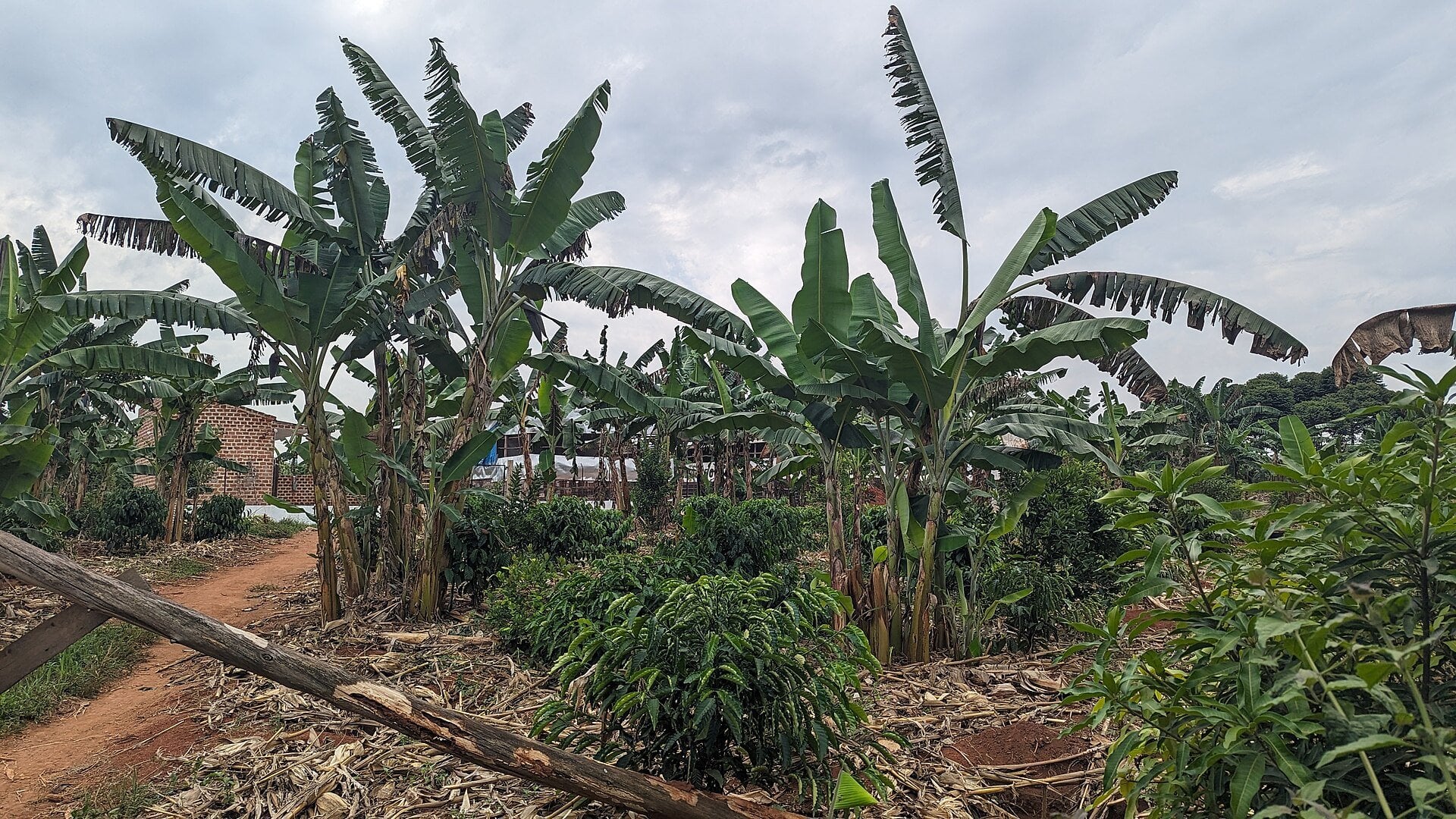
The 2024 national census counted 33.1 percent of households in the subsistence economy, the Daily Monitor reported. That matches the share Museveni cited at Kololo.
The statistics bureau counts a household as outside the money economy if it cannot meet its basic food and non-food needs. That covers subsistence farmers but also workers whose wages fall short and small businesses earning too little.
The government’s main tool for changing this is the Parish Development Model, rolled out from the 2022/23 financial year. It channels revolving funds through parishes, the layer of local government above villages, to help families earn cash.
The broader economy gives the president some cover. The Bank of Uganda held its benchmark rate at 9.75 percent on 13 August 2026.
The central bank estimated growth of 6.4 percent in 2025/26 and projects 7.0 to 7.5 percent for 2026/27. Uganda’s financial year runs from July to June.
A generation that has also protested
The friendly Kololo crowd is only one face of Uganda’s young majority. On 23 July 2024, young people marched on parliament against corruption, and Human Rights Watch counted at least 45 detained that day.
That march was partly inspired by youth-led protests in neighbouring Kenya, the rights group said.
Chatham House, a London think tank, has tracked that mood. In January it wrote that many young urban Ugandans remain critical of “the perceived lethargy of the NRM”.
The NRM is the ruling National Resistance Movement, which Museveni leads. Chatham House also cited repeated corruption scandals that sparked protests in 2024.
The Electoral Commission declared Museveni the winner of the 15 January 2026 election with 71.65 percent. His main rival, the singer-turned-politician Bobi Wine, took 24.72 percent and rejected the result.
The vote took place during a nationwide internet blackout that drew international criticism. Museveni was sworn in on 12 May 2026, after two constitutional amendments had removed presidential term and age limits.
What comes next
Museveni’s son, General Muhoozi Kainerugaba, commands the armed forces as Chief of Defence Forces. Al Jazeera has described him as a likely candidate to succeed his father.
The message echoes what Museveni told a Gen Z group at his Rwakitura country home in late November 2025, before the vote. There he set out the same four pillars of wealth creation, the Daily Monitor reported.
Whether that persuades the young people who did not attend the celebration is another matter. The next test is whether parish funds and skilling centres turn into paying work.
More: Africa coverage, every day from The Rio Times.
Frequently Asked Questions
What did Museveni tell Gen Z at his 82nd birthday?
In a message read by Vice President Jessica Alupo on 19 September 2026, he urged young Ugandans to join commercial production. He said no one should be a spectator in wealth creation. He named commercial agriculture, industry, services and information technology among the key sectors for jobs.
Who organised the Kololo celebration?
Youth groups that support the president organised it, with government involvement. Pulse Uganda named a group called Gen Z for Gen Seven among those mobilising. Israel Kyarisima spoke as national chairperson of Gen Z, and several ministers attended.
What is the money economy in Uganda?
The Uganda Bureau of Statistics counts a household as outside the money economy if it cannot meet its basic food and non-food needs. That includes subsistence farmers, workers whose wages fall short and struggling small businesses. Households in the money economy meet their basic needs and still have savings. The 2024 census put 33.1 percent of households outside it.
How old is Museveni and how long has he ruled?
Museveni was born on 15 September 1944 and turned 82 this month. He has been president since January 1986. He won a seventh term in January 2026 and was sworn in on 12 May 2026.
Sources: Uganda Broadcasting Corporation on the Kololo celebration, Nile Post on the president’s message, Daily Monitor on the speeches, Pulse Uganda on the organisers, Presidential Press Unit cabinet list of 26 May 2026, Uganda Bureau of Statistics Labour Market Survey 2025, Daily Monitor on the 2024 census and the money economy, World Bank on the Parish Development Model, Daily Monitor on the Bank of Uganda decision, Al Jazeera on the January 2026 result, Al Jazeera on the May 2026 inauguration, Human Rights Watch on the 2024 anti-corruption march, Daily Monitor on the Rwakitura Gen Z podcast, Chatham House on succession and Gen Z
This article was produced by The Rio Times’ automated newsroom system. How we use AI · Report an error
Read More from The Rio Times