Medellín Police Arrest Three Accused of Linking ELN and FARC Dissidents
Key Facts
Officials in Antioquia say rival armed groups are fighting over drug trafficking and other illegal income in the department. Police now say three men arrested in Medellín helped two of those groups work together.
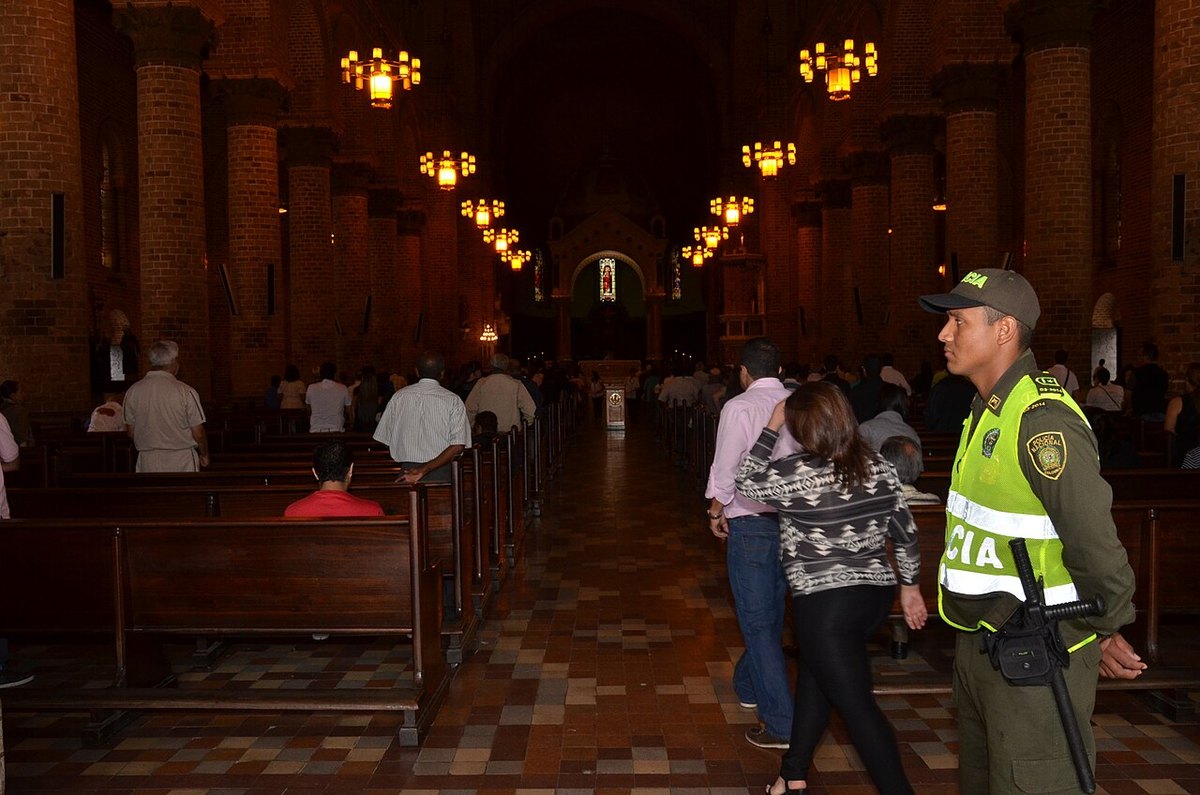
Police arrested three men in Medellín on 18 September, accusing them of links to the ELN guerrillas and a FARC dissident faction. The arrests by the Dijín, the police criminal investigation unit, were reported by El Colombiano and Q’hubo.
Why This Matters
The ELN, or National Liberation Army, is a guerrilla group that has attacked several police stations in north-eastern Colombia since late August. It was founded in 1964 by rebels influenced by the Cuban revolution, and it runs operations in Colombia and Venezuela.
The research group InSight Crime estimates its strength at about 6,300 members, organised in eight war fronts. The United States has listed it as a terrorist organisation since 1997, and the European Union followed in 2004.
On 17 September it confirmed holding three police investigators and a civilian seized on 17 August in Norte de Santander. The president has rejected any prisoner exchange for them, Infobae reported.
Structure 36 is a FARC dissident unit tied to a faction led by a commander known as Calarcá, El Colombiano reported. FARC dissidents are fighters who rejected the 2016 peace deal that disarmed the former FARC guerrilla army.
On 9 September, President Abelardo de la Espriella closed the remaining peace talks and stripped armed groups of political status. Antioquia’s governor, Andrés Julián Rendón, said the two groups joined to fight the Clan del Golfo for illegal income.
The Clan del Golfo, also called the Gaitanist Army of Colombia, is the country’s largest drug trafficking organisation. An alliance between a guerrilla group and a dissident front would shift the balance of power across Antioquia.
The Arrests
Police identified the three men only by their aliases, Téllez, Gordo and Jaider, according to Infobae. The operation was carried out by the Dijín’s special anti-terrorist operations group, El Colombiano reported.
Téllez allegedly served as finance coordinator and main link between the ELN’s Héroes de Tarazá company and Structure 36. Infobae described him as a close associate of Calarcá, the dissident commander.
Police accuse Gordo and Jaider of helping plan and carry out attacks on vehicles. Investigators link the group to the burning of a bus in La Paulina, in Valdivia, and of trucks on Antioquia’s roads.
Medellín mayor Federico Gutiérrez announced the operation on X and named the ELN unit involved, Minuto30 reported. Rendón linked the three to what he described as a mixed commission of the ELN and dissidents in the department.
The Charges and the Legal Framework
The three face charges of terrorism, rebellion and aggravated criminal conspiracy, Minuto30 reported. Colombia’s Penal Code sets a prison term of 160 to 270 months for terrorism.
Aggravated criminal conspiracy, when linked to crimes such as terrorism or drug trafficking, carries eight to 18 years. The code raises that penalty by half for anyone who organises or finances such a conspiracy.
That provision could matter for Téllez, whom police describe as the network’s finance coordinator. Political status, a constitutional category, decides whether rebels can seek amnesty or pardon, The Rio Times reported.
It also shields rebellion charges from extradition, a protection the government now says armed groups will not get. A judge must still decide whether the evidence justifies the charges and whether the suspects stay in custody.
A Region Under Pressure
The arrests follow weeks of warnings about Structure 36 in the north and north-east of Antioquia. On 7 September, the mayors of Santa Rosa de Osos, Carolina del Príncipe and Gómez Plata received threats blamed on the front.
On 12 September, Ombudsman Iris Marín denounced forced displacement and movement restrictions imposed by the structure in Anorí. She said the risk had been flagged in an early warning issued in 2022 and in a follow-up note in July 2026.
The ELN and the Clan del Golfo have fought over drug trafficking and illegal mining areas since 2018, InSight Crime says. On 19 September, soldiers of the army’s 11th Brigade clashed with Clan del Golfo members in El Bagre, Infobae reported.
The investigators held by the ELN in Norte de Santander also belong to the Dijín, the unit behind the Medellín arrests. The ELN accused those officers of spying on it and of ties to Front 33, another dissident unit, Infobae reported.
They include Major Freddy Alexis Russi González, seized with two colleagues and a civilian on the Ocaña–Cúcuta road. The ELN has said their release or an exchange remains under consideration, which the president has refused.
What Officials Said
“Different names, the same breed: criminals fighting over drug trafficking and other illegal economies,” Rendón said, Q’hubo reported. “One by one they are falling,” Medellín mayor Federico Gutiérrez said, according to El Colombiano.
Gutiérrez said authorities would keep working against those who try to sow fear and violence, Infobae reported. De la Espriella has said that “criminals will have no political status, considerations nor impunity”.
How the Peace Talks Ended
Talks between the ELN and the previous government of Gustavo Petro resumed on 21 November 2022. Petro suspended them on 17 January 2025, after deadly ELN attacks on civilians and dissidents in the Catatumbo region.
On 9 September 2026, De la Espriella signed Executive Resolution 391, revoking all 13 government negotiators at the ELN table. Earlier resolutions had closed talks with Calarcá’s bloc, the Comuneros del Sur and criminal gangs in Medellín, The Rio Times reported.
What It Means If You Live in or Visit Antioquia
For residents of Medellín, police allege that rural armed groups run finance and logistics from inside the city. The attacks linked to the suspects targeted buses and trucks, so road travel in the north and Bajo Cauca carries risk.
Travellers should check local advisories before driving between Medellín and towns such as Valdivia, Anorí or El Bagre. Businesses moving goods by road in the department should plan for disruption, since attacks have targeted trucks.
For investors, the breakdown of peace talks points to a longer period of military pressure rather than negotiation. Mining and farming operations in areas contested by the ELN, dissidents and the Clan del Golfo face the most direct exposure.
What Is Not Yet Known
Police have not published the suspects’ full names or details of the evidence against them. It is not known whether a judge has ordered them held in pre-trial detention.
It is also unclear whether the suspects have lawyers or have answered the accusations. Officials have not said whether more arrests are expected.
Police have not said whether weapons, cash or other items were seized. None of the reports reviewed includes a response from the ELN or Structure 36.
Frequently Asked Questions
Why do the Medellín arrests matter?
Officials say the suspects linked the ELN guerrillas with a FARC dissident front in Antioquia. Such cooperation would strengthen both groups against the Clan del Golfo and the state.
Who was arrested in Medellín?
Police arrested three men known by the aliases Téllez, Gordo and Jaider. They are accused of links to the ELN and a FARC dissident front.
Have the suspects been convicted?
No. They face charges of terrorism, rebellion and aggravated criminal conspiracy, and they are presumed innocent.
Are peace talks with the ELN still going on?
No. President Abelardo de la Espriella closed the remaining talks on 9 September and removed the government’s negotiators.
Sources: El Colombiano, alias Téllez arrested in Medellín, Infobae, Téllez, Gordo and Jaider, Q’hubo Medellín, the governor’s reaction, Minuto30, the charges, Infobae, ELN confirms holding police officers, The Rio Times, peace talks closed and political status removed, InSight Crime, ELN profile, Wikipedia, ELN founding and terrorist designations, Wikipedia, Clan del Golfo, Senate of Colombia, Penal Code articles 340 and 343
This article was produced by The Rio Times’ automated newsroom system. How we use AI · Report an error
Read More from The Rio Times