Marcopolo Profit Falls 15.5% as Margins Weaken, Shares Tumble
Brazil · Industry
Key Facts
- Net profit — R$271.2 million (US$53.1 million), down 15.5% year on year.
- Ebitda — R$339 million (US$66.4 million), 15% below 2Q25.
- Revenue — grew, but analysts had expected higher profit and Ebitda.
- Share reaction — Marcopolo fell 10.43% to R$4.80 on the day after release.
- Margin pressure — weaker gross margin, less favorable sales mix, more microbuses.
- Export drag — lower export volumes hurt overall profitability.
- Argentina costs — restructuring charges at Metalsur weighed on results.
Brazil’s biggest bus maker beat revenue forecasts but missed on profit. Investors punished the stock.
Marcopolo profit is the story. The company posted second-quarter 2026 net profit of R$271.2 million (US$53.1 million), down 15.5% year on year. Investors punished the stock as margins weakened, even as revenue grew.
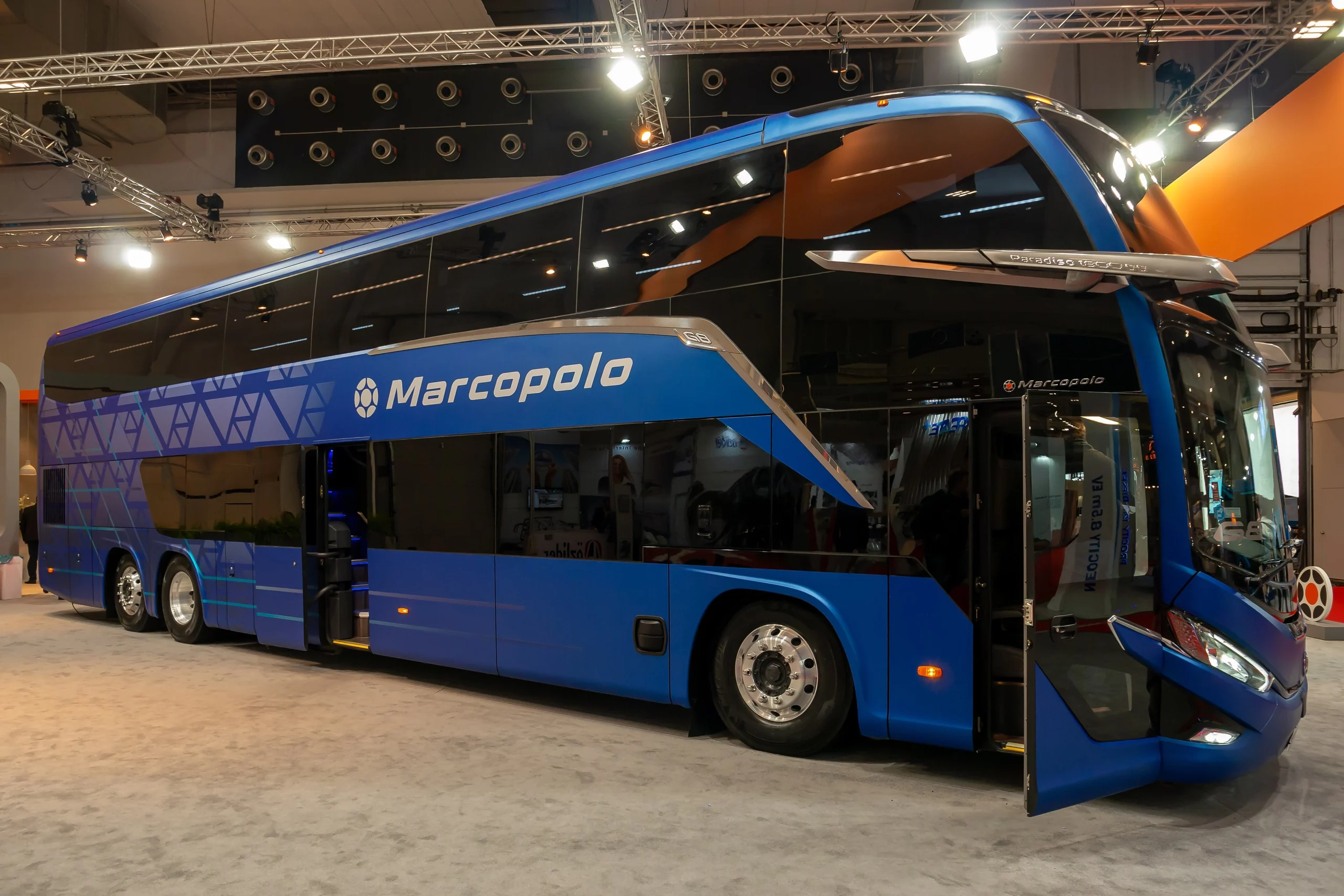
The Numbers Behind the Marcopolo Profit Drop
The Brazilian bus maker reported net profit of R$271.2 million (US$53.1 million) for the April-June quarter. That fell short of the average analyst forecast of R$283 million (US$55.4 million).
Ebitda came in at R$339 million (US$66.4 million), again below the R$383 million (US$75 million) analysts had pencilled in. The year-on-year decline was 15%.
Revenue actually increased, but that wasn’t enough to offset weaker margins. The sales mix tilted toward lower-priced microbuses, which hurt profitability.
Export volumes also slipped, adding to the pressure. High financing costs in Brazil further squeezed the bottom line, as NC News noted in its 4Q25 review.
The company’s revenue growth was driven mainly by domestic sales of coaches and urban buses. But the lower-margin microbuses made up a larger share of total volume, dragging down overall profitability.
Currency swings also played a role, as a stronger real made exports less competitive. This compounded the effect of lower export volumes, particularly to markets in Africa and the Middle East.
Why Investors Fled Marcopolo Shares
Shares in Marcopolo (Marcopolo) tumbled 10.43% to R$4.80 on the day after the release. That was the worst drop in months, according to Infomoney.
The market focused on the weaker gross margin and the less favorable sales mix. Lower export volumes and Argentina restructuring costs at Metalsur also weighed on sentiment.
Diário do Transporte said investors weighed the lower net profit and Ebitda more heavily than the revenue increase. The stock touched its lowest level since April 2025, as Terra reported.
For you as an investor in Latin America, this shows how quickly sentiment can shift. A company can beat on revenue and still see its stock hammered if margins disappoint.
Trading volume surged to nearly three times the daily average on the day of the drop. This suggests that institutional investors were actively reducing their positions, not just retail traders.
The selloff also dragged down other auto parts makers listed on the Brazilian exchange. This indicates that the market read Marcopolo’s results as a warning about the broader commercial vehicle sector.
A Tale of Two Quarters: 4Q25 vs 2Q26
Just a few months earlier, Marcopolo had posted stronger results. In the fourth quarter of 2025, net profit rose 7.2% year on year to R$341.7 million (US$66.9 million).
That quarter also saw a positive financial result of R$32.8 million (US$6.4 million), versus a negative R$28.3 million (US$5.5 million) in 4Q24. Revenue, however, fell 3.6%.
The 2Q26 contrast is stark. Profit fell, margins narrowed, and the market reacted badly.
Yet the company’s cash position remains strong, as NC News highlighted.
This back-and-forth is typical for cyclical manufacturers. Bus demand depends on funding costs, government orders, and export markets — all of which can swing quickly.
In the first quarter of 2026, Marcopolo had also seen a slowdown in orders from large cities. But the company remained optimistic about the long-term electrification of urban fleets, which could drive future growth.
What It Means for Your Portfolio
If you hold Brazilian equities, Marcopolo’s results are a cautionary tale. Even a profitable quarter can disappoint if the market expects more.
The company’s exposure to Argentina adds another layer of risk. Restructuring costs at Metalsur, its Argentine unit, ate into profits and could continue to do so.
On the positive side, the cash position remains solid, and the company is investing in new models. But with interest rates high in Brazil, domestic demand for buses may stay weak.
Watch for the next quarter’s sales mix and export numbers. Those are the key drivers of whether Marcopolo profit recovers or keeps sliding.
Diversifying across sectors can help mitigate the impact of such volatility. Consider balancing industrial holdings with more defensive plays like utilities or consumer staples.
Also monitor the central bank’s interest rate decisions, as lower rates would likely spur bus demand. A rate cut later this year could be a catalyst for the stock.
More: Brazil news in English, every day from The Rio Times.
Frequently Asked Questions
What was Marcopolo’s net profit in Q2 2026?
Marcopolo posted net profit of R$271.2 million (US$53.1 million) for the second quarter of 2026. That was down 15.5% from the same period a year earlier.
Why did Marcopolo shares fall after the results?
Shares dropped 10.43% to R$4.80 because profits and margins missed expectations. Investors focused on weaker gross margin, lower export volumes, and Argentina restructuring costs.
How did analysts expect Marcopolo to perform?
Analysts on average expected net profit of R$283 million (US$55.4 million) and Ebitda of R$383 million (US$75 million). Marcopolo missed both forecasts.
What are the key risks for Marcopolo going forward?
Key risks include high financing costs in Brazil, lower export volumes, and ongoing restructuring at its Argentine subsidiary Metalsur. The sales mix also shifted toward lower-margin microbuses.
Connected Coverage
Sources: Marcopolo investor relations; Valor Econômico
This article was produced by The Rio Times’ automated newsroom system. How we use AI · Report an error
Read More from The Rio Times