Malta Politics Explained, Who Holds Power in 2026
MALTA · POLITICS EXPLAINED
Key Facts
- —Who holds power Prime Minister Robert Abela’s Labour Party governs alone after winning the 30 May 2026 election; he was sworn in on 1 June.
- —Parliament The 79-seat House of Representatives has 42 Labour members and 37 from the centre-right Nationalist Party.
- —The vote Labour took 51.77% of first-preference votes and the Nationalists 44.68%, a gap of about 21,700 votes.
- —Head of state President Myriam Spiteri Debono, in office since April 2024, holds the largely ceremonial top post.
- —The budget Finance Minister Clyde Caruana presented the 2027 budget on 26 October 2026.
- —For US readers Malta is in the EU and the euro but outside NATO; new fees for non-EU residents may affect Americans there.
- —Still open No date is set for the next general election, which falls due by mid-2031.
Malta, a Mediterranean island republic in the European Union (EU), is run by one party after Prime Minister Robert Abela won a fourth straight election on 30 May 2026. It stays outside NATO, so its politics matter to Americans mainly through trade, travel and the euro area.
This guide names who holds power and how the system works, as part of our Europe political guide. Every office holder below was checked against official or dated reports in November 2026.

Published 6 November 2026. Sources: Parliament of Malta, President of Malta, Government Gazette, Inter-Parliamentary Union.
Labour Wins a Fourth Straight Term
Malta’s centre-left Labour Party won the general election on 30 May 2026, the first party in Malta’s history to win four in a row. Prime Minister Robert Abela, who has led Labour since 2020, called the vote on 27 April, ahead of the legislature’s expected end in March 2027.
Labour took 51.77% of first-preference votes, down 3.34 points from 2022, while the centre-right Nationalist Party took 44.68%. The lead narrowed to about 21,700 votes from about 39,500 in 2022.
Malta is therefore governed by a single-party Labour administration rather than a coalition. Abela was sworn in on 1 June 2026 and announced his cabinet on 3 June.
How Parliament and the Presidency Fit Together
Malta is a parliamentary republic in which the president, currently Myriam Spiteri Debono, is the constitutional head of state. The prime minister directs the government.
Parliament is a single chamber, the House of Representatives, with 79 seats: 42 for Labour and 37 for the Nationalists, the centre-right opposition. Labour won 36 seats directly and six more through a gender rule, while the Nationalists won 29 directly, two through a proportionality top-up and six through the gender rule.
The base is 65 seats from 13 districts. Two proportionality seats and up to 12 gender-rule seats, which apply when fewer than 40% of those elected are women, bring the total to 79, as in 2022.
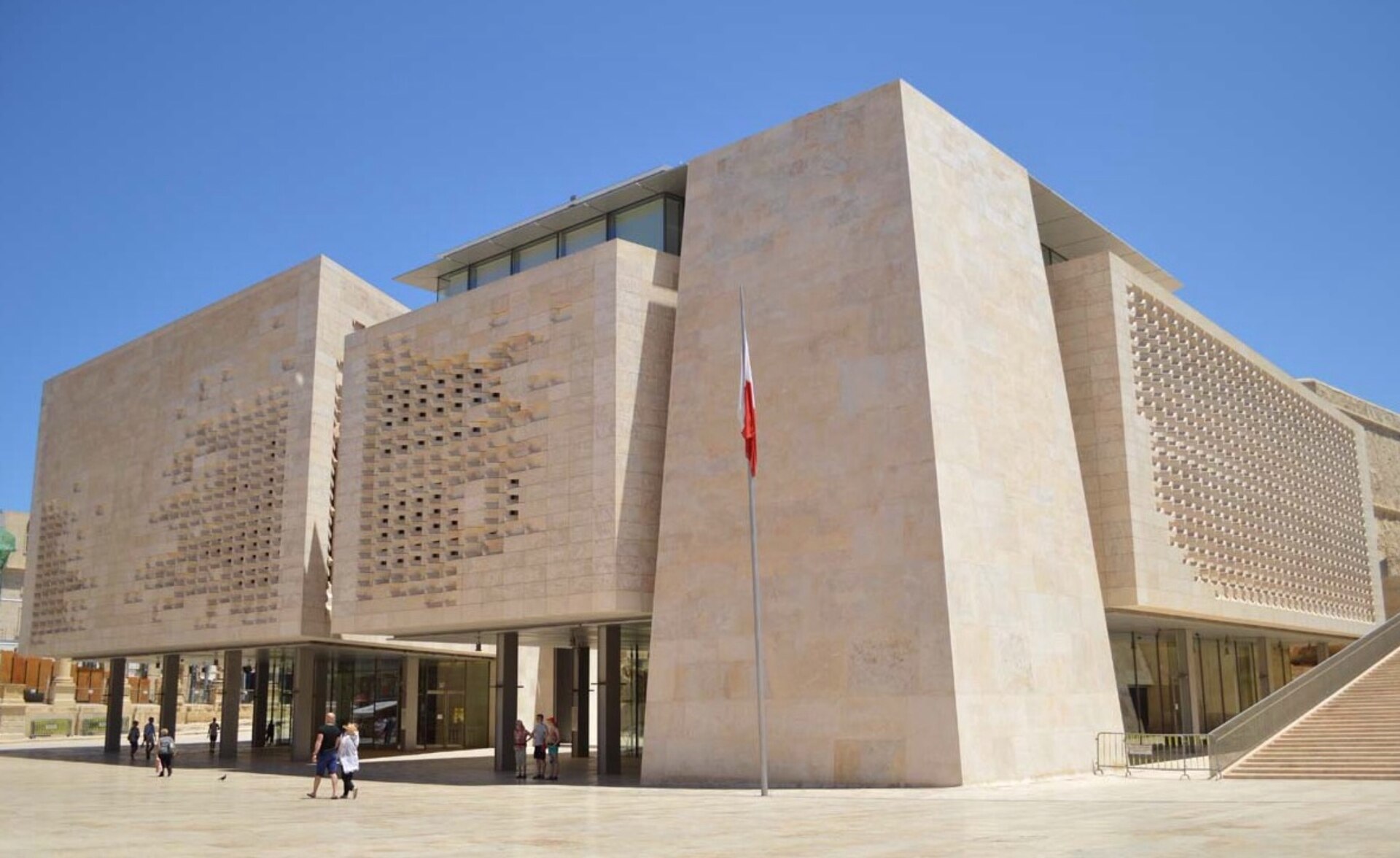
On 20 June 2026 the House elected Carmelo Abela of Labour as Speaker, its presiding officer, replacing Angelo Farrugia, who had held the post since 2013. Alex Borg, elected Nationalist leader on 6 September 2025 and sworn in as leader of the opposition on 10 September, speaks for the main opposition.
AD+PD, a merger of the Democratic Alternative (a green party) and the Democratic Party, also contested the election, as did Momentum and Aħwa Maltin, two smaller groups. None of them won a seat, so Labour and the Nationalists hold all 79.
The Ministers to Know
Ian Borg, the former foreign minister, is deputy prime minister and has been health minister since 4 June 2026. Chris Fearne took over as Minister for European and Foreign Affairs the same day.
Clyde Caruana remains finance minister and presented the 2027 budget. The government published the full list of ministerial responsibilities on 5 June 2026.
The Fights Shaping the New Term
The 2027 budget, presented by Caruana on 26 October 2026, is the first of the new legislature. It adds a bonus for workers, raises pensions and changes the tourist ecotax, a charge on visitors.
The sharpest dispute concerns reduced benefits and higher fees for third-country nationals, meaning people from outside the EU. Abela defended the measures in Parliament, according to MaltaToday, a Maltese news site.
A second fight is over traffic and population growth. Alex Borg, in the opposition reply, said the budget ignores traffic and leans on a growing population.
The third is energy costs, a theme of the campaign. Abela said the government will keep subsidising energy and fuel in 2027, at a cost of about €400 million (about US$450 million at US$1.12 per euro).
Malta in the EU and Outside NATO
Malta joined the EU on 1 May 2004 and adopted the euro on 1 January 2008, so its budget is judged against EU fiscal rules. Those rules cap a government deficit at 3% of gross domestic product (GDP), the size of the economy.
Malta is not a NATO member. Its constitution describes it as a neutral state that follows non-alignment and refuses to join any military alliance, although it takes part in NATO’s Partnership for Peace programme, a cooperation framework open to non-members.
What It Means for US Readers
Malta is in the EU and the euro area but outside NATO, so it is a partner of the United States rather than a treaty ally. Its politics are stable for now, with one party holding a clear majority.
Visitors face changes to the tourist ecotax under the 2027 budget. Americans who live or work in Malta as non-EU citizens could be affected by the new fees and reduced benefits, but who is covered and when the changes start were not available.
What Is Not Known
No date has been set for the next general election, which falls due by mid-2031 under five-year terms unless Abela calls it earlier. We found no opinion polls published since May.
Whether Parliament has passed the 2027 budget is not known, and nothing dated 4 to 6 November 2026 could be found. Who exactly is covered by the new rules for third-country nationals is also unconfirmed.
We found no prediction market on Maltese politics, so none is shown. We also found no verified account of Malta’s position on Russia, so we do not describe it.
Frequently Asked Questions
Who is Malta’s prime minister in 2026?
Robert Abela, leader of the Labour Party since 2020, was sworn in for a new term on 1 June 2026. He announced his cabinet on 3 June 2026.
How many seats does each party hold in Malta’s parliament?
Labour holds 42 and the Nationalist Party holds 37 in the 79-seat House of Representatives. Labour won 36 seats directly and the Nationalists 29, before the gender and proportionality rules added the rest.
Who leads the opposition in Malta?
Alex Borg, leader of the Nationalist Party since September 2025, is leader of the opposition. His party won 44.68% of first-preference votes in the 30 May 2026 election.
Who is Malta’s president?
Myriam Spiteri Debono has been president since April 2024. The role is the constitutional head of state, while the prime minister runs the government.
Is Malta a member of NATO?
No. Malta’s constitution describes it as neutral and non-aligned, and it takes part only in NATO’s Partnership for Peace programme.
Sources: Parliament of Malta, Speaker Carmelo Abela, 2026-06-20; President of Malta, June 2026, 2026-06; Government Gazette (official state notices), ministerial responsibilities, 2026-06-05; IPU Parline (the Inter-Parliamentary Union election database), Malta election of 30 May 2026, 2026-06; Partit Nazzjonalista, Alex Borg, 2026-11; European Union, Malta country profile, 2026-11; Constitution of Malta, 2016; KPMG Malta (audit and tax firm), Budget 2027, 2026-10; MaltaToday (Maltese news site), Abela budget reply, 2026-10.
This article was produced by The Rio Times’ automated newsroom system. How we use AI · Report an error · Editorial responsibility: Matthias Camenzind, Editor-in-Chief
LatAm Markets: Live Signals → — real-time movers, turnover leaders and FX across Latin America.