Angola Opens Luau Solar Park to Power Lobito Corridor Region
Key Facts
- —What happened President João Lourenço inaugurated the Luau photovoltaic park in Moxico Leste province on 5 May 2026.
- —How big The plant has up to 32.20 MWp of solar capacity and up to 79.77 MWh of battery storage across roughly 61.8 hectares.
- —Who it hits The park is designed to supply 24-hour electricity to about 20,500 households and up to 100,000 residents near the Democratic Republic of Congo border.
- —The money The project is valued at €87 million (about US$102 million), within a larger export-credit-backed facility of about €1.0 billion (about US$1.2 billion) arranged by Standard Chartered Bank.
- —Why it matters The park anchors cleaner power for the Lobito Corridor, a rail and logistics route linking Angola to the DRC and Zambia.
- —What comes next Angola plans 46 autonomous solar mini-grids across 60 communes in six inland provinces by 2027.
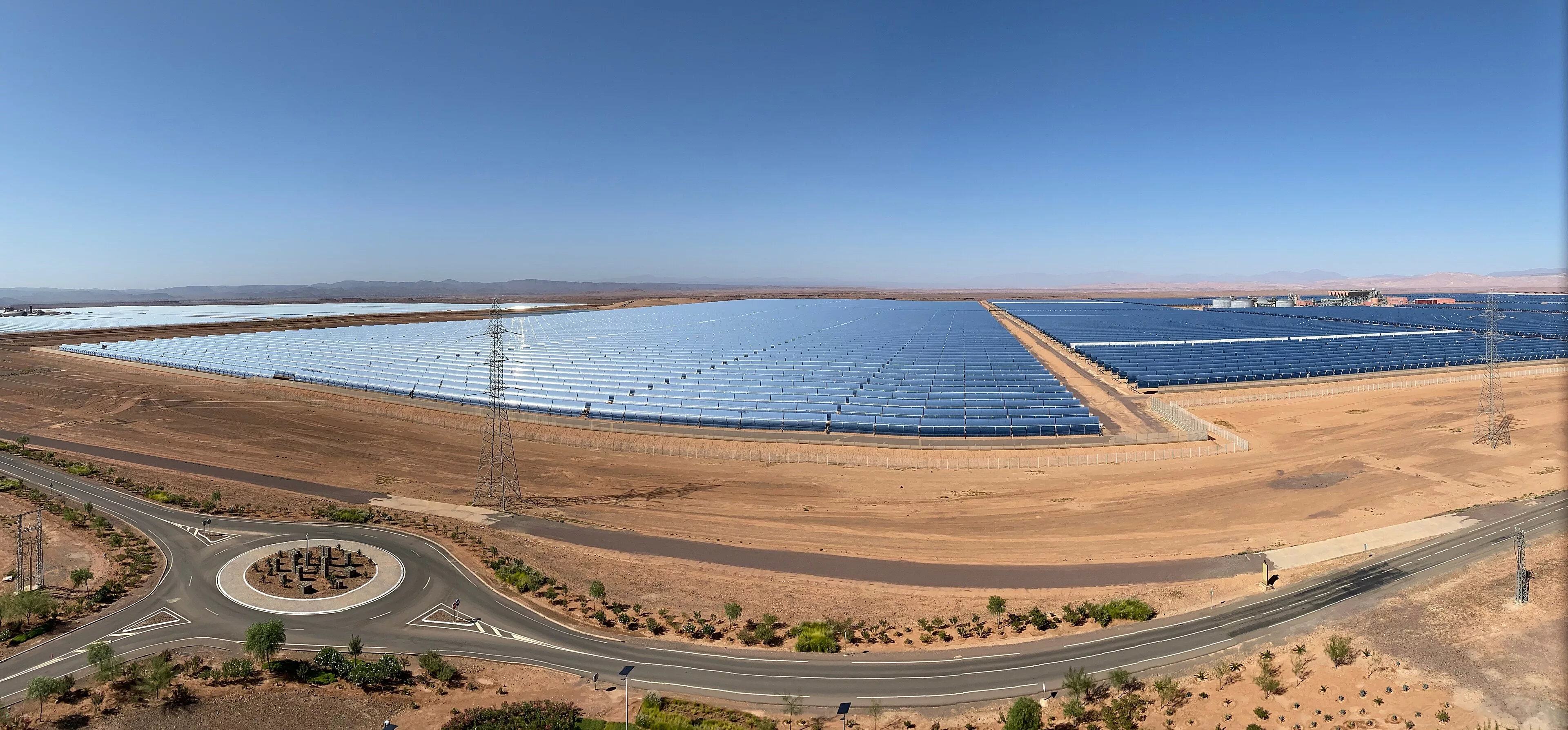
The Luau photovoltaic park in eastern Angola is now online, bringing 24-hour solar and battery power to a previously off-grid region near the Democratic Republic of Congo border and anchoring cleaner energy for the Lobito Corridor.
President João Lourenço inaugurated the Luau photovoltaic park in Moxico Leste province on 5 May 2026, marking Angola’s largest off-grid solar and storage installation. The plant is designed to supply round-the-clock electricity to about 20,500 households and up to 100,000 residents in a fuel-dependent area more than 1,300 kilometres from Luanda.
A flagship off-grid solar and storage project
The Luau photovoltaic park sits on roughly 60 to 61.8 hectares in Luau municipality, close to the border with the Democratic Republic of Congo. It carries an installed capacity of 31.85 to 32.20 megawatts peak of solar generation and 75.26 to 79.77 megawatt hours of battery storage.
Around 54,912 to 55,000 solar panels feed the system, which is built and operated by Portuguese engineering firm MCA Group. The project is promoted by Angola’s Ministry of Energy and Water, known as MINEA, and the state utility PRODEL EP.
For local residents, the change is practical and immediate. The park replaces costly and unreliable diesel generation with 24-hour electricity, and it is expected to save between 12 and 18 million litres of fuel annually.
Rural electrification with a 2027 horizon
The Luau photovoltaic park is part of Angola’s Rural Electrification Project, also branded as Angola Energia 2025. The wider programme plans 46 autonomous solar mini-grids across 60 communes in six inland provinces: Bié, Malanje, Lunda Norte, Lunda Sul, Moxico and Moxico Leste.
By 2027, the government aims to reach more than 900,000 to 1,000,000 people with around 250 megawatts peak of solar capacity and 590 megawatt hours of storage. Luau is the largest single piece of that push so far.
The project also positions Angola among Africa’s top five solar markets. Utility-scale solar capacity in the country is rising to about 426 megawatts peak, a meaningful step for a nation long defined by oil.
European finance and the Global Gateway strategy
The Luau project is valued at €87 million (about US$102 million). It sits within a larger export-credit-backed facility of about €1.0 to €1.03 billion (about US$1.2 billion).
UK-based Standard Chartered Bank arranged the debt, with support from German export credit agency Euler Hermes. Portuguese COSEC and Korean K-Sure provided reinsurance, all under the European Union’s Global Gateway infrastructure strategy.
This financing structure is a clear signal of great-power competition in African infrastructure. European and allied capital is aligning with Angola’s ambition to anchor the Lobito Corridor in cleaner, more reliable power.
The Lobito Corridor connection
The Lobito Corridor is a rail and logistics route running from the Atlantic port of Lobito through Angola to the Democratic Republic of Congo and Zambia. Reliable electricity is a precondition for expanding mining, processing and trade along that route.
By placing a major solar and storage plant in Moxico Leste, Angola is extending power into a corridor that has drawn attention from the United States, the European Union and other players. The Luau park is therefore as much a geopolitical asset as an energy one.
This fits the wider pattern covered in Africa: The New Scramble, where infrastructure, minerals and finance intersect. Angola is using off-grid solar to strengthen its position in that contest.
Who gains and what to watch next
The immediate winners are households and small businesses in Luau municipality, who gain access to stable power without waiting for a national grid extension. MCA Group also gains a flagship reference project as operator and builder.
For the Angolan state, the park demonstrates that off-grid solar can deliver services in remote provinces at scale. It also reduces the fuel import bill and cuts local carbon dioxide emissions.
The next test is delivery of the remaining mini-grids by 2027. Investors and development partners will watch whether the Luau model can be replicated across the five other inland provinces on schedule.
Frequently asked questions
Where is the Luau photovoltaic park located?
The park is in Luau municipality, Moxico Leste province, in eastern Angola near the border with the Democratic Republic of Congo.
How many people will the Luau solar park serve?
It is designed to supply 24-hour electricity to about 20,500 households and between 90,000 and 100,000 residents.
Who financed the Luau photovoltaic park?
Standard Chartered Bank arranged the debt, with support from Euler Hermes and reinsurance from COSEC and K-Sure under the EU Global Gateway strategy.
Connected Coverage
Sources
More Africa news: Nigeria | South Africa | Kenya | Egypt | Ghana | Morocco | DR Congo | Angola | Ethiopia | Tanzania
This article was produced by The Rio Times’ automated newsroom system. How we use AI · Report an error · Editorial responsibility: Matthias Camenzind, Editor-in-Chief
LatAm Markets: Live Signals → — real-time movers, turnover leaders and FX across Latin America.
Critical Minerals in Africa
- Africa’s Critical Minerals 2026: Who Holds What and Why
- DR Congo Explained 2026, Its War, Cobalt and Politics
- Zambia Explained: The Country, Its Copper Economy, Its Politics and What to Watch
- The Lobito Corridor: A New Railway for African Copper