Elon Musk’s push for a Martian city evolves into tangible plans, but SpaceX faces challenges from Mars’ unbreathable air and extreme cold.
They pioneer extraterrestrial colonization, developing dome habitats and specialized spacesuits.
They also explore the feasibility of human reproduction on Mars, according to confidential sources and documents reviewed by The New York Times.
Musk, now 53, aims to establish a self-sustaining Martian colony with one million people within 20 years.
This swift timeline marks a shift from theoretical to practical planning at SpaceX. Previously, he predicted up to a century, but now insists on urgency to capitalize on strong civilization.
Scientists like Robert Zubrin critique the plan’s pace, noting colonization will unfold slowly. Despite skepticism, Musk integrates his businesses into his Martian agenda.
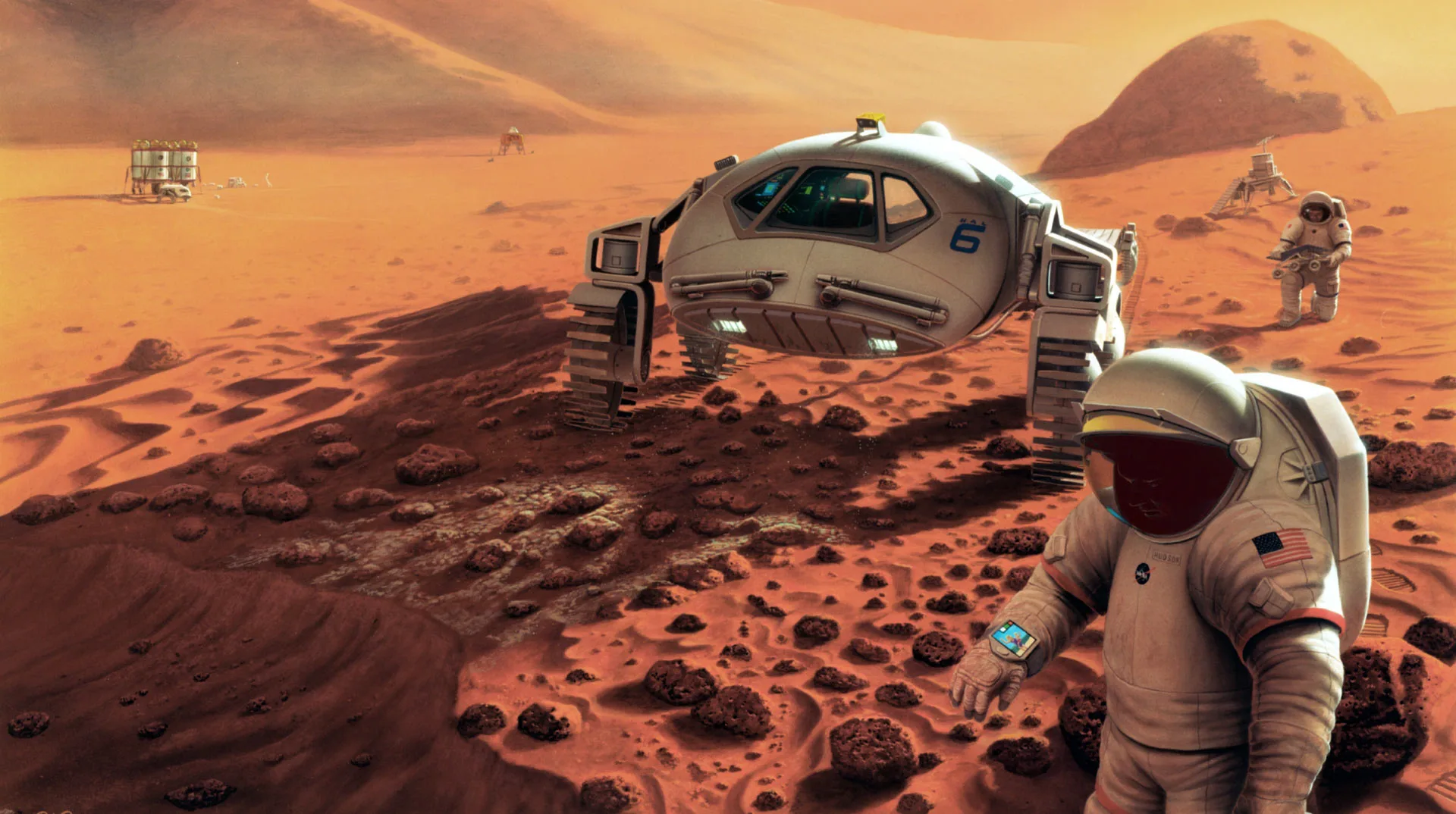
His ventures include The Boring Company, enhancing Martian infrastructure, and Tesla, adapting Cybertrucks for Mars.
Musk’s fortune, estimated at $258 billion, underscores his financial commitment to Martian colonization.
During court testimony regarding his Tesla compensation, he described his assets as a fund for the Martian project.
However, doubts persist about realizing a Martian colony within Musk’s lifetime. Critics argue Musk’s vision may exceed current technological and logistical bounds.
His colony designs, though elaborate, face scrutiny for their optimism. SpaceX actively develops the Starship rocket to transport humans to Mars.
This rocket, capable of carrying 100 passengers, embodies Musk’s vision for a space-faring civilization.
It could offer amenities like cinemas and running tracks, as shown in Musk’s posts.
Life on Mars: Elon Musk’s Plan for a Space-Age Civilization
Additionally, Musk plans to terraform Mars using thermonuclear explosions to simulate heat from artificial suns, supported by solar panels.
This bold strategy reflects his readiness to employ groundbreaking technologies for habitability. SpaceX progresses from ideas to detailed plans, with high stakes and tight deadlines.
Musk envisions a robust, interconnected colony featuring dome habitats and community spaces. He also considers bioengineering organisms suited for Martian life.
In conclusion, Elon Musk’s vast Martian ambitions reflect his dedication to extending human civilization beyond Earth.
While it’s uncertain if his timelines will hold, his efforts significantly push the boundaries of space exploration and colonization, as noted by The New York Times.
This article was produced by The Rio Times’ automated newsroom system. How we use AI · Report an error · Editorial responsibility: Matthias Camenzind, Editor-in-Chief