Car Bomb Kills Haftar’s Military Intelligence Chief in Benghazi
LIBYA · SECURITY
Key Facts
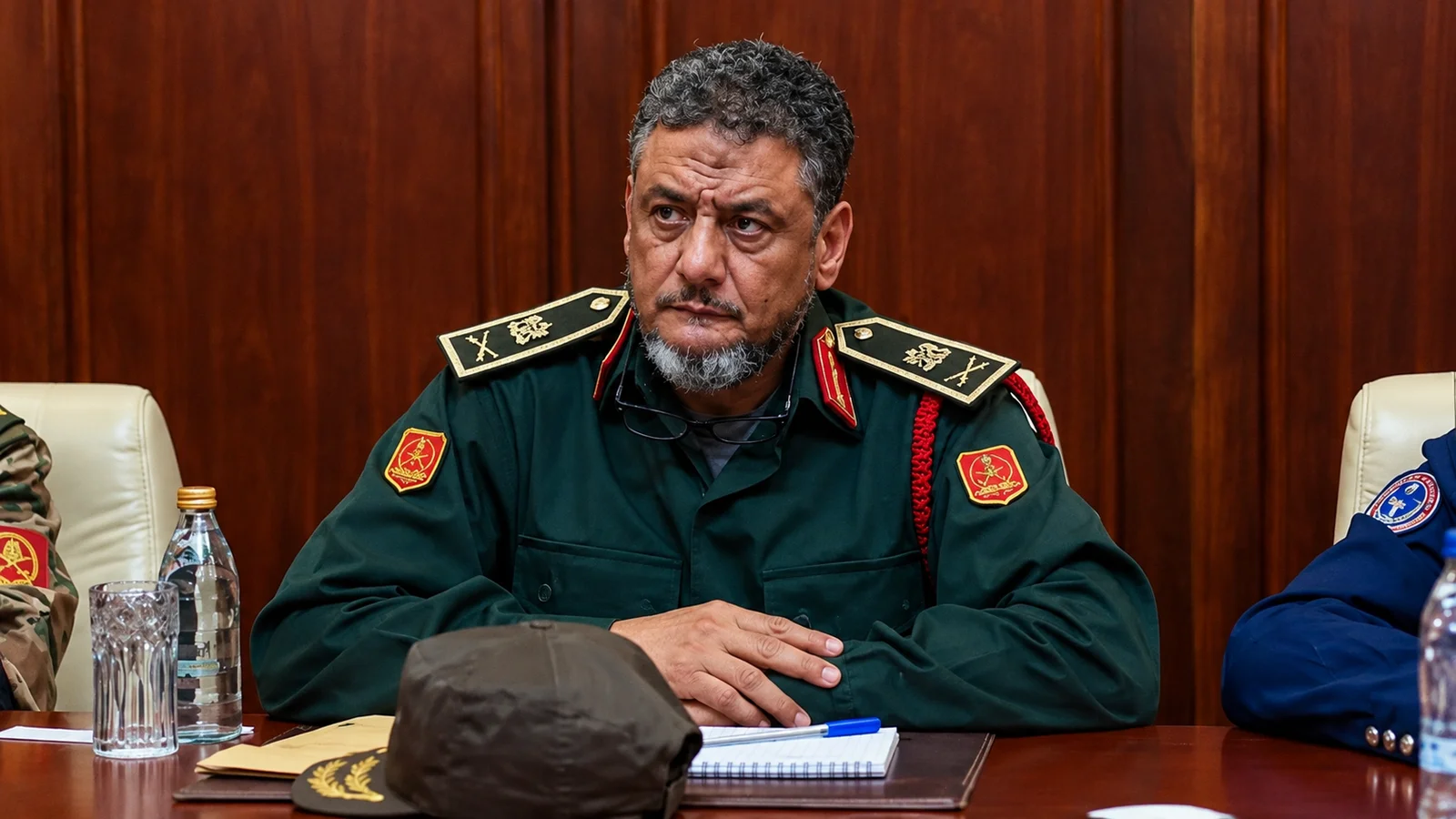
- —What happened Major General Fawzi al-Mansouri, the military intelligence chief of Khalifa Haftar’s Libyan National Army, was killed when an explosive device attached to his car detonated in Benghazi on the night of Monday, August 10.
- —The response Two days later, Haftar’s forces announced the arrest of what they called a terrorist cell in the city, and a security committee led by his son Saddam is investigating.
- —Across the divide Libya’s rival government in Tripoli publicly condemned the assassination and called for an urgent investigation, a rare gesture between the country’s two administrations.
- —Washington’s stance US presidential adviser Massad Boulos condemned the Benghazi killing and the drone strikes on Al-Zawiya and called for comprehensive investigations into both.
- —The backdrop The killing came three weeks before Libya’s rival camps signed the 4+4 electoral framework, a UN-backed deal that Haftar’s side endorsed.
The assassination of the man who ran military intelligence for eastern Libya has punctured the image of control that Khalifa Haftar’s forces project in Benghazi — and drawn an unusual note of public sympathy from his rivals in Tripoli.
The blast in al-Hawari
The device was attached to Fawzi al-Mansouri’s car and detonated on the evening of Monday, August 10, in Benghazi’s al-Hawari district. According to the eastern command’s statement, he was leaving a local mosque after evening prayers; security officials told the Anadolu news agency the bomb went off as he got into the car. He died at the scene.
Al-Mansouri was no ceremonial officer. He had commanded the Sabha Military Zone in Libya’s south from 2021 — a region of energy infrastructure, desert borders and smuggling routes — before Haftar appointed him head of the Military Intelligence Department in May 2024. He also took part in the failed 2019 offensive on Tripoli. He was buried in Benghazi on the Tuesday, with senior commanders of the Libyan National Army in attendance, according to Libyan media reports.
No group has claimed responsibility. Khaled Haftar, one of the commander’s sons, told AFP that an investigation had been opened and that “indicators point to a despicable terrorist tactic”, adding that terrorism “is a project targeting the entire region, not just Libya”.
Arrests, and a family-run investigation
On the Wednesday, Haftar’s General Staff announced that its security affairs department had arrested what it described as a terrorist cell in Benghazi, accusing its members of planning attacks against the city’s security and stability. A military source told local media those detained were foreign nationals, without naming their countries; the authorities have withheld further detail, and it remains unclear whether the cell is linked to al-Mansouri’s killing.
The investigation is led by a security committee headed by Saddam Haftar, the commander’s son and deputy, instructed to identify those responsible and bring them to justice. In recent days, media outlets close to the eastern forces have reported a declared state of emergency and raised military readiness in the region — a sign the command believes the threat is not over.
A rare word of condemnation from Tripoli
The most striking reaction came from across Libya’s divide. The Government of National Unity — the UN-recognized administration in Tripoli led by Prime Minister Abdulhamid Dbeibah — publicly condemned the assassination and called for an urgent investigation, despite having fought a war against Haftar’s forces only six years ago.
Washington weighed in on both fronts of Libya’s violent month. Massad Boulos, the US president’s senior adviser for Arab and African affairs, condemned the Benghazi assassination and the drone attacks on the Al-Zawiya oil complex in the west, called for comprehensive investigations and accountability, and said the events showed the urgent need for a unified, professional Libyan military and security apparatus.
Who is who in this story
Khalifa Haftar is the military commander whose Libyan National Army, or LNA, controls most of eastern and southern Libya and backs the rival administration based in Benghazi. The Government of National Unity, or GNU, is the internationally recognized government seated in Tripoli, which administers most of the west. Libya has been split between the two camps, on and off, since 2014, three years after the NATO-backed uprising that toppled Muammar Gaddafi.
Benghazi is Haftar’s showcase: a city his forces present as pacified after years of street-by-street fighting against Islamist groups. A bomb stuck to the intelligence chief’s car, near a mosque at prayer time, cuts against that narrative — whoever planted it.
The 4+4 deal raises the stakes
The assassination landed in the middle of Libya’s most serious political opening in years. On August 30, three weeks after the killing, the two rival camps signed the 4+4 electoral framework — a joint committee deal, endorsed by Haftar’s side and welcomed by the UN, that is meant to carry Libya toward long-delayed national elections.
That sequence matters. The framework depends on a minimum of security in both halves of the country, and on neither side using violence to renegotiate the terms. An unsolved assassination at the top of the eastern command, and a drone campaign against the west’s biggest refinery in the same month, test exactly that assumption.
What to watch next: whether Saddam Haftar’s committee names suspects, and whether the promised foreign-national arrests produce charges; whether Tripoli’s condemnation turns into any practical intelligence cooperation; and whether the UN mission’s one-month deadline for the electoral bodies survives the security weather.
This report is based on statements from the eastern forces’ General Command reported by Al-Wasat and the Libya Observer, AFP’s interview with Khaled Haftar, security officials quoted by Anadolu and Reuters, and reaction from the Government of National Unity, the US State Department adviser Massad Boulos and UNSMIL.
Frequently Asked Questions
Who was Fawzi al-Mansouri?
A major general in Khalifa Haftar’s Libyan National Army. He commanded the Sabha Military Zone in southern Libya from 2021 and was appointed head of the Military Intelligence Department in May 2024. He was killed by a car bomb in Benghazi on August 10, 2026.
Who is Khalifa Haftar?
The commander of the Libyan National Army, the force that controls most of eastern and southern Libya and backs the Benghazi-based administration that rivals the UN-recognized government in Tripoli.
Has anyone claimed the Benghazi car bombing?
No. Haftar’s forces announced the arrest of an alleged terrorist cell of foreign nationals two days later, but have not said it carried out the assassination. A committee led by Saddam Haftar is investigating.
What is the 4+4 electoral framework?
A deal signed on August 30, 2026 by a joint committee of Libya’s rival eastern and western institutions, setting rules intended to lead to national elections. It was endorsed by Haftar’s camp and welcomed by the United Nations.
Connected Coverage
For the political deal now hanging over this violence, see Libya’s rival camps sign the 4+4 electoral deal — and Haftar backs it. For the parallel crisis in the west, see drones hit Libya’s biggest working refinery.
This article was produced by The Rio Times’ automated newsroom system. How we use AI · Report an error · Editorial responsibility: Matthias Camenzind, Editor-in-Chief