Libya Oil Economy Hits 1.49 Million Bpd as UN Election Deal Takes Shape
Economy · Libya
—The stakes. Libya’s oil sector is recovering faster than its politics, leaving investors caught between rising output and an unresolved split between Tripoli and the east.
—The output. Total production reached 1,487,723 barrels per day on 21 June 2026, the highest level since 2013, according to the National Oil Corporation.
—The target. The NOC has stated goals ranging from 1.5 million bpd of crude by year-end to 1.6 million bpd by end-2026 and 2 million bpd by 2028.
—The politics. UN-backed negotiations produced a late-summer agreement to hold presidential and parliamentary elections within 24 months under a single executive authority.
—The budget. Libya agreed its first unified state budget in 13 years in April 2026, worth 190 billion Libyan dinars or about US$29.95 billion.
Libya is stabilising around oil in a limited and conditional sense, not fully stabilising as a state. Energy revenues and sector deals are creating incentives for compromise, but the country still lacks a settled unified government.
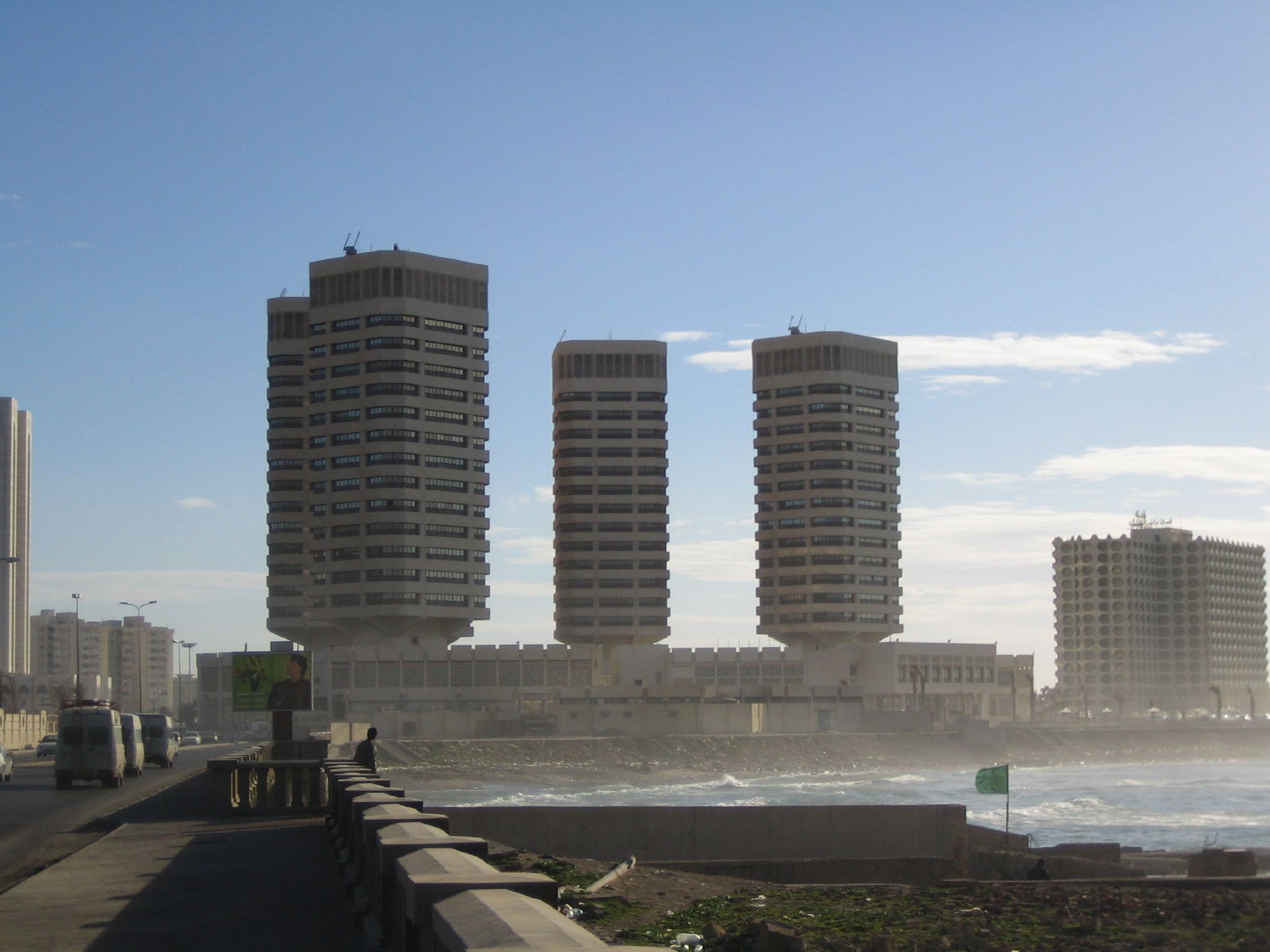
The Production Rebound
Libya’s total oil and condensate output reached 1,487,723 barrels per day on 21 June 2026. The National Oil Corporation, known as the NOC, described that as the highest level since 2013.
Crude alone accounted for 1,438,560 barrels per day, with condensate adding 49,163 barrels per day. Reuters reported a similar figure near 1.49 million bpd total for June 2026.
The rebound follows average production of about 1.37 to 1.375 million bpd in 2025. That figure was already up from 1.14 million bpd in 2024.
The NOC’s near-term targets varied by statement. Some official language pointed to 1.5 million bpd of crude by year-end, while broader strategic targets cited 1.6 million bpd by end-2026 and 2 million bpd by 2028.
The NOC and industry plans also referenced a need for US$3 to 4 billion in annual or near-term investment to restore and expand production capacity.
A State Still Split in Two
Libya remains divided between the UN-recognised Government of National Unity, or GNU, in Tripoli and an eastern administration backed by the House of Representatives and Khalifa Haftar’s Libyan National Army.
This split is not new, but its persistence shapes every energy decision. Investors still face the question of which authority can guarantee contracts and security.
In April 2026, UN Special Representative Hanna S. Tetteh told the Security Council that Libya was not where it should be on the UN roadmap. She said state institutions remained divided.
The UN Support Mission in Libya, known as UNSMIL, has promoted a roadmap built around three linked tracks. These cover an electoral framework, institutional unification under a single government, and a broader national dialogue.
The oil sector has recovered despite this fragmentation, but the recovery remains vulnerable to political shocks.
The UN Election Track
By late August and early September 2026, UNSMIL-backed negotiations produced a new political agreement. The deal aimed at holding presidential and parliamentary elections within 24 months under a single executive authority.
Reports said the agreement also covered restructuring the High National Electoral Commission. Follow-through was still required by Libya’s rival political bodies.
The election track matters for oil because it could reduce the risk of sudden blockades linked to political disputes. A single executive authority would in theory offer clearer contracting and revenue-sharing rules.
But the April 2026 warning from Hanna Tetteh showed how fragile the process remained. Even late-summer progress did not dissolve the underlying institutional divide.
Foreign investors are watching whether election sequencing translates into enforceable fiscal and security arrangements around oil infrastructure.
Central Bank Reunification
Libya agreed its first unified state budget in 13 years in April 2026. Central bank governor Naji Issa announced the consensus on 11 April 2026.
Reuters reported the total budget at 190 billion Libyan dinars, equivalent to about US$29.95 billion. Xinhua described it as the first consensus on unified spending in over 13 years.
The deal was tied to the central bank’s role in coordinating public spending. That is significant because rival governments had previously competed over oil revenues.
A unified budget does not mean a unified state, but it does reduce some fiscal uncertainty. It creates a common reference point for how oil income should be distributed.
For energy investors, this lowers one layer of political risk without removing the underlying conflict over authority.
Frozen Billions Remain Sensitive
Libya’s external assets remain politically sensitive and internationally managed. A June 2026 Security Council summary noted discussion of frozen assets and a cash reserve re-investment arrangement.
The UN Security Council adopted Resolution 2819 in April 2026. It included a narrowly defined exemption for the Libyan Investment Authority to change its global custodian bank under strict conditions.
The Libyan Investment Authority, the country’s sovereign wealth vehicle, still operates under international oversight linked to frozen assets. This limits how Libya can use its wealth abroad.
These restrictions matter for the oil economy because they affect the broader investment climate. Even as production rises, Libya cannot freely mobilise its frozen billions.
The December 2025 Security Council context and the 2026 resolution show that asset management remains a point of international influence.
European Gas Interest
Libya has a direct gas link to Europe through the GreenStream pipeline to Italy. That link remains strategically important even though exports have been constrained.
A February 2026 Reuters report said Libya wants to ramp up gas production to supply more to Europe. The NOC sees Europe as a prospective market for expanded output.
Libya’s first licensing round since 2007 drew major foreign participation. Rights or blocks involved Chevron, Eni, QatarEnergy, Repsol, BP, and others.
One 2026 industry report said the European Union imported 981 million cubic metres of Libyan gas in 2025, down 31.8 percent year on year. Shell and BP reopened offices in Libya in 2025.
In April 2026, the NOC began a trial run of a gas pipeline intended to recover roughly 150 million cubic feet per day previously flared. That gas could support domestic use and exports.
Investment Case Forms
Libya is attracting investors because it combines very large reserves, existing export infrastructure, and a production base that recovers quickly when outages ease.
The renewed licensing round and major international participation suggest companies see a high-upside, high-risk opportunity rather than a fully stabilised market.
For gas, Libya’s European value proposition rests less on immediate volume than on strategic optionality. Proximity to Italy, existing pipeline access, and possible incremental supply growth matter most.
For oil investors, the key question is whether Libya can move from episodic production recovery to institutionalised stability. The 2026 evidence shows partial progress but not a durable settlement.
The unified budget and election roadmap reduce, but do not eliminate, the risk premium on upstream capital and service contracts.
The Risk Premium Persists
Political fragmentation and a still-divided security environment constrain the investment case. Oil output can still be disrupted by domestic power struggles.
The April 2026 Security Council briefing made clear that institutions remained divided even as oil revenues flowed. That tension is central to understanding Libya in 2026.
The election agreement faces follow-through risks from rival political bodies. A deal on paper does not guarantee implementation on the ground.
Investors are also watching the frozen asset file. International oversight limits Libya’s financial flexibility and keeps external powers involved in its economy.
Every improvement in output now runs alongside a political process that remains incomplete and reversible.
What Stabilisation Means Here
Libya is stabilising around oil in a narrow sense. Production is rising, a unified budget exists, and foreign companies are returning.
But this is not a full normalisation. The country still lacks a settled unified government, and its security environment remains contested.
Oil revenues are helping to create incentives for compromise. Fiscal coordination and election talks are partly products of that energy-driven logic.
The relationship is reciprocal. Political progress lowers risk for oil operators, while oil revenue gives political actors a reason to keep negotiating.
In 2026, Libya looks like a case where energy is driving political engagement, yet political normalisation remains incomplete.
The Investor Read
The strongest verified framing is that Libya is stabilising around oil in a limited, conditional sense, not fully stabilising as a state.
Investors should treat the production rebound as real but fragile. Output above 1.4 million bpd is a proven fact, not a forecast.
The NOC’s goals of 1.5 to 1.6 million bpd by end-2026 and 2 million bpd by 2028 are credible but dependent on investment and security.
The US$3 to 4 billion annual investment need shows that current output does not guarantee future capacity growth.
For energy investors, Libya offers early-cycle exposure with a distinct political risk overlay. The unified budget and UN election track reduce some uncertainty without removing it.
The Big Picture
Latest developments
- Tanzania Fuel Prices Rise, Petrol Hits US$1.53 a Litre — 7 October 2026
- Sudan Gold Exports Top US$2.29 Billion in 9 Months — 7 October 2026
- Egypt Trims Budget Deficit as Growth Hits 5.1% — 7 October 2026
- Morocco’s Dirham Drops 6.5% Against Dollar Since August — 7 October 2026
This article was produced by The Rio Times’ automated newsroom system. How we use AI · Report an error · Editorial responsibility: Matthias Camenzind, Editor-in-Chief
Read More from The Rio Times