Lesotho Asks the UN for Climate Money, Citing 38% Youth Joblessness
Key Facts
- The country. Lesotho is a mountain kingdom of about 2.4 million people, entirely surrounded by South Africa. Its economy, about US$2.6 billion in 2025, is smaller than a thousandth of Britain’s.
- Why it matters. Lesotho produces almost none of the world’s emissions yet suffers floods, droughts and eroding land. Money sent home by its workers abroad equals about a fifth of national output.
- Why now. World leaders are in New York for the annual general debate of the United Nations General Assembly. Small states use the stage to press for climate money before the next UN climate summit.
- What happened. On Friday, 25 September 2026, Prime Minister Sam Matekane told the Assembly youth unemployment stands at 38 percent. Rich countries, he said, owe climate finance as a matter of justice.
- Who is involved. Matekane, a businessman who made his fortune in mining and construction, has led the government since October 2022. His Just Energy Transition Fund is meant to pay for renewable power and jobs.
- What it means for you. No visa or business rules change. Investors in water, solar and wind will meet a government seeking partners. The loti is pegged one-to-one to the South African rand.
- Still open. The size and backers of the Just Energy Transition Fund have not been disclosed. The survey and age range behind the 38 percent youth figure are also unclear.
Lesotho, a small African kingdom that emits almost nothing, told the UN it needs climate money. Its prime minister also put a number on Lesotho youth unemployment: 38 percent.
Lesotho is a landlocked mountain country of about 2.4 million people, entirely surrounded by South Africa. Prime Minister Sam Matekane addressed the 81st UN General Assembly in New York on Friday, 25 September 2026.
Climate change is no longer a future threat but a present reality, he said, according to the UN’s official summary. Climate justice, he added, demands adequate and accessible finance from developed countries.
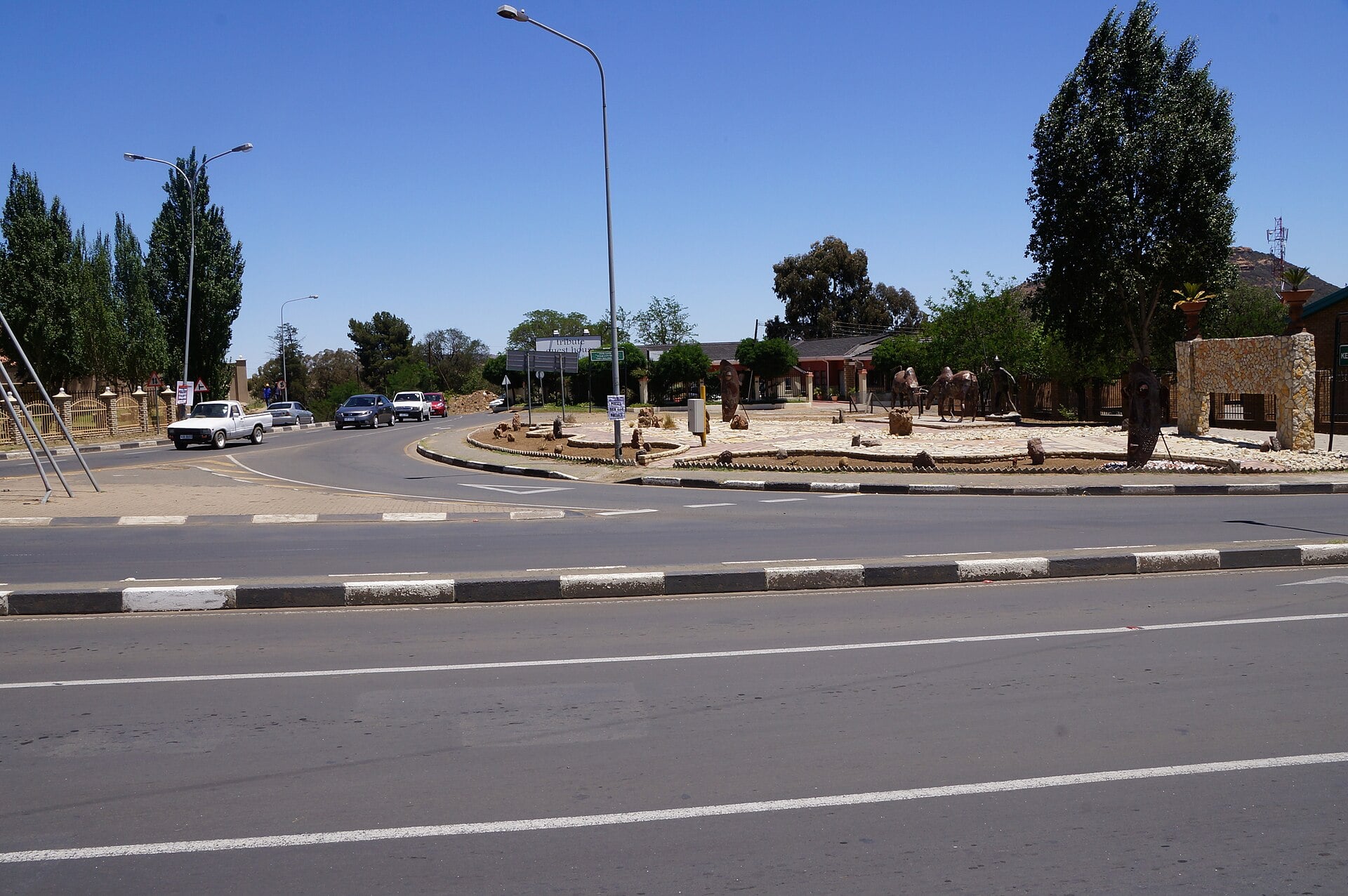
A small country most outsiders cannot place
Lesotho sits high in southern Africa’s mountains; even its lowest point is well above 1,000 metres. It is one of only three countries in the world entirely enclosed by another state.
Its economy is tiny: about US$2.6 billion in 2025, World Bank data show. That is less than a thousandth of Britain’s economy, spread across roughly 2.4 million people.
The country lives on a few pillars. Garment factories sell clothing to the United States, and highland dams sell water to South Africa’s industrial heartland.
Diamond mines add export income. Wages sent home by people working abroad, mostly in South Africa, equal about a fifth of national output.
What Matekane said in New York
The speech built a single argument, according to the UN summary. Small, poor and peaceful countries keep their side of the bargain, and the rich world should keep its side.
Matekane said Lesotho has restored peace and stability after periods of political and security unrest. Its experience, he argued, shows that preventive diplomacy remains the best way to avert conflict.
On climate, he pointed to severe floods, droughts, land degradation and damaged roads and bridges. Least developed countries emit little, he said, yet carry a disproportionate share of the damage.
He asked developed countries for adequate and accessible climate finance and technology. He also named his government’s own tool, a Just Energy Transition Fund.
The fund is meant to expand renewable energy, create jobs and reduce the country’s dependence on work abroad. He also backed permanent African seats on a reformed UN Security Council.
The 38 percent problem
The most concrete number in the speech concerned Lesotho youth unemployment. It remains at 38 percent, Matekane said, urging partners to keep their official development assistance, or aid, promises.
He also called for fairer international financial institutions, such as the World Bank and the International Monetary Fund (IMF). Poor countries often say these lenders charge them too much and listen too little.
The source and age range behind the 38 percent figure are not clear. The International Labour Organization (ILO) modelled estimate for ages 15 to 24 was about 25 percent in 2025.
Either way, joblessness is a national emergency. In July 2025 the government declared a state of disaster over unemployment, as US tariffs hit its garment exports.
Why migration is personal for Lesotho
For generations, people from Lesotho have crossed into South Africa to work in its mines, farms and homes. Migration, Matekane said, is not an abstract concept for his country but a daily lived reality.
He said migration benefits both the countries people leave and the countries they reach. Protecting migrants’ dignity, regardless of status, is a legal obligation and a moral imperative, he added.
The main audience for that passage sits in Pretoria as much as in New York. South Africa has seen repeated campaigns against foreign workers, and many people from Lesotho work there without papers.
The money matters too. Personal remittances equalled about 21 percent of Lesotho’s economy in 2025, according to World Bank data.
Why water and clothing matter more than speeches
Lesotho’s real leverage is water and textiles. The Lesotho Highlands Water Project already sends water to the Johannesburg region and generates hydropower at home.
Its second phase, built around the Polihali Dam, is under construction and will raise those flows. Royalties from South Africa for that water are among the government’s steadiest incomes.
The garment industry employs tens of thousands of people, mostly women. It depends on the African Growth and Opportunity Act (AGOA), a US scheme giving duty-free access to American shoppers.
AGOA lapsed in 2025 and received only a short renewal in early 2026. In early September President Donald Trump signed a further two-year extension, running to 2028.
What this means for expats, travellers and investors
Lesotho hosts a small foreign community in Maseru, the capital, mostly aid workers, dam contractors and clothing buyers. Nothing in the speech changes visa or business rules.
The practical message is that the government is shopping for climate and energy finance. Investors in water, solar and wind will find a receptive government, and labour-heavy projects will get political priority.
For travellers, the loti is pegged one-to-one to the South African rand, and rand notes are accepted. On 26 September 2026 both traded at about 16.30 to the US dollar, according to open.er-api.com.
What is not known
The size, backers and first projects of the Just Energy Transition Fund have not been disclosed. It is also unclear whether Matekane secured any new commitments from donors in New York.
No fresh figure for overall unemployment, as opposed to Lesotho youth unemployment, was given. The survey behind the 38 percent figure has not been identified.
Frequently Asked Questions
What did Lesotho’s prime minister ask for at the UN?
Sam Matekane asked developed countries for adequate and accessible climate finance and technology, according to the UN summary. He also urged donors to meet their aid promises and called for fairer international lenders.
How high is Lesotho youth unemployment?
Matekane told the UN General Assembly on 25 September 2026 that it stands at 38 percent. The International Labour Organization’s modelled estimate for ages 15 to 24 was about 25 percent in 2025.
Why does migration matter so much to Lesotho?
Lesotho is entirely surrounded by South Africa, and generations of its people have worked in South African mines, farms and homes. Money sent home by workers abroad equals about a fifth of Lesotho’s economy, World Bank data show.
Does the speech change anything for visitors or investors?
No rules change. The speech signals that the government wants partners for renewable energy and job-heavy projects. The loti remains pegged one-to-one to the South African rand.
Sources
United Nations — Lesotho, 81st session General Debate: statement summary (25 September 2026) · World Bank — Youth unemployment, ages 15–24, ILO modelled estimate, Lesotho · World Bank — Personal remittances received, % of GDP, Lesotho · World Bank — Lesotho country data (population, GDP)
This article was produced by The Rio Times’ automated newsroom system. How we use AI · Report an error
Read More from The Rio Times