On Thursday night, Guatemala’s Congress made a significant decision by voting to remove immunity from four Supreme Electoral Tribunal TSE judges.
This action is in response to allegations of illegal procurement of a non-official data computing system used in recent elections.
The Congress’s decision gained support from 108 of the 160 legislators. This move now allows for the potential investigation and arrest of the affected judges.
Two right-wing activists drove the initiative for this removal. Opposition lawmaker Orlando Blanco criticized the decision.
He suggested it was a strategy by coup plotters to appoint new judges and reverse President-elect Bernardo Arévalo de León’s electoral victory.
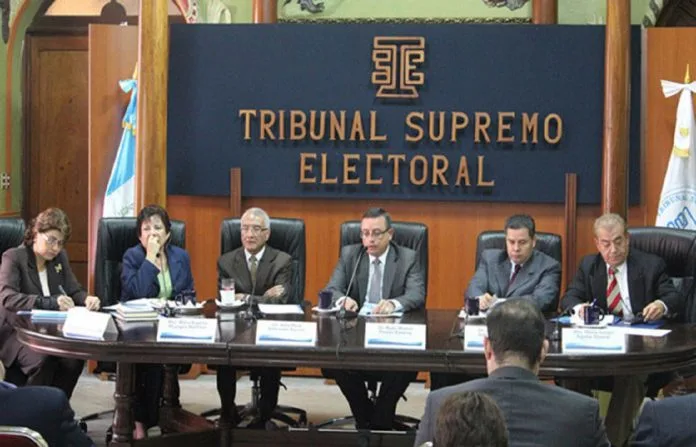
Irma Palencia, Mynor Franco, Gabriel Aguilera, and Ranulfo Rojas are affected judges. They played key roles in overseeing this year’s elections.
The majority of votes for their immunity removal came from the Vamos party and its congressional allies, connected to President Alejandro Giammattei.
Public Ministry investigation
Achieving the necessary 107 votes, as required by Guatemalan law, was a significant moment. It marked the culmination of efforts by the ruling party and its partners.
The judges face charges of abuse of authority, fraud, and neglect of duty.
These accusations originate from a Public Ministry investigation into electoral results transmission system irregularities.
This system, used for quick public result dissemination, was not linked to official election results.
Since July, there have been accusations of the Public Ministry trying to overturn Arévalo de León’s victory. He leads the social democratic Seed Movement.
Blanco warns that the true aim is to replace Supreme Electoral Tribunal judges. This could potentially overturn Arévalo de León’s victory.
Arévalo de León himself has claimed an ongoing “coup” against him by Attorney General Consuelo Porras Argueta.
In summary, Guatemala’s political landscape is experiencing a critical shift. The Congress’s decision to strip judges of immunity reflects deep political divisions.
It also raises questions about the balance of power and the integrity of the nation’s electoral process.
More: Latin America news in English, every day from The Rio Times.
This article was produced by The Rio Times’ automated newsroom system. How we use AI · Report an error · Editorial responsibility: Matthias Camenzind, Editor-in-Chief