Key Facts
- Vale, Brazil’s iron-ore giant, is near its 12-month low: its New York shares ended Friday, November 13, 2026 at US$11.22, only 2.2% above the 12-month low of US$10.98 set on 3 November.
- The fall is steep: Vale’s New York shares are 37.0% below their 12-month high of US$17.82 from 20 April, and down 21.2% over 60 sessions.
- No single trigger is confirmed: China, which makes more than half the world’s steel, remains the key buyer, but we found no confirmed Chinese data or policy event on Friday.
- Smaller miners hurt most: CSN Mineração fell 3.73% to R$4.64, another daily decline.
- Higher rates add weight: the US 10-year Treasury yield rose 31 basis points in five sessions to 5.14%, and the dollar index gained.
- History is no comfort: after 56 earlier falls this large in Vale’s price, it was higher 20 sessions later in only 26 cases (46%).
- Prediction markets: Polymarket, a real-money prediction market, prices an 88.5% chance of a 0.25-point Federal Reserve rate rise in December (US$33.0 million traded, 8:05 p.m. ET, 13 November).
Today’s Focus
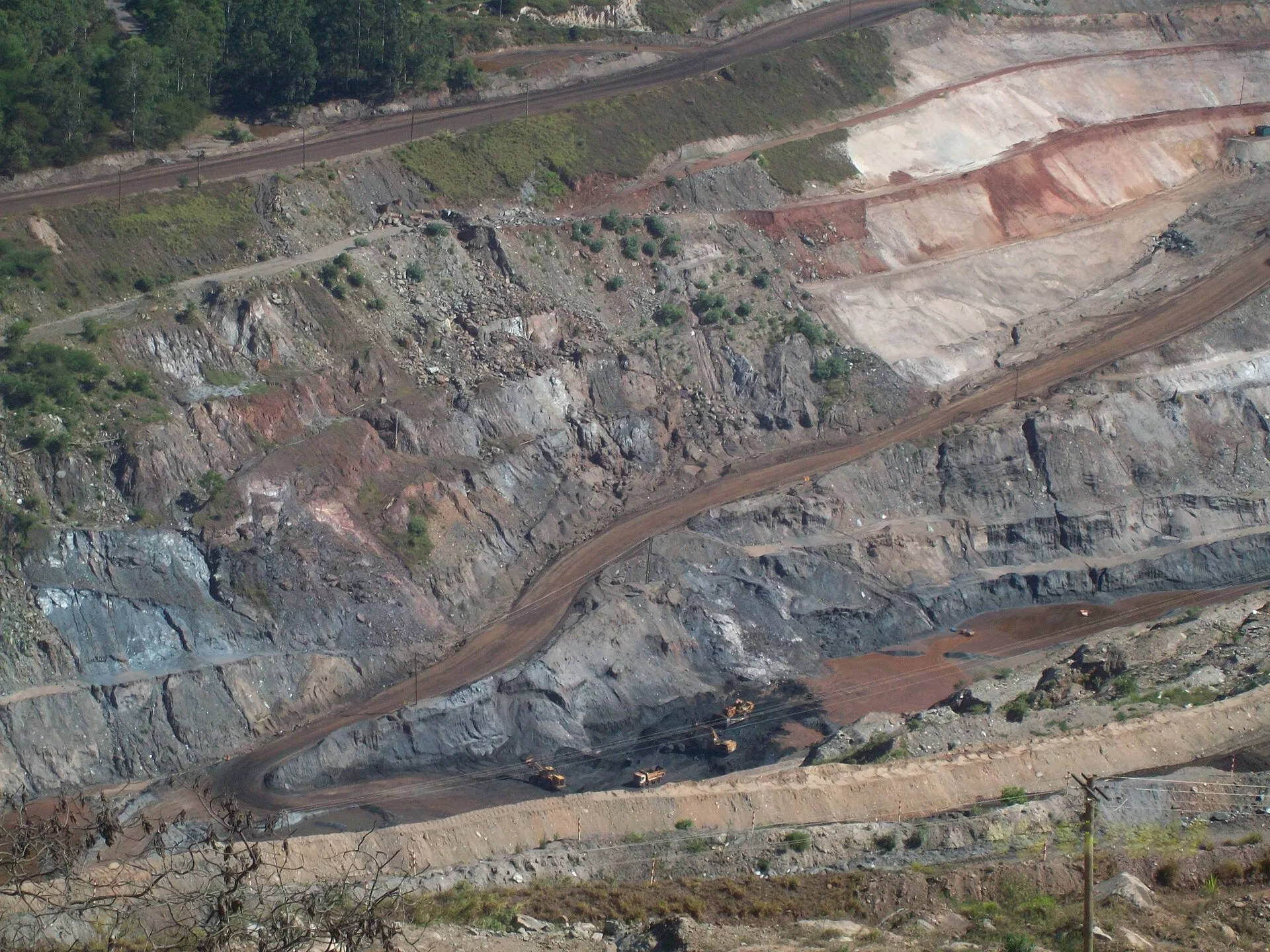
Iron ore, the raw material of steel, is in a slow grind lower, and Friday, November 13, 2026 added to it. Vale’s New York shares, our proxy for the ore price, fell 0.53% to US$11.22, their second decline in a row.
The reason usually sits in China, which makes more than half the world’s steel and buys most seaborne iron ore. We found no confirmed Chinese data or policy event on Friday, so the best-supported pressure is the cost of money.
Vale is Brazil’s mining giant and one of the largest iron-ore exporters on earth, so when ore weakens, Brazil’s trade income and its stock market feel it. Vale’s New York shares have lost 14.09% over 20 sessions.
What matters today. Iron ore proxies sit near their yearly lows and Brazil’s biggest exporter is paying for it, so watch whether US yields stop rising.
01 The session in one read
Vale’s New York shares slipped 0.53% on Friday, November 13, 2026, a small move after a large decline. The shares are down 3.19% over five sessions and 14.09% over 20.
The price of iron ore itself is not on our board, so we read it through the companies that dig it up. Vale is the cleanest proxy: its profits rise and fall with the ore price.
Smaller Brazilian producers took the sharper blow. CSN Mineração, a Brazilian steel-and-mining group, lost 3.73% in one session.
The best-supported reading is that costlier money worldwide is weighing on a sector with a weak trend; we found no confirmed Chinese trigger on Friday. Vale’s shares sit just above their November low, and a close below US$10.98 would show sellers still in control. The variable to watch is the 10-year US yield.

02 The board
The three miners tell one story at different speeds. Rio Tinto, the Anglo-Australian rival with a large iron-ore business, eased 0.40% to US$82.95 and has lost 8.16% over 20 sessions.
CSN Mineração closed at R$4.64, which is 31.0% below its 12-month high of R$6.99 from 10 September. It sits 18.1% above its May low of R$4.08, so it has more room to fall than Vale does.
| Asset | Level | Change |
|---|---|---|
| Iron ore (Vale) | US$11.22 | -0.53% |
| CSN Mineração | R$4.64 | -3.73% |
| Rio Tinto | US$82.95 | -0.40% |
Source: RT close, 2026-11-13. Where a commodity has no spot feed, an exchange-traded tracker or leading producer is shown as a labelled proxy.
Live Market IntelligenceThe live market board
Rio Times · Live Market Intelligence
Latin America — Cross-Market Board
| Instrument | Last | Change | YoY | Prev. | High | Low | Volume |
|---|---|---|---|---|---|---|---|
| IBOV | 172,457.76 | +0.66% | +9.73% | 171,324.31 | 172,715 | 171,132 | — |
| IPSA | 10,660.94 | +0.34% | — | 10,625.19 | 10,699 | 10,624 | — |
| IPC MEX | 71,610.23 | -0.28% | +13.87% | 71,811.20 | 71,981 | 71,044 | 149,701,210 |
| MERVAL | 2,848,945 | — | -10.97% | 2,859,051 | — | — | — |
| COLCAP | 2,452.46 | -0.02% | — | — | — | — | — |
| USD/BRL | 5.67 | +0.45% | +7.09% | 5.64 | 5.67 | 5.63 | — |
| EUR/BRL | 6.25 | +0.93% | +1.93% | 6.19 | 6.26 | 6.21 | — |
| USD/MXN | 18.52 | -0.42% | +1.29% | 18.60 | 18.63 | 18.51 | — |
| USD/CLP | 994.16 | -0.13% | +6.95% | 995.48 | 1,002 | 993.78 | — |
| USD/COP | 3,302 | +0.70% | -10.86% | 3,279 | 3,331 | 3,302 | — |
| USD/PEN | 3.40 | -0.16% | +0.77% | 3.41 | 3.41 | 3.39 | — |
| USD/ARS | 1,544 | -0.11% | +9.58% | 1,545 | 1,548 | 1,543 | — |
| USD/UYU | 40.59 | +2.33% | +3.41% | 39.67 | 40.59 | 40.52 | — |
| USD/PYG | 6,196 | +2.33% | -10.79% | 6,055 | 6,196 | 6,185 | — |
| USD/BOB | 11.59 | -0.37% | +72.02% | 11.63 | 11.60 | 11.55 | — |
| USD/DOP | 60.59 | +1.85% | -5.40% | 59.49 | 60.61 | 60.27 | — |
| USD/CRC | 442.74 | -0.10% | -9.70% | 443.16 | 445.25 | 442.74 | — |
| USD/GTQ | 7.64 | +2.06% | +2.02% | 7.49 | 7.65 | 7.64 | — |
03 Why it moved
Cause one, with the most weight we can support: costlier money. The US 10-year Treasury yield, the rate on America’s benchmark government loan, rose 31 basis points over five sessions to 5.14%, as markets bet on interest-rate rises. The dollar index also gained 1.09% over five sessions, which makes commodities pricier for buyers using other currencies. Gold’s drop of 4.58% in its fund over the same stretch shows the same pressure across raw materials.
Cause two: CSN’s results. CSN Mineração, the iron-ore arm of the steelmaker CSN, fell 3.73% to R$4.64 after its parent reported a third-quarter net loss of R$1.25bn (about US$220m) and net debt of 4.23 times EBITDA (operating profit before depreciation), which weighed on Brazilian ore names.
Not everything lined up: the S&P 500 gained 2.51% over five sessions, so this is not a general market panic. That points to a miner-specific problem. Confidence in the ranking of causes: medium, because we could not find daily ore-futures prices for Friday itself.
From the RT economic calendar: US producer prices rose 0.3% in October against 0.4% expected, and the core measure, which strips out food and energy, rose 0.3% as forecast, or 5.0% on the year. The 10-year Treasury yield still rose to 5.14%, so the milder headline reading did not ease the pressure. China, the buyer of most seaborne iron ore, had no major calendar release on Friday.
04 The trend behind it
Vale’s New York shares peaked at US$17.82 on 20 April and are 37.0% below that today. They touched a 12-month low of US$10.98 on 3 November and have bounced only 2.2% since.
This is a continuation, not a new phase. The 60-session loss of 21.2% shows a downtrend that has run for roughly three months.
Our own archive adds a sober note. Vale’s price has fallen 14.1% in 20 sessions; in the 56 earlier cases since 2007 with a move at least that large, it was higher 20 sessions later in 26 (46%), with a median change of -2.3%, a worst case of -38.9% and a best of +31.9%. History is not a forecast.
05 What it means for Latin America
Brazil is the country most exposed. Iron ore is one of its biggest exports, and a weaker price means less dollar income for the economy and less tax and dividend money from Vale.
Brazilian investors feel it twice: through Vale’s own shares and through CSN Mineração, which lost 3.73% on Friday. A weaker ore price also tends to weigh on the real, Brazil’s currency.
Chile and Peru are less affected because copper, not iron, is their main metal. Even so, a Chinese building slowdown that cuts steel demand also dampens appetite for copper.
06 The names to watch
Vale is the barometer. Its 12-month low of US$10.98 is the nearest support, and its April high of US$17.82 is the distant ceiling.
Rio Tinto is the global check: at US$82.95 it is 26.0% below its May high of US$112.04 and 20.6% above its November 2025 low of US$68.78. CSN Mineração has support at R$4.08 and resistance at R$6.99.
07 What would end it
Two things could turn the tide: China could announce new building or infrastructure spending that revives steel demand, or US yields could ease from 5.14%.
The next monthly Chinese steel-output and ore-import figures will show whether stockpiles are shrinking. Until then, the honest answer is that the slide has no clear floor, and a close below US$10.98 in Vale’s shares would confirm it.
08 What to watch
- China steel output: The next monthly production and ore-import figures will show whether mills are cutting or restocking.
- CSN Mineração: Whether the sell-off after its parent’s results spreads to other Brazilian ore names.
- Vale at US$10.98: A close below the 3 November low would signal fresh selling; a rise toward US$11.58 would suggest buyers are returning.
- US yields and dollar: The 10-year yield at 5.14% and the dollar index at 103.41 set the cost of money for all commodities.
What Prediction Markets Say
Polymarket, where users bet real money, lists a market on the Federal Reserve’s December decision, with US$33.0 million traded as of 8:05 p.m. ET, 13 November 2026. It prices a 0.25-point rise at 88.5%, a 0.5-point or larger rise at 7.7%, no change at 2.5%, a 0.25-point cut at 0.4% and a 0.5-point or larger cut at 0.2%.
These prices are bets, not polls. They show traders expect the Fed, the US central bank, to raise interest rates again in December.
Why we show this: prediction markets turn real-money bets into a live probability that moves within minutes of the news, which is why investors, campaigns and newsrooms in the United States now follow them closely. We show them next to polls and official results, never instead of them.
Frequently Asked Questions
Why does Vale stand in for the iron ore price?
Iron ore is Vale’s main product, so its profits and share price move closely with the ore price. Our board shows Vale’s New York shares, not the raw price.
Why is China so important to iron ore?
China makes more than half the world’s steel and buys most seaborne iron ore. When its mills slow down, ore prices fall.
How does this affect Brazil?
Iron ore is a major export, so a weaker price reduces Brazil’s dollar income and Vale’s dividends and taxes, and it can weigh on the real.
Will the fall continue?
History offers no promise: after 56 earlier falls this large, Vale was higher 20 sessions later in 46% of cases. A recovery in Chinese steel demand is what would end the slide.
Market data: The Rio Times
This article was produced by The Rio Times’ automated AI newsroom. Editorial responsibility: Matthias Camenzind, Publisher and Editor-in-Chief. The Rio Times also runs Ask Rio Times, which answers from 100,000+ of our own articles, the daily Latin America Power Map, and prediction-market odds on elections and markets.. How we use AI · Report an error
LatAm Markets: Live Signals → — real-time movers, turnover leaders and FX across Latin America.
Read More from The Rio Times