Indonesia Pitches a Mercosur Trade Deal, With Brazil as the Broker
Brazil · Trade
Key Facts
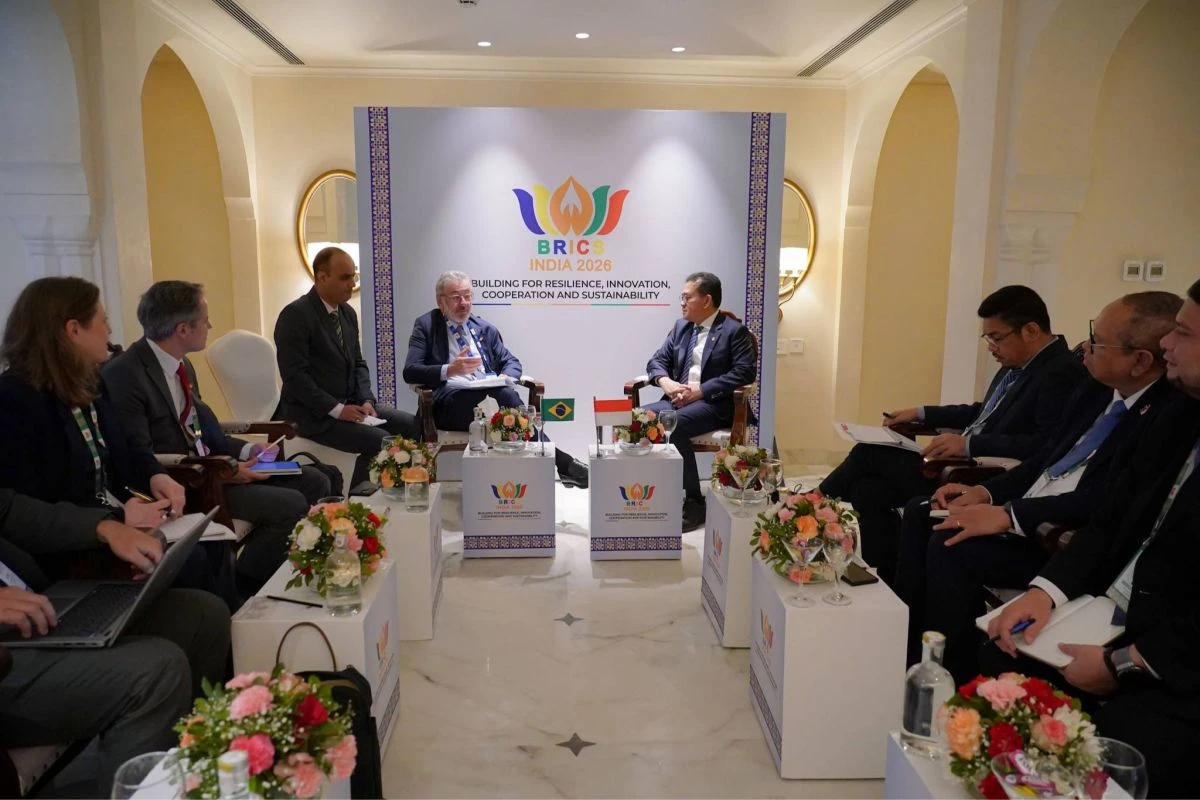
- First step Indonesia proposed a narrow preferential trade agreement (PTA) with Mercosur at the BRICS Trade Ministers’ Meeting in Jaipur, India, on Aug 7, 2026.
- Stalled CEPA The broader Indonesia-Mercosur Comprehensive Economic Partnership Agreement is stuck over how wide and deep the deal should be.
- Consensus ask Jakarta asked Brazil to bridge differences and build alignment among Mercosur members on the PTA.
- Open response Brazil’s development, industry, trade and services minister, Márcio Elias Rosa, said Brasília will study the proposal.
- Trade heft Indonesia-Brazil trade was about US$7 billion in 2025 and US$3.53 billion in the first half of 2026.
- Asia pivot Mercosur is already advancing deals with the EU and Japan and eyeing one with China as it diversifies away from US trade friction.
Indonesia wants a faster, narrower trade pact with South America’s big bloc — and it is asking Brazil to make it happen.
If you have been watching Mercosur’s busy year, you know the bloc has become the emerging world’s most sought-after trade partner. Now add Indonesia. In early August, Jakarta’s trade minister floated an Indonesia-Mercosur trade deal in slimmed-down form — skip the full agreement for now and do a smaller, quicker one instead. Nothing is signed. But it tells you a lot about where global trade is heading, and where your next opportunity might sit.
What Indonesia is proposing
Indonesia’s trade minister, Budi Santoso, used the BRICS Trade Ministers’ Meeting in Jaipur, India, to suggest a fresh path. His pitch was a preferential trade agreement, or PTA — a focused deal that cuts tariffs on a selected list of goods. Think of it as trade’s express lane — faster and easier than a sprawling comprehensive pact.
Why the change of tack? The bigger Indonesia-Mercosur Comprehensive Economic Partnership Agreement, or CEPA, has stalled. The problem is not Jakarta’s appetite — it is friction inside Mercosur over how broad the deal should be. So Indonesia asked Brazil for help. “We hope Brazil can help build consensus among Mercosur members and advance negotiations for the Indonesia-Mercosur PTA,” Santoso said. Brazil’s development, industry, trade and services minister, Márcio Elias Rosa, replied that Brasília is open to more talks and will study the proposal. No timeline was set. This is a proposal, not a deal.
What the Indonesia-Mercosur trade deal would cover
Here is where it gets interesting for commodities. Indonesia is the world’s biggest palm oil producer. Brazil and Argentina are soy oil powers. Those two oils compete head-to-head in global food and biofuel markets, and a PTA would help decide which one gets the tariff edge in the other’s backyard. A deal would likely cover tariffs on goods ranging from vegetable and animal fats to vehicles, electrical machinery, rubber, mineral fuels, sugar, cotton, tobacco and metal ores.
Look at the current picture. In the first half of 2026, Indonesia-Brazil trade reached US$3.53 billion. Indonesia sold Brazil about US$1.17 billion of goods — palm oil, vehicles and rubber — while buying roughly US$2.36 billion of Brazilian farm residues, sugar, cotton and ores. That leaves Jakarta with a deficit of about US$1.19 billion. A PTA is, in part, Indonesia’s attempt to rebalance that ledger by getting more of its products onto Brazilian shelves.
There is a bigger strategic thread here too. Indonesia has spent recent years chasing new markets to cut its reliance on China and the West — from a fresh pact with the EU to joining BRICS. Latin America is one of the last large regions where it has little preferential access. A Mercosur deal, even a narrow one, would plant a flag and give its exporters a foothold before rivals lock in their own terms.
Why Latin American readers should care
This is not just a Jakarta-Brasília affair. It is a window into Mercosur’s strategic pivot. The bloc is already living with the EU-Mercosur agreement, which took provisional effect on May 1, 2026. It launched talks with Japan in June, is eyeing a deal with China, and now Indonesia — a BRICS member since January 2025, with more than 280 million people — wants a foothold. That is a lot of suitors at one dance.
For Brazilian and Argentine agribusiness, the prize is Asian market access at preferential rates. For Indonesian palm oil, South America is a growing market and a hedge. And with the United States raising tariffs on major partners, every new Mercosur deal trims the bloc’s reliance on any single buyer. If you invest or live in the region, watch the farm supply chain: if this advances, expect ripples in vegetable-oil pricing and machinery flows.
What happens next
Do not expect a quick signature. Brazil has to study the proposal, then take it to Argentina, Paraguay, Uruguay and Bolivia — a full Mercosur member since 2024. Each has its own farm lobbies and industrial priorities, which is exactly why the CEPA stalled. The PTA route lowers the bar to a smaller menu of goods. Get consensus, and Indonesia is through the door; miss it, and the bigger deal stays parked. Either way, Southeast Asia is signalling that it is serious about Latin America.
More: Brazil news in English, every day from The Rio Times.
Frequently Asked Questions
Is the Indonesia-Mercosur trade deal signed?
No. It is a proposal. Indonesia suggested a PTA at the BRICS meeting in August 2026 as a first step toward a broader agreement. Brazil said it will study the idea. No timeline was set, and formal negotiations have not started.
What is the difference between a PTA and a CEPA?
A PTA is a narrow agreement that cuts tariffs on specific, selected goods, so it is quicker to negotiate. A CEPA is comprehensive, covering goods, services, investment and trade rules, which makes it far more complex and slower to finalize.
Why does Indonesia want a deal with Mercosur?
Indonesia wants preferential access for its palm oil, vehicles, rubber and machinery, while narrowing its trade deficit with Brazil. It also wants a foothold in South America as Mercosur signs deals with the EU, Japan and others. For a country of more than 280 million people, early access matters.
Connected Coverage
Sources: Indonesian Ministry of Trade via ANTARA News; MLex; Brazil’s Ministry of Development, Industry, Trade and Services (MDIC); Nikkei Asia; European Council.
This article was produced by The Rio Times’ automated newsroom system. How we use AI · Report an error
Read More from The Rio Times