China-Mercosur Trade Deal Fast-Tracked Amid US Tariff Pressure
Brazil · Trade
Key Facts
—Phone Call Presidents Lula and Xi spoke for over an hour on 26 July 2026, agreeing to fast-track Mercosur-China trade talks.
—Strategic Timing The call came weeks after Lula publicly pushed for negotiations at a Mercosur summit and amid new US tariff pressures.
—Trade Volume Bilateral trade between Brazil and China alone reached US$188.17 billion in the most recent year cited.
—Bloc Requirement Any final Mercosur-China deal requires the unanimous consent of all member states, including Argentina, Uruguay, and Paraguay.
—Cooperation Areas The leaders also agreed to deepen ties in high technology, artificial intelligence, satellites, critical minerals, and fertilizer trade.
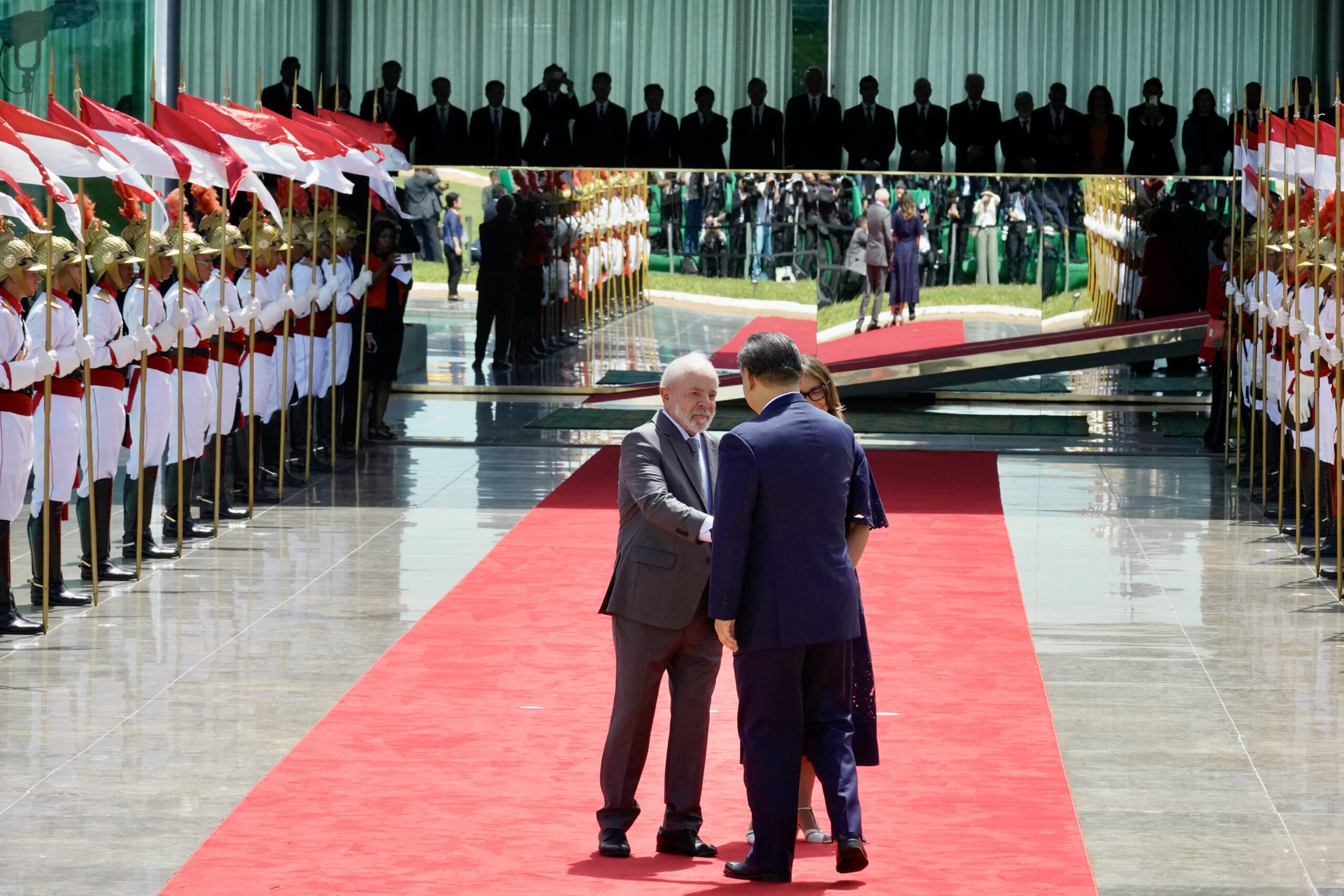
Brazilian President Luiz Inácio Lula da Silva and Chinese President Xi Jinping agreed on Sunday to accelerate a China Mercosur trade agreement, a move framed by analysts as a direct response to new US tariff barriers that are reshaping global trade alliances.
China Mercosur trade: A Strategic Call Amid Trade Tensions
The two leaders spoke by phone on 26 July 2026 for a little over an hour. Brazil’s presidential palace, the Planalto, stated the talks focused on accelerating negotiations toward a flexible trade agreement between China and Mercosur, the South American customs union founded by Argentina, Brazil, Paraguay, and Uruguay.
While the Planalto’s official readout did not explicitly mention the new US tariffs, major international outlets including Reuters framed the call as part of Brazil’s repositioning after Washington’s trade shock. The conversation occurred less than a month after Lula publicly pushed Mercosur to begin formal negotiations with Beijing at the bloc’s summit in Asunción on 30 June 2026.
What the Leaders Agreed
The core agreement was to accelerate the Mercosur-China talks with built-in “flexibilities” to accommodate the needs of both sides. This language suggests a pragmatic approach, potentially allowing for a partial deal rather than a comprehensive free trade agreement that could face resistance within the bloc.
Beyond trade, Lula and Xi committed to deepening cooperation in strategic sectors. These include high technology, artificial intelligence, satellite development, critical minerals, and fertilizer trade.
The latter is particularly vital for Brazil’s massive agricultural sector, which relies heavily on imported fertilizers to maintain crop yields.
The leaders also pledged to maintain close coordination on multilateralism and international issues, specifically mentioning the United Nations and the BRICS group of emerging economies, which both nations co-founded alongside Russia, India, and South Africa.
The Mercosur Constraint
A significant hurdle remains. Any trade agreement between China and Mercosur requires the unanimous consent of all four full member states.
While Brazil, as the bloc’s largest economy, is driving the initiative, it cannot unilaterally deliver a deal.
Paraguay maintains diplomatic relations with Taiwan rather than mainland China, a persistent complication for bloc-wide consensus. Argentina, under President Javier Milei, has pursued closer ties with the United States and Israel, potentially creating ideological friction.
Uruguay has historically favored bilateral trade deals and may support the initiative, but the requirement for unanimity gives each member effective veto power.
Reuters reported in February 2026 that Brazil was signaling a new openness to considering a partial Mercosur-China deal, a format that might circumvent some internal political obstacles by focusing on specific sectors rather than a sweeping agreement.
Massive Trade Flows at Stake
The economic stakes are enormous. Bilateral trade between Brazil and China alone reached US$188.17 billion in the most recent year cited.
China is Brazil’s largest trading partner, purchasing vast quantities of soybeans, iron ore, and crude oil, while supplying manufactured goods and industrial inputs.
For China, a bloc-wide deal would secure preferential access to South America’s agricultural and mineral wealth at a time when its trade relations with the West face growing strain. For Mercosur members, it would diversify export markets beyond traditional partners in North America and Europe, reducing vulnerability to unilateral tariff actions.
Chinese state media, including Xinhua and CGTN, presented President Xi as ready to strengthen strategic coordination and oppose what Beijing calls unilateralism and protectionism, a clear rhetorical counter to Washington’s trade policies.
Brazil’s Market Diversification Push
The Lula administration emphasized market diversification and stronger bilateral cooperation in its public statements, carefully avoiding a direct public focus on the US tariffs in the official note. This diplomatic restraint allows Brazil to pursue new trade architecture without explicitly framing it as a confrontation with Washington.
The push for a China deal aligns with Lula’s broader foreign policy of positioning Brazil as a leader of the Global South and a bridge between competing great powers. By accelerating talks with Beijing while maintaining dialogue with Washington, Brasília seeks to maximize its strategic autonomy.
The phone call also covered deepening cooperation within BRICS, a forum where both nations see an opportunity to reshape global governance institutions to better reflect the economic weight of emerging economies.
Looking Ahead
The acceleration of talks sets the stage for technical negotiations in the coming months. The flexibility language suggests both sides are aware of the political sensitivities and are willing to craft a bespoke agreement rather than a one-size-fits-all template.
For foreign investors and expatriates watching Latin America, a successful China-Mercosur deal would significantly alter the region’s economic geography, potentially boosting infrastructure investment, commodity exports, and supply chain integration with Asia. However, the unanimous consent requirement means the path forward remains politically complex and far from guaranteed.
More: Brazil news in English, every day from The Rio Times.
Frequently Asked Questions
What is Mercosur and why does it matter for a China trade deal?
Mercosur is a South American trade bloc founded by Argentina, Brazil, Paraguay, and Uruguay. It matters because any trade agreement with China requires the unanimous approval of all four member states, giving each country veto power over the deal.
How large is the trade relationship between Brazil and China?
Bilateral trade between Brazil and China reached US$188.17 billion in the most recent year cited. China is Brazil’s largest trading partner, buying commodities like soybeans and iron ore while selling manufactured goods.
Why are Lula and Xi accelerating talks now?
The acceleration follows new US tariff barriers and reflects a strategic push by both nations to diversify trade partnerships. Lula publicly called for negotiations at a Mercosur summit in June 2026, and the July phone call formalized the commitment to fast-track the process.
Connected Coverage
Sources: Brazil's presidential palace, the Planalto.
This article was produced by The Rio Times’ automated newsroom system. How we use AI · Report an error · Editorial responsibility: Matthias Camenzind, Editor-in-Chief
Brazil runoff, Sunday, October 25: Brazil runoff start time and results schedule. Latest: Brazil runoff polls, Flávio 51%, Lula 49%.