India’s Mega-River Vision: Waterways to Propel Growth and Stability
India is embarking on a transformative journey to forge a “mega-river” by linking several of its waterways.
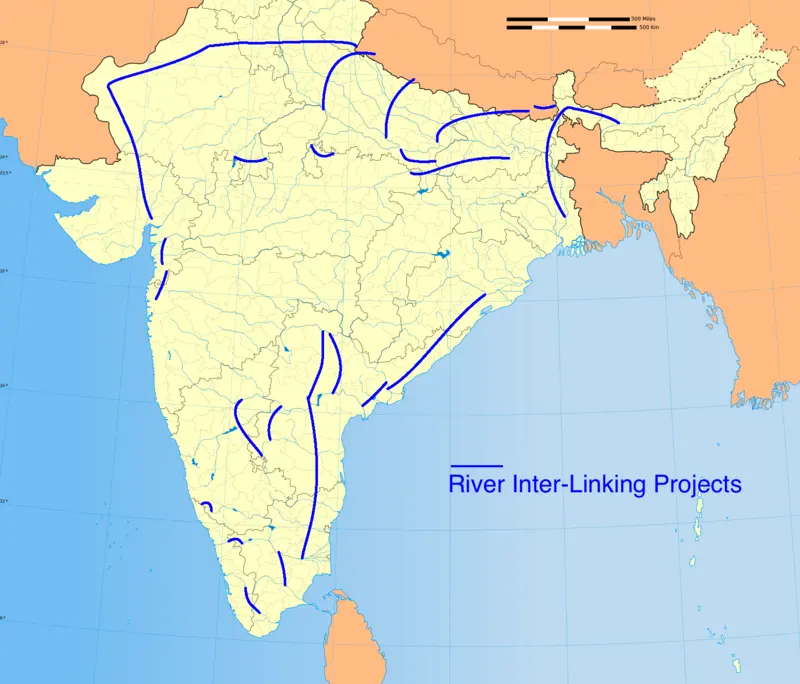
This expansive project stretches from the Himalayas to the Bay of Bengal and the Arabian Sea, aiming to enhance irrigation, hydroelectric power, and flood control.
Conceived in the 19th century, it revisits historical ambitions with a modern twist to solve pressing infrastructure challenges.
This initiative isn’t merely about connecting rivers; it’s about reshaping India’s landscape to meet the needs of its growing population and dynamic economy.
The vision involves rerouting and managing waterways to create a robust system capable of supporting agriculture, energy needs, and urban expansion.
It also aims to address the harsh realities of climate-induced disasters. However, the interconnections of river systems raise substantial environmental concerns.
Alterations could disrupt monsoon patterns vital for farming and upset ecological balances, affecting communities dependent on these rivers.
Previous global experiences suggest that such vast undertakings come with high stakes. Therefore, careful consideration of both ecological and social impacts is necessary.
Stakeholders from various sectors call for thorough scientific reviews and collaborative discussions to address potential cross-border implications.
The project’s ultimate success depends on blending engineering excellence with sustainable practices and navigating complex political terrains both at home and internationally.
In essence, India’s river-linking plan is not just an infrastructure project but a bold reimagining of its natural resources.
It stands as a testament to India‘s forward-thinking strategies in the face of global changes.
India aims to secure a sustainable and prosperous future for the next generations through continuous growth.
This ambitious endeavor underscores the nation’s commitment to innovation and environmental stewardship in an interconnected world.
This article was produced by The Rio Times’ automated newsroom system. How we use AI · Report an error
Read More from The Rio Times