In the first half of 2024, the Brazilian Amazon experienced 13,489 fires, a 61% increase from the previous year.
This surge marks the highest number of fires in two decades. Data from the National Institute for Space Research (INPE) show it was the third-worst semester for fires since record-keeping began in 1998.
Only 2003, with 17,143 fires, and 2004, with 17,340 fires, recorded higher numbers. The Amazon’s first six months of 2024 saw more fires compared to 8,344 during the same period last year.
Despite this increase in fires, deforestation in the Amazon dropped by 42%. In the first half of 2024, 1,525 square kilometers of rainforest were deforested, compared to the same period in 2023.
Additionally, forest fires also reached unprecedented levels in the Pantanal and Cerrado biomes. These regions lie south of the Amazon.
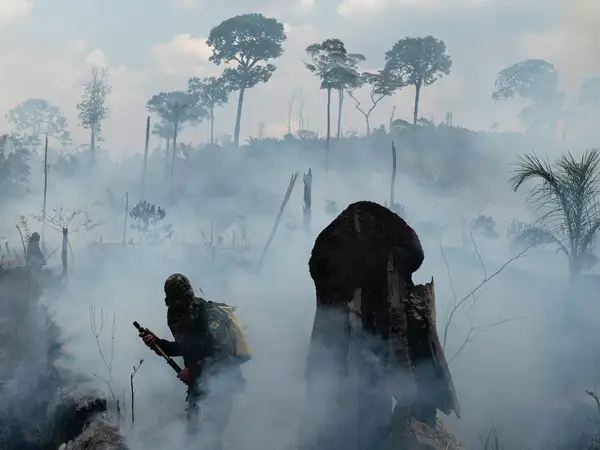
The Pantanal, the world’s largest wetland, covering parts of Paraguay and Bolivia, recorded 3,538 fires from January to June.
This represents a 40% increase compared to 2020, when fire affected 30% of the biome.
June 2024 alone saw 2,639 fires, six times more than the previous record for June, set in 2005.
The Cerrado biome also faced significant fire activity. It recorded nearly as many fires as the Amazon in the first half of 2024, with 13,229 fires, surpassing the previous record of 13,214 set in 2007.
This spike in fires in both the Pantanal and Cerrado biomes highlights a broader environmental crisis.
These fires contribute to global climate change, threatening biodiversity and the livelihoods of local communities.
The increase in fire activity, despite a reduction in deforestation, underscores the urgent need for stronger environmental protection measures.
Protecting these vital ecosystems is crucial for maintaining global ecological balance and combating climate change.
The continued rise in fires points to the necessity for immediate, effective action to safeguard these critical regions.
Editorial responsibility: Matthias Camenzind, Editor-in-Chief · Editorial standards · Report an error
Read More from The Rio Times