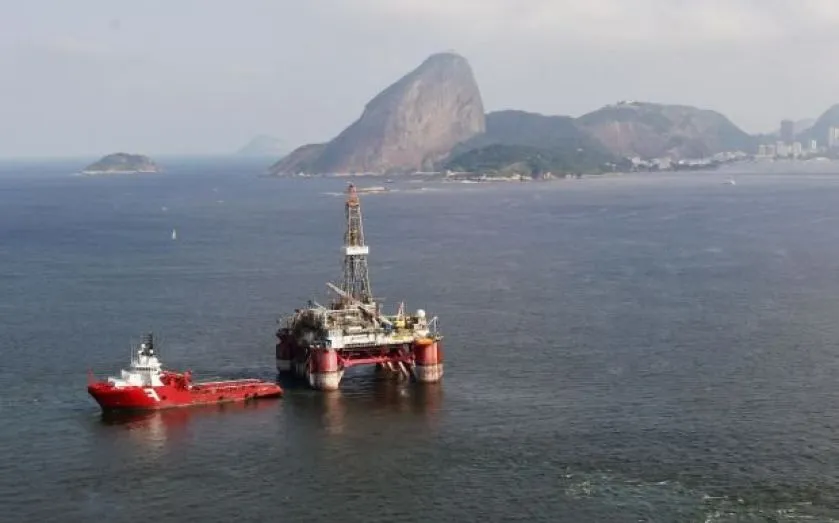
If Rio de Janeiro were a country, it would be the tenth largest oil producer in the world
Rio’s experience in providing goods, services, and equipment to the offshore oil industry and the lower carbon footprint of Rio’s industrial production compared to the rest of the world give the state a competitive advantage in globally supplying the energy industry with inputs for the energy transition.
The conclusion is the coordinator of oil, gas, and marine content of the Federation of Industries of the State of Rio de Janeiro (Firjan), Fernando Montera.
“The Brazilian supplier has carbon emissions that are six times lower than China’s in the production of a commodity and 4.6 times lower than the global average. That’s a big difference,” he says.
Montera says Rio state is already positioned as a supplier to the onshore oil industry in the Northeast, which has heated up as Petrobras sells off mature fields.
Firjan’s data shows that more than 50% of the labor force employed exclusively in Brazil’s oil market works in Rio. The state benefits from the country’s two largest production basins are here: Campos and Santos.
Rio produces nearly 2 million barrels of oil per day, about 80% of national production. If it were a country, the state would be the tenth largest producer in the world, Firjan points out.
According to estimates by the National Petroleum Agency (ANP) presented in the yearbook, the state is expected to receive R$380.71 (US$75) billion in oil production investments between 2022 and 2026.
This amount represents 89% of the R$427 billion projected for all of Brazil and includes activities such as drilling, new production units, and platform revitalization.
The amount has increased by 32% compared to estimates for the previous period. “Brazil manages to keep an effective schedule for auctioning area concessions, and therefore we will see an increase in exploration and production in the coming years,” says Firjan manager Karine Fragoso.
She points out that the increase in Rio de Janeiro oil production comes at a time of high prices. The war in Ukraine and the revival of global consumption after the most critical phase of the pandemic have kept the barrel of oil near $100 on the international market.
Thus, the price of a barrel of oil in reais this year is around R$600, higher than during the commodity supercycle between 2010 and 2015, when it was around R$200. The difference is explained by the current devaluation of the Brazilian currency. “We need to convert this into benefits for Rio, in more jobs and income,” Fragoso says.
According to Firjan, the number of job openings in Rio’s oil market has increased by 146% as the sector recovers. The manager points out that the changes in the industry will also change the profile of the workers to be hired: “The diversity and complementarity of energy sources have increased, and this will be reflected in the professionals that the industry will hire. Employees will need to be “multifunctional” and know how to talk about the energy industry as a whole, for example,” Fragoso says.
More: Brazil news in English, every day from The Rio Times.
This article was produced by The Rio Times’ automated AI newsroom. Editorial responsibility: Matthias Camenzind, Publisher and Editor-in-Chief. The Rio Times also runs Ask Rio Times, which answers from 100,000+ of our own articles, the daily Latin America Power Map, and prediction-market odds on elections and markets.. How we use AI · Report an error
Living in or visiting Rio de Janeiro? See this month's events and our Rio de Janeiro city guide with rents, safety and upcoming concerts.
Brazil runoff, Sunday, October 25: Brazil runoff start time and results schedule. Latest: Brazil runoff polls, Flávio 51%, Lula 49%.